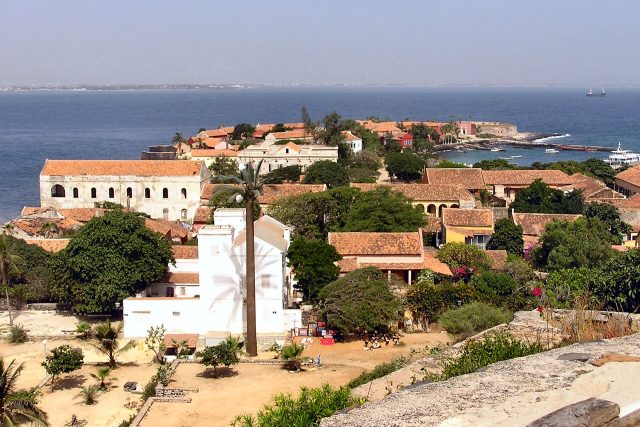
The Great Mosque of Dakar stands as one of the most striking landmarks in Senegal’s capital, a place where faith, history, and urban life intersect. Built in the late 1960s, it was a project that reflected the country’s post-independence ambitions, blending traditional Islamic architecture with modernist influences. The mosque’s towering minaret, visible from much of the city, serves as both a spiritual beacon and a point of orientation in Dakar’s bustling streets. Its construction was supported by foreign partners, including Morocco, which contributed artisans and materials, adding layers of cultural exchange to its story.
The mosque’s design is a study in contrasts. The exterior is imposing yet elegant, with clean lines and a pale, almost luminous facade that catches the light differently at dawn and dusk. The main prayer hall, expansive and airy, is designed to accommodate thousands of worshippers, particularly during Friday prayers and religious festivals. Inside, the space is uncluttered, with minimal ornamentation—a departure from the intricate tilework and calligraphy found in many older mosques. Instead, the focus is on the simplicity of the architecture, allowing the act of prayer to take center stage.
Beyond its religious function, the Great Mosque has become a symbol of Dakar’s identity. It sits in the heart of the city, near the presidential palace and government buildings, reinforcing its role as both a spiritual and civic landmark. The surrounding area is lively, with markets, cafes, and street vendors adding to the sense of community. For many Dakarois, the mosque is not just a place of worship but a familiar part of daily life, a backdrop to conversations, gatherings, and even political discussions.
The mosque’s history is tied to Senegal’s broader narrative of independence and self-determination. When it was inaugurated in 1964, it was one of the first major religious structures built in the country after colonial rule ended. Its construction was seen as a statement of national pride, a way to assert Senegal’s place in the Islamic world while embracing its own cultural heritage. Over the decades, it has hosted dignitaries, scholars, and ordinary citizens, becoming a space where diplomacy, education, and faith coexist.
Visitors to the Great Mosque often remark on its atmosphere of quiet dignity. Unlike some of the more tourist-oriented mosques in other parts of the world, this one feels deeply rooted in local life. Non-Muslims are welcome to admire the architecture from the outside, though access to the interior is typically reserved for worshippers. The best time to visit is during the early morning or late afternoon, when the light softens the mosque’s facade and the call to prayer echoes across the city.
The Great Mosque is also a place of learning. Attached to it is an Islamic institute where students study theology, Arabic, and the Quran. This educational role has made the mosque a center of intellectual life in Dakar, fostering generations of scholars and religious leaders. The institute’s presence underscores the mosque’s broader mission—not just as a place of prayer, but as a hub for spiritual and academic growth.
For those exploring Dakar, the Great Mosque offers a moment of reflection amid the city’s energy. It stands as a reminder of Senegal’s deep Islamic traditions, which have shaped its culture, politics, and daily rhythms for centuries. Whether you’re drawn by its architecture, its history, or simply the chance to observe a living part of the city, the mosque provides a glimpse into the soul of Dakar. It’s a place where the past and present coexist, where faith and urban life flow together in a way that feels both timeless and distinctly Senegalese.