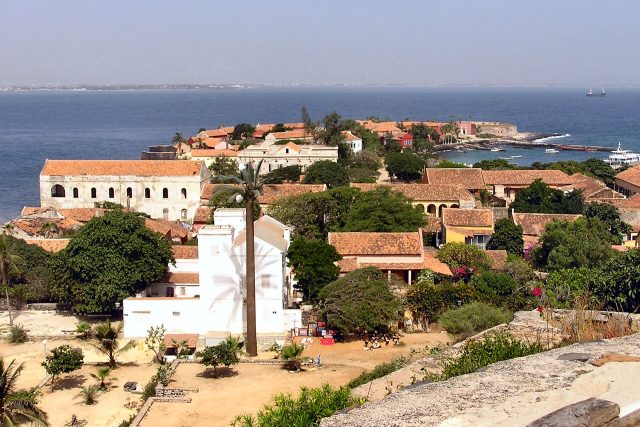
The Musée Théodore Monod d'Art Africain in Dakar is one of those rare places where the continent’s history feels alive—not through grand declarations, but through quiet, enduring traces of time. Housed in a building from the colonial era, when Senegal was part of French West Africa, the structure itself is part of the experience. Its thick walls of local stone, high wooden-beamed ceilings, and large windows that filter soft light create an atmosphere where the objects on display don’t just sit behind glass; they seem to breathe, carrying stories that predate the museum’s own walls.
The collection spans a broad spectrum of African art, from masks and sculptures to everyday tools and ritual objects. Here, you’ll find Dogon wooden figures from Mali, Benin bronzes, Sahelian pottery, and intricately embroidered textiles that speak to the skill of West African weavers. But what makes the museum stand out is its focus on the sacred and the ceremonial: fetishes, amulets, and musical instruments once used in initiation rites or healing ceremonies. These aren’t just relics of the past; they’re windows into the worldviews, social structures, and artistic traditions of the people who created them long before Africa became a focal point of colonial ambition.
Rather than trying to be exhaustive, the museum excels in its attention to detail, offering glimpses of specific cultures and eras. One room is dedicated to the art of the Wolof, the dominant ethnic group in Senegal, whose elongated wooden masks with delicate features and geometric patterns were once central to agricultural and funeral ceremonies. Nearby, the Serer people’s sculptures—rounder, softer, rich with symbolism of fertility and ancestry—provide a contrast, hinting at the diversity of traditions even within a single region.
What sets this museum apart is its commitment to context. Each piece comes with more than just a label; there’s an explanation of how it was used, when, and what role it played in community life. This matters because African art is often misunderstood in the West as purely decorative, when in reality, it’s deeply functional. A mask isn’t just an ornament—it’s a bridge between the human and spiritual worlds. A figurine isn’t just a sculpture—it’s a vessel for ancestral memory. The museum doesn’t impose interpretations but invites visitors to look closer, to see beyond the surface.
The building itself is worth lingering over. Constructed in the early 20th century as part of an administrative complex, its architecture blends European design with local materials. The thick walls, made from shell limestone quarried nearby, keep the interior cool even on the hottest days. The inner courtyard, shaded by palm trees and dotted with benches, offers a quiet place to reflect after wandering the galleries. It’s also where temporary exhibitions, lectures, and workshops often take place, sometimes focusing on traditional crafts, other times on contemporary African art.
The Musée Théodore Monod isn’t Dakar’s most hyped attraction, and that’s part of its charm. There are no crowds jostling for photos, just the space to move slowly, read the descriptions, and study the details. In recent years, the museum has expanded its focus to include modern African artists, hosting exhibitions of local creators. This isn’t a trendy pivot but a natural evolution—African art isn’t frozen in time; it’s alive, absorbing new influences while reinterpreting old traditions.
For those who see Africa as more than just a travel destination—as a cultural phenomenon—the museum acts as a kind of bridge. It doesn’t romanticize the past or present it as exotic. Instead, it shows how deeply intertwined history, religion, and daily life have always been on the continent. You might spend an hour here or half a day, depending on how deeply you want to dive in. What lingers isn’t the sense of having seen a collection of curiosities, but the realization that behind every object is a living culture, one that continues to evolve even now.
In a city as vibrant and fast-paced as Dakar, the Musée Théodore Monod offers a quiet counterpoint. It doesn’t aim to dazzle with scale or opulence, and that’s precisely why it works. This is a place for those who want to see Africa not through the lens of stereotypes, but as it has always been: complex, layered, and quietly extraordinary.