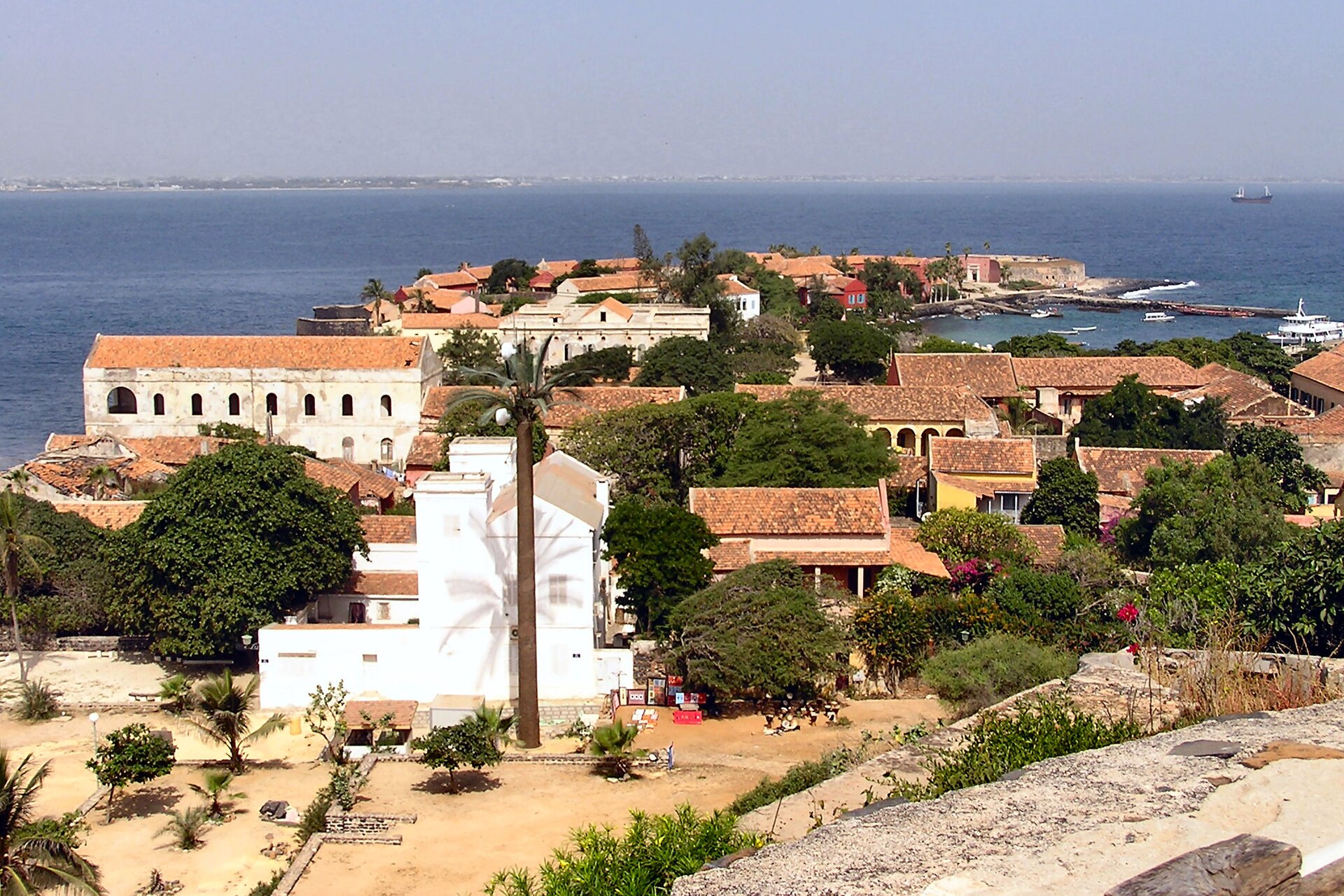
Gorée Island sits just off the coast of Dakar, a small but weighty speck in the Atlantic that has witnessed centuries of human movement, trade, and suffering. To reach it, you take a twenty-minute ferry ride from the city’s bustling port, leaving behind the noise of taxis and street vendors for the quiet rhythm of waves lapping against the hull. The island is barely three kilometers long and less than a kilometer wide, yet its history looms large, not just in Senegal but in the broader narrative of the Atlantic world. The ferry docks at a small pier, and from there, the island unfolds in a way that feels both intimate and overwhelming—a place where the past is never far from the surface.
The first thing you notice is the stillness. There are no cars here, no motorbikes, just the occasional sound of footsteps on cobblestone or the distant chatter of visitors. The buildings, painted in warm hues of ochre, pink, and yellow, stand close together, their balconies and shutters adding a touch of colonial charm. But this is no idyllic retreat. Gorée was once a key hub in the transatlantic slave trade, and its architecture tells a story of power, commerce, and cruelty. The most famous of these structures is the House of Slaves, a stark reminder of the island’s darkest chapter. Built in the late 18th century, it was one of many holding facilities where enslaved Africans were kept before being shipped across the ocean. The cells, narrow and dimly lit, still bear the weight of that history, as do the heavy iron shackles that once restrained those who passed through.
Yet Gorée is more than its painful past. The island has been inhabited for centuries, long before European traders arrived. The Lebou people, a fishing community, were among the first to settle here, drawn by the island’s strategic location and natural harbor. By the 15th century, Portuguese explorers had established a presence, followed by the Dutch, French, and British, each leaving their mark on the island’s culture and architecture. The French eventually took control in the 19th century, turning Gorée into a colonial administrative center. The grand houses of the era, with their wide verandas and ornate ironwork, speak to a time when the island was a symbol of European ambition in West Africa.
Walking through Gorée’s narrow streets, you can sense the layers of history beneath your feet. The island has always been a crossroads, a place where different worlds collided. The slave trade may have been its most infamous role, but Gorée was also a center of learning, religion, and resistance. The first Catholic mission in Senegal was established here in the 17th century, and the island became a refuge for freed slaves after the abolition of the trade. In the 20th century, it played a part in Senegal’s struggle for independence, with figures like Léopold Sédar Senghor, the country’s first president and a celebrated poet, drawing inspiration from its complex legacy.
Today, Gorée is a UNESCO World Heritage site, recognized for its historical significance and the way it preserves the memory of the transatlantic slave trade. But it is also a living community. Around 1,500 people still call the island home, many of them descendants of those who were once enslaved or who worked in the colonial administration. The island’s economy revolves around fishing, tourism, and small-scale trade, with women often selling handmade crafts and textiles to visitors. The pace of life here is unhurried, shaped by the rhythms of the sea and the seasons. In the evenings, locals gather at the waterfront, watching the sun dip below the horizon as the lights of Dakar twinkle in the distance.
The House of Slaves is the most visited site on the island, and for good reason. It is a place of quiet reflection, where the weight of history is palpable. The door of no return, a narrow opening that leads directly to the sea, is a particularly haunting symbol. It was through this door that countless men, women, and children were forced onto ships bound for the Americas, never to see their homeland again. The museum inside the house does not shy away from the brutality of the trade, but it also honors the resilience of those who endured it. Exhibits include chains, manacles, and firsthand accounts of the conditions on the island, as well as stories of resistance and survival.
Beyond the House of Slaves, Gorée has other stories to tell. The Fort d’Estrées, a 19th-century French military installation, now houses the IFAN Historical Museum, which offers a broader look at Senegal’s past, from pre-colonial kingdoms to the fight for independence. The island’s churches and mosques, some dating back centuries, reflect its religious diversity. The Catholic Church of Saint-Charles-Borromée, with its simple white facade and wooden pews, is one of the oldest in Senegal, while the Mosque of Gorée, tucked away in a quiet corner, serves as a reminder of the island’s Muslim heritage.
For all its historical weight, Gorée is also a place of beauty. The island’s coastline is dotted with small beaches where locals and visitors alike come to swim or simply sit and watch the waves. The views from the higher points of the island are stunning, especially at sunset, when the sky turns shades of orange and pink over the Atlantic. The absence of modern development means that the island retains a sense of timelessness, as if it exists slightly apart from the rest of the world. It is a place where you can wander for hours, losing yourself in the quiet streets and the stories they hold.
Gorée is not an easy place to visit. Its history is difficult, and the emotions it evokes can be overwhelming. But it is also a place of profound significance, a reminder of both the depths of human cruelty and the strength of those who endured it. For many, the island is a pilgrimage, a chance to connect with a history that shaped not just Senegal but the entire Atlantic world. Whether you come for the history, the culture, or simply the quiet beauty of the place, Gorée leaves an impression that lingers long after you’ve returned to the mainland. It is a small island with a big story, one that continues to unfold with each visitor who steps onto its shores.