Wat Sainyaphum sits quietly in the heart of Savannakhet, a town where the slow rhythms of provincial life meet the faded elegance of its colonial past. Unlike the grand, ancient temples that dot Laos, this one feels lived-in, woven into the daily fabric of the city. It’s not a place you stumble upon by accident—it stands a little apart from the bustling markets and riverside cafés, down a narrow street where the air smells of damp earth and frangipani. Yet for all its unassuming presence, the temple is a cornerstone of the community, a place where monks chant at dawn, children learn to read, and elders gather to settle disputes over cups of strong, sweet coffee.
The architecture is classic Lao—tiered roofs that curve gently toward the ground, their edges adorned with the sinuous forms of naga, the serpentine guardians of Buddhist lore. Inside the main sim, or sanctuary, the light is soft, filtered through high, narrow windows that cast long shadows across the worn wooden floors. The air is cool, thick with the scent of incense and old paper, the kind that lingers in places where time moves differently. The central Buddha statue, seated in meditation, isn’t the largest in Laos, but it carries a quiet authority. Locals leave offerings of flowers and lit candles at its feet, their murmured prayers blending with the rustle of robes as monks move through the hall.
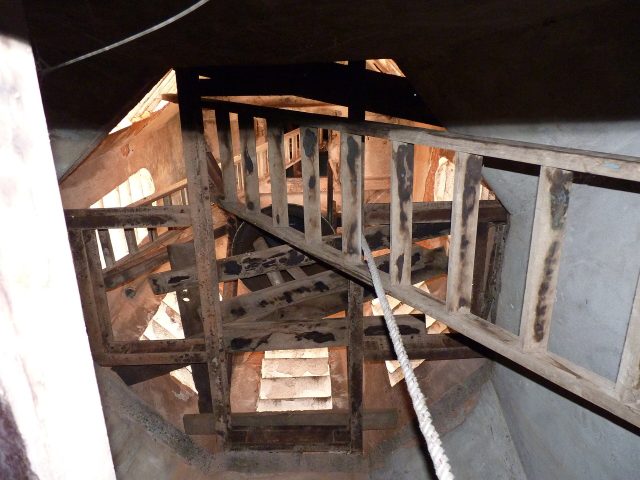
Beyond the sanctuary, the temple grounds hum with activity. In one corner, a group of novices practice writing in Lao script on slates, their teacher correcting strokes with a patient hand. Nearby, an old monk repairs a wooden bench, his hammer striking in a steady rhythm. A bell hangs from a simple frame, its deep, resonant toll marking the hours of prayer. The sound carries beyond the temple walls, a reminder of the day’s passage in a town where clocks often feel unnecessary. There’s no grand spectacle here, just the quiet persistence of tradition.
Wat Sainyaphum has stood as a refuge through the upheavals of history. During the French colonial era, when Savannakhet was reshaped by foreign rule, the temple remained a bastion of Lao identity. Manuscripts on palm leaves, medicinal recipes, and astronomical charts were preserved within its walls, passed down through generations of monks. Today, faded photographs of robed figures from the early 20th century line the walls of a small side hall, their faces a bridge to a time when the town was smaller, the world beyond it more distant. The temple doesn’t advertise this history—it simply holds it, like an old book whose pages have been thumbed smooth by time.
Savannakhet moves at its own pace, and the temple reflects that. There are no crowds here, no vendors hawking trinkets, no signs urging visitors to hurry. If you arrive at the right moment, you might witness a novice’s ordination, the solemn procession of monks during a festival, or the easy camaraderie of an evening gathering. These are not performances for outsiders but the natural cadence of life in a place where faith and community are inseparable. The temple doesn’t demand attention; it offers something rarer—a chance to step into a rhythm that feels older than the town itself.
Visiting Wat Sainyaphum isn’t about ticking off a landmark. There are no guided tours, no plaques explaining the significance of each carving. Instead, there’s the creak of a wooden bench underfoot, the murmur of a monk reciting sutras, the occasional laughter of children chasing each other across the courtyard. If you’re lucky, someone might offer you a cup of tea, or a novice might shyly practice his English. The temple doesn’t need to impress—it simply exists, as it has for decades, a place where the sacred and the ordinary coexist without fanfare.
For travelers accustomed to the polished veneer of tourist sites, this can feel disarming. There’s no script here, no curated experience. You might spend an hour watching a monk sweep the courtyard, or sit in silence as the evening bell echoes through the streets. It’s in these unscripted moments that Savannakhet reveals itself—not as a destination, but as a place where life unfolds at its own unhurried pace. The temple is just one thread in that tapestry, but it’s a thread that runs deep, connecting the past to the present in a way that feels both ordinary and profound.
If you find yourself in Savannakhet, don’t rush. The town doesn’t give up its secrets easily. Wander the backstreets where French colonial buildings stand beside wooden Lao houses, stop for a bowl of *khao poon* at a roadside stall, and let the heat of the afternoon slow you down. Then, when the light softens, make your way to Wat Sainyaphum. There’s no guarantee of revelation—just the quiet possibility of understanding why Laos has long been called the land of a million elephants and the white parasol. Not for its grandeur, but for the quiet dignity of places like this, where time feels suspended, and the weight of centuries is carried lightly.