Savannakhet moves at its own unhurried pace, a quiet town where the past lingers in the details. Along the Mekong’s dusty banks, low-slung houses with tiled roofs line streets that curve like memories, and among them stands a modest red-brick building—the Co-Cathedral of St. Therese. It doesn’t command attention with towering spires or gilded domes, but there’s something quietly enduring about it, as if the place itself chose this corner of Laos to preserve a different kind of story.
The cathedral arrived in Savannakhet in the early 20th century, when Laos was still part of French Indochina. The Catholic community here was small but steady, made up mostly of Vietnamese migrants—traders, officials, and families who had come with the colonial administration. The French, eager to leave their mark, supported the construction of churches across the region, and St. Therese was one of them. Built in the 1930s, it rose in a town already shaped by European influence: straight avenues, administrative buildings, and cafés where coffee was served with croissants in the mornings.
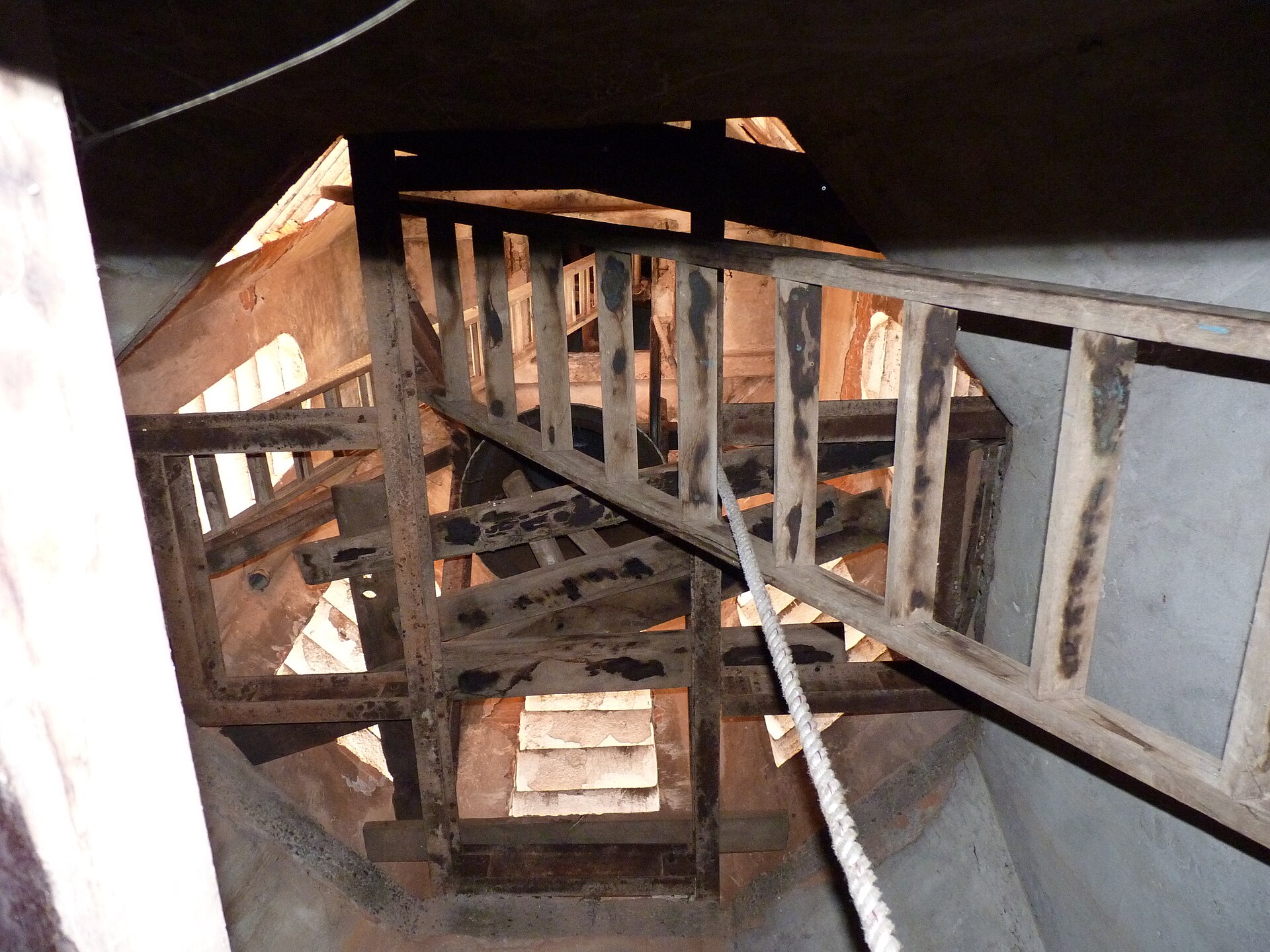
The architecture is simple and practical, a blend of imported materials and local craftsmanship. The red bricks were brought in from elsewhere, but the hands that laid them were Savannakhet’s own, and the work bears their touch. The building is low, with a pitched roof of terracotta tiles and a small bell tower above the entrance. The façade is unadorned, save for a few arches and narrow windows that let in a soft, filtered light. Inside, wooden pews face a modest altar, where an image of St. Therese of Lisieux—patron saint of missionaries—watches over the space. A handful of stained-glass windows, faded but still vivid, hint at the lives that have passed through here over the decades.
St. Therese was never a major religious center in Laos. Catholicism has always been a minority faith here, but for those who practiced it, the cathedral was a familiar refuge. Vietnamese families gathered for Sunday mass, children learned catechism, and on feast days, the courtyard filled with the quiet hum of conversation over tea. When Laos gained independence in 1953, many of the Vietnamese left, but the cathedral remained. It wasn’t torn down or repurposed—it simply endured, a quiet witness to the changes around it.
Today, the Co-Cathedral of St. Therese is both a working church and a subtle landmark in Savannakhet’s landscape. Tourists drawn to the town’s colonial past sometimes stop by, and locals who appreciate its tranquility visit as well. Trees shade the building, and in the mornings, nuns in white habits hurry up the steps for early services. Inside, the scent of wax and aged wood lingers, and plaques on the walls bear the names of those who once tended to the church.
Savannakhet is a place where cultures have long intertwined—Lao, Vietnamese, French, Thai—and St. Therese is one of the few places where all these threads come together. It doesn’t demand recognition or make grand statements, but if you look closely, you can see how its walls hold fragments of the region’s layered history. There’s no opulence here, just a quiet authenticity that makes a visit feel less like sightseeing and more like stepping into a living memory.
In recent years, the cathedral has started appearing in guidebooks, but it remains a place people come to for stillness rather than photographs. Savannakhet has plenty of Buddhist temples, where golden Buddhas gleam and monks chant, but St. Therese offers something different. There are no crowds, no noise—just the creak of wooden floors underfoot and the sense that time here has paused. Maybe that’s why it draws people in: not as a monument to admire, but as a space to sit quietly and reflect on the many lives that have passed through its doors.