Savannakhet moves at its own pace, a quiet city where the Mekong’s slow currents seem to shape the rhythm of life. Along its banks, beneath low hills and dense greenery, a corner of the town feels suspended in another era. The French colonial quarter isn’t just a collection of old buildings—it’s a living fragment of history, where every street and structure carries traces of the time when Laos was part of French Indochina. Today, it remains one of the most evocative parts of the city, a place where the past lingers without overshadowing the present.
The quarter took shape in the early 20th century, when the French were consolidating their hold over Laos, turning it into an administrative outpost of their empire. Savannakhet’s location made it strategically important—sitting along the trade route between Vientiane and the Vietnamese port of Danang, it became a key center for colonial governance. The French built homes for officials, officers, and merchants, along with schools, hospitals, and churches, all designed to give the town a European character. Yet they couldn’t entirely ignore local traditions. Many buildings incorporated Lao elements, from intricately carved wooden details to tiled roofs that curved gently in the style of traditional temples.
Walking through the quarter, the blend of styles becomes apparent. There are two-story houses with high ceilings and large windows, designed to catch the breeze and offer relief from the heat—hallmarks of colonial architecture. Nearby, a building with a shaded veranda supported by slender columns might have once been a café or a small shop. Further along, a mansion with delicate ironwork balconies hints at the lives of those who tried to recreate a piece of Europe in Southeast Asia. Many of these structures show signs of age, their facades weathered but still standing. They aren’t preserved as museum pieces; they’re part of the city’s everyday life, lived in and used, which only adds to their charm.
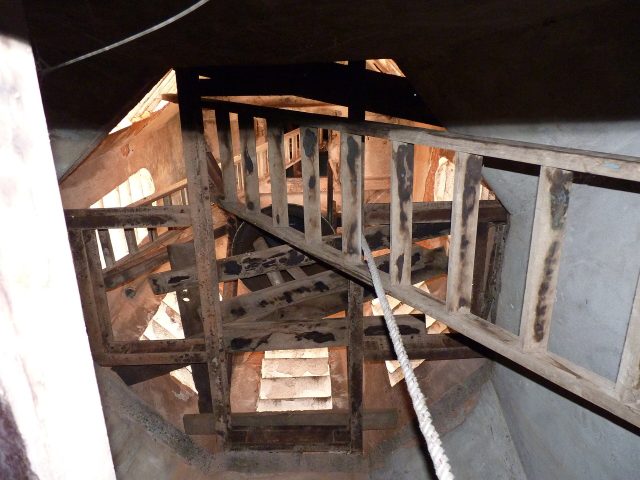
One of the quarter’s most notable landmarks is the Church of the Sacred Heart, built in the 1930s. It’s one of the few remaining religious buildings from that era, modest in size but striking in its design. The church’s facade merges Gothic influences with Lao motifs—pointed arches sit alongside local patterns, and the bell tower echoes both European spires and traditional Lao stupas. Inside, the space is cool and quiet, with walls adorned by frescoes depicting saints amid tropical landscapes. The church still holds services, and on Sundays, the sound of hymns drifts through the neighborhood.
More than half a century after the French left, the quarter hasn’t become a relic. It’s still a functioning part of the city, where people live, work, and gather. Some of the old houses now operate as cafés or small guesthouses, while others have been repurposed in unexpected ways. A former administrative building now houses a museum dedicated to the city’s history, including its colonial past. A bookshop in one of the older structures sells everything from contemporary novels to rare books about Laos, and a small gallery nearby showcases local artists. The streets hum with activity, but it’s a quiet, unhurried kind of life.
The atmosphere shifts with the time of day. Mornings are peaceful, the only sounds being the occasional chatter of market vendors or the distant hum of motorbikes. By midday, the sun is strong, and the shade of old trees becomes a welcome refuge. This is the best time to step into a café and order a cup of strong coffee with condensed milk—a drink the French introduced to Laos and which remains just as popular here as it does in France. Evenings bring a different energy. Lanterns glow along the streets, people gather on verandas with glasses of wine or beer, and the air fills with the scent of jasmine, spices, and freshly baked bread.
The French colonial quarter isn’t just about architecture; it’s a record of cultural exchange. Here, you can see how European traditions intersected with Lao life, how the city changed under colonial rule, and how it evolved after independence. Many buildings have been adapted over the years—former mansions now house large families, and old administrative offices have become schools or clinics. Yet the quarter hasn’t lost its character. It’s neither entirely Lao nor entirely French, but something in between, a reflection of a complex and often ambiguous period in the country’s history.
What draws people here isn’t just the buildings, but the sense of place. There are no crowds, no scripted tours, no pushy guides—just quiet streets where you can wander for hours, noticing the details of old facades or stepping into small shops selling everything from antiques to local sweets. It’s a part of Savannakhet where the past feels tangible, not as a staged attraction but as something that’s still alive. The quarter may not be the most famous or the most picturesque in Laos, but it’s one of the most honest—a place where history isn’t just preserved, but continues to breathe.