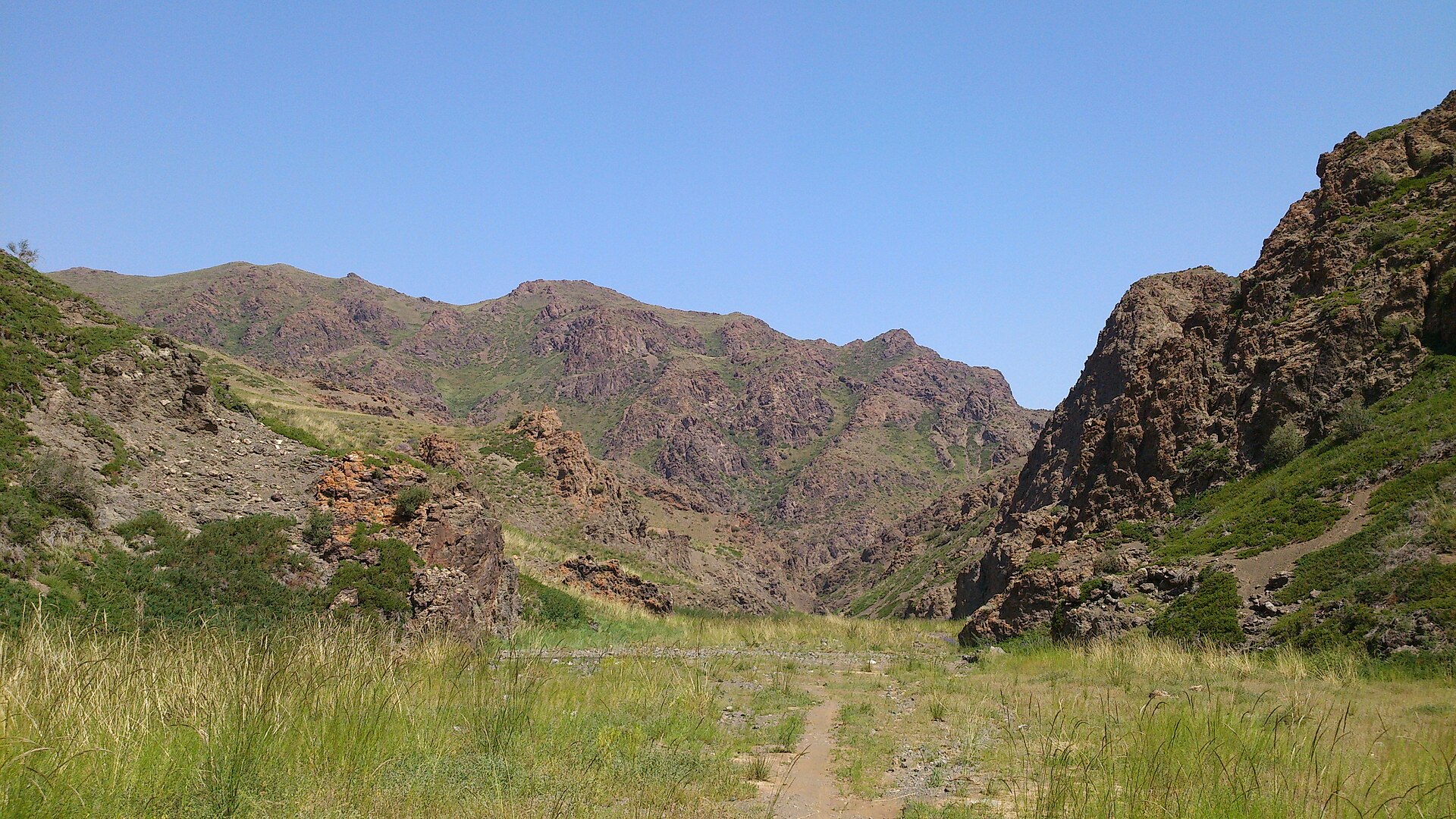
Yolyn Am, or the Valley of the Eagles, is one of those rare places where the Gobi Desert reveals its quiet grandeur. Tucked away in southern Mongolia, not far from the town of Dalandzadgad, it lies within the vast expanse of Gobi Gurvansaikhan National Park. The name itself hints at the wildlife that once thrived here, though locals often call it the Ice Valley—a nod to the surprising pockets of ice that linger in its shadows even in the height of summer. In winter, the gorge transforms entirely, its walls draped in frozen cascades that stretch for dozens of meters, turning the landscape into something between a dream and a natural fortress.
The story of Yolyn Am is written in its rocks. The cliffs that rise on either side are layers of reddish sandstone and conglomerate, remnants of an ancient seabed that once covered this land. Over millions of years, the water receded, leaving behind these striated formations, carved and smoothed by wind and time. The gorge itself was shaped by a river that no longer flows year-round, though a seasonal stream still trickles through, just enough to sustain life in this otherwise harsh environment. The contrast is striking—outside the valley, the Gobi stretches endlessly under the sun, but here, the narrow passage traps moisture and cool air, creating a microclimate all its own.
Stepping into Yolyn Am feels like entering another world. The temperature drops noticeably, and the air carries a dampness absent from the surrounding desert. The gorge acts as a natural wind tunnel, funneling breezes that bring relief from the heat. In summer, the mercury rarely climbs above twenty degrees Celsius, while winters can plunge to minus thirty. It’s this persistent coolness that allows ice to cling to the rocks long after the rest of the desert has thawed. Some patches never fully melt, hidden in crevices where sunlight barely reaches. It’s a reminder of how fragile and fleeting life can be in the Gobi, where even water becomes a precious anomaly.
There are no grand monuments or man-made structures here—nature is the only architect that matters. Yet the valley isn’t entirely untouched by human hands. Along the trails that wind deeper into the gorge, you’ll find *obo*—small piles of stones stacked as offerings to the spirits of the land. Some are adorned with *khataags*, the traditional blue silk scarves left by travelers and pilgrims. These simple markers are more than decoration; they’re a quiet acknowledgment of the belief that the land is alive, deserving of respect and reverence. For generations, Mongolians have seen the natural world not as something to conquer, but as a force to coexist with.
Wildlife here is sparse but resilient. The valley’s name comes from the eagles and falcons that nest in the cliffs, their sharp cries echoing through the gorge. If you’re lucky, you might spot an argali, the wild mountain sheep with its massive, curling horns, descending from the rocks for a drink at the stream. The vegetation is equally hardy—wormwood and caragana shrubs dominate, their roots clinging to the dry soil. After a rare rain, the valley briefly blooms with green, but the desert sun soon reclaims its territory, leaving only the toughest plants standing. It’s a cycle of survival, played out in silence.
For travelers, Yolyn Am is less about ticking off sights and more about experiencing the Gobi on its own terms. There are no crowds, no souvenir stalls, no guided tours with scripted commentary. The journey here is part of the experience—first across the open steppe, then along rocky paths where each turn reveals another layer of the landscape. Some visitors arrive on horseback or camel, led by local herders who know the land intimately. Others walk, though the dry air and relentless sun demand caution. The key is to move slowly, to let the scale of the place sink in. The farther you go, the narrower the gorge becomes, the cliffs rising like walls on either side, until you’re standing in a corridor of stone and shadow.
Winter changes everything. The ice that forms along the rocks and streambed turns the valley into a crystalline world, its surfaces glinting under the pale winter sun. Few travelers make the journey in these months, but those who do are rewarded with a side of the Gobi few ever see. The air is sharp with cold, the silence broken only by the crunch of snow underfoot. It’s a landscape stripped down to its essentials—raw, beautiful, and utterly indifferent to human presence. In a way, that indifference is what makes Yolyn Am so compelling. It doesn’t exist for visitors; it simply is, enduring long after they’ve left.
This isn’t a place you can rush. There’s no checklist of must-see spots, no itinerary to follow. The real draw is the chance to sit quietly, to watch the way the light shifts across the rocks as the day passes, or to follow the stream deeper into the gorge, where the walls press closer together. In those moments, it’s easy to understand why such places have always been considered sacred in Mongolian culture. There’s a sense of timelessness here, a feeling that the land has seen countless seasons come and go, and will continue to do so long after you’re gone. It’s humbling, in the best possible way.