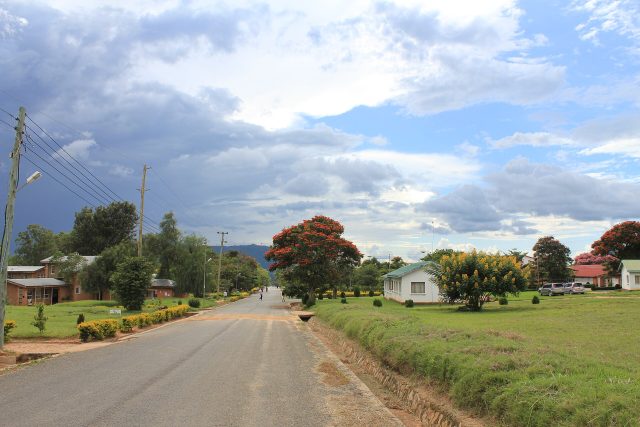
The Udzungwa Mountains rise from the heart of Tanzania like a forgotten world, a place where nature has carved something rare and untamed. Unlike the snow-capped grandeur of Kilimanjaro or the endless savannas that define the country’s tourist image, these mountains offer something quieter, more intimate. Dense rainforests spill over steep ridges, waterfalls tumble into hidden gorges, and sheer cliffs drop away into misty valleys. Stretching for hundreds of kilometers, the range forms a natural divide between Tanzania’s eastern and western regions, its slopes cloaked in an ancient stillness that feels far removed from the modern world.
Geologically, the Udzungwas are part of the East African Rift, the vast fracture that has been slowly splitting the continent for millions of years. The mountains were shaped by violent tectonic shifts, their jagged peaks and deep ravines bearing the scars of those ancient forces. The highest point, Mount Luhombero, reaches nearly three thousand meters, but scaling it is a challenge reserved for experienced climbers. Most visitors stick to the lower trails, where the forest breathes with life—giant trees draped in vines, the damp earth rich with the scent of decay and growth. The air is thick with humidity, and the paths twist unpredictably, as if the land itself is guiding you deeper into its secrets.
What makes the Udzungwas truly remarkable is their biodiversity. This is one of Tanzania’s most vital ecological strongholds, home to species found nowhere else on earth. The Udzungwa red colobus monkey, with its fiery coat and long, expressive tail, is the most famous of these, a living symbol of the mountains’ uniqueness. The forests teem with rare birds, chameleons that shift color like living jewels, and butterflies whose wings flash iridescent blues and greens. Even the rivers hold surprises—fish found only in these waters, adapted to the swift currents and shaded pools. Scientists still uncover new species here, a reminder of how much remains unknown about this corner of the world.
For the Hehe people and other local tribes, the mountains have always been sacred. They believe the forests are inhabited by the spirits of their ancestors, and this reverence is still palpable today. The land is treated with respect, its rhythms dictating daily life. Walking through the Udzungwas is less like a hike and more like stepping into a different time. There are no paved trails, no souvenir stands, no safari vehicles rumbling past. Instead, the paths are narrow and uneven, worn by the feet of villagers and the hooves of wild animals. Streams must be forded, roots and rocks demand careful steps, and the occasional troop of monkeys watches from the branches with quiet curiosity.
The most famous trek leads to Sanje Waterfall, where water plunges nearly two hundred meters into a misty gorge, creating rainbows in the spray. The hike takes several hours, the trail climbing steadily through the forest before opening onto the dramatic sight of the falls. The effort is worth it—not just for the view, but for the sense of having earned it. The humidity is relentless, the air heavy with the weight of the jungle, and by the time you reach the base of the falls, the cool mist feels like a reward.
The Udzungwas are also a place of history, though its traces are subtle. In the late 19th century, these mountains were the stage for fierce resistance against German colonizers. The Hehe chief Mkwawa, a legendary figure in Tanzanian history, used the rugged terrain to his advantage, turning the forests and cliffs into a natural fortress. His guerrilla tactics kept the invaders at bay for years, and though the resistance was eventually crushed, the mountains still carry the weight of that struggle. There are no monuments here, no plaques to mark the battles, but the land itself feels like a witness to the past.
For visitors, the Udzungwas offer a rare kind of solitude. There are no crowds, no tour buses, no pressure to rush from one attraction to the next. Time moves differently here. You can spend hours sitting on a rock, listening to the chorus of birds and insects, watching clouds drift into the valleys below. The nights are cool, especially at higher elevations, and if the sky is clear, the stars appear with a brilliance that’s hard to find anywhere else. Without the glow of cities or the haze of pollution, the Milky Way stretches overhead like a river of light.
The people who live at the foot of the mountains have changed little over the generations. They farm maize, bananas, and coffee, tend to their cattle, and harvest honey from wild beehives. Many work as guides, their knowledge of the forest unmatched. They can read the land like a book—identifying animal tracks, finding hidden paths, predicting the weather from the behavior of birds. In the villages, life moves at its own pace. Meals are simple but hearty: ugali, a thick porridge made from maize flour, served with vegetables or meat, or mandazi, sweet fried dough eaten with tea in the morning.
The Udzungwa Mountains are not a place for those seeking comfort or convenience. There are no luxury lodges, no fine dining, no carefully curated experiences. What you find instead is something far more valuable: the chance to step into a world that feels untouched by time. The forests, the waterfalls, the quiet villages—all of it exists on its own terms, indifferent to the expectations of outsiders. And perhaps that’s why those who come here often feel drawn back. The mountains don’t just offer beauty; they offer a sense of belonging to something older, wilder, and more enduring than ourselves.