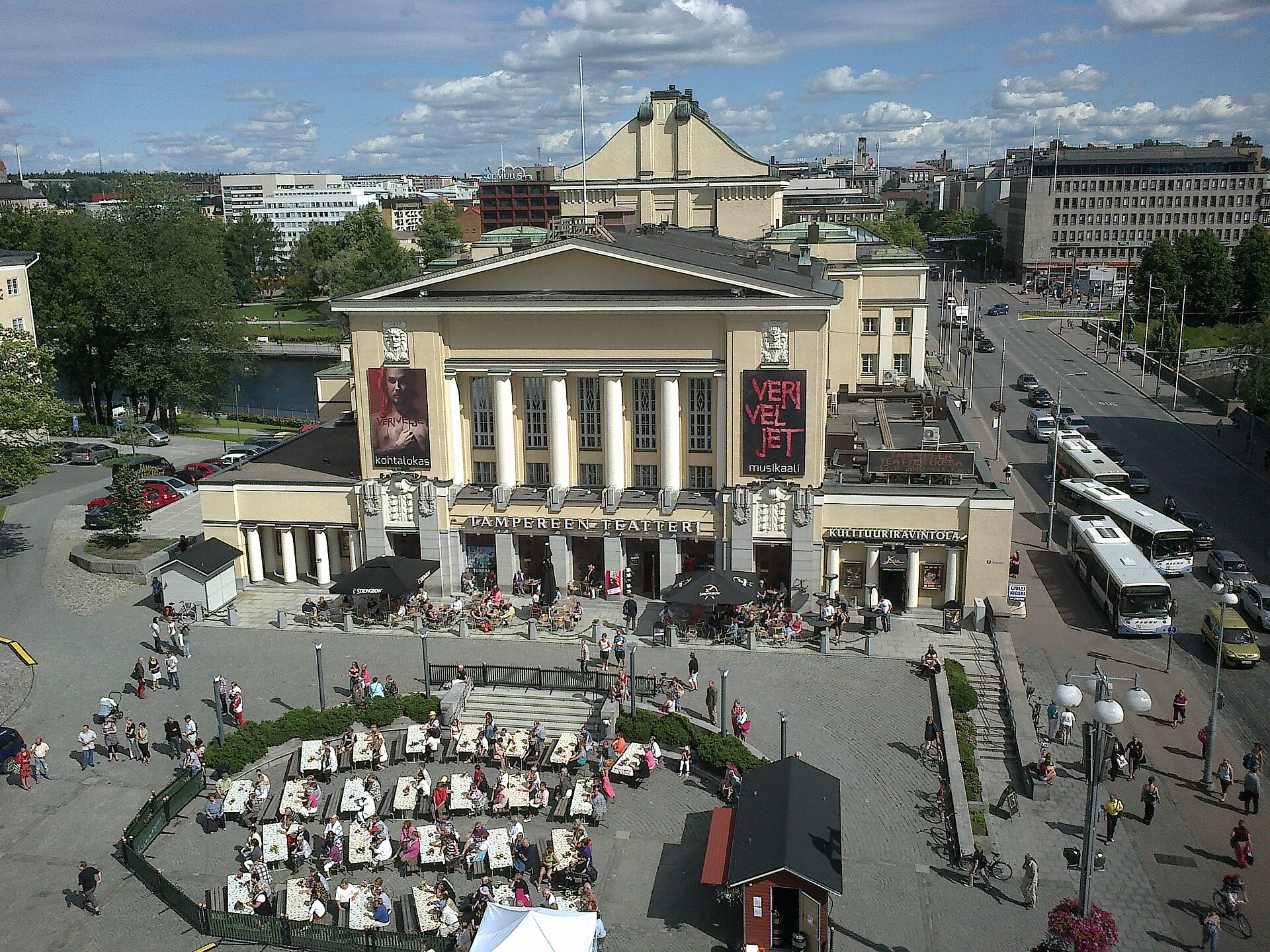
Tampere Theatre is one of those places that feels like it has always been part of the city, even though its story only began in the late 19th century. Back then, Tampere was rapidly growing into an industrial hub, and with that growth came a demand for culture beyond the factory whistles and clattering machinery. The theatre was founded in 1913, but its roots go deeper—it was built on the legacy of earlier performance spaces that had served the city since the 1870s. The current building, designed by Kauno Kallio, opened its doors in 1918, just as Finland was declaring its independence. That timing wasn’t coincidental; the theatre became a symbol of the new nation’s cultural ambitions, a place where Finnish-language performances could take center stage in a country still finding its voice after centuries of Swedish and Russian rule.
The architecture of the Tampere Theatre is a quiet but confident statement of its time. The building’s facade is a mix of neoclassical and Art Nouveau elements, with clean lines and subtle decorative details that avoid grandiosity. The entrance is marked by a modest portico, flanked by two small towers that give the structure a sense of balance. Inside, the auditorium is intimate yet elegant, with a horseshoe-shaped balcony that wraps around the stage, ensuring no seat feels too distant. The woodwork and plaster details have been preserved over the decades, though the theatre has seen its share of renovations—most notably in the 1980s, when modern technical requirements were integrated without sacrificing the original character. The result is a space that feels both historic and alive, where the past isn’t just preserved but actively used.
What makes Tampere Theatre stand out isn’t just its architecture or its age, but the role it has played in the city’s cultural life. For much of the 20th century, it was one of the few places in Finland where serious theatre in Finnish was consistently produced. Before television and the internet, theatres like this were vital—places where people gathered not just for entertainment, but for shared experiences that shaped local identity. The repertoire has always been broad, from classic Finnish plays to international works, but there’s a particular emphasis on new writing. The theatre has premiered works by some of Finland’s most important playwrights, including Aleksis Kivi and Minna Canth, whose stories often grappled with the social changes sweeping the country. Even today, the theatre maintains a reputation for nurturing contemporary voices, making it a place where tradition and innovation coexist.
Walking into the theatre, you notice how unpretentious it is. There’s no red carpet or velvet ropes, just a sense of quiet anticipation before a performance. The foyer is small but warm, with a café where audiences linger before the show or during intermission. The seats in the auditorium are comfortable but not luxurious, and the acoustics are designed to carry voices clearly, even in the back rows. This isn’t a place for spectacle or extravagance; it’s a theatre for people who come to listen, to think, and to feel. The programming reflects that ethos, with a mix of drama, comedy, and experimental works that often reflect the concerns of the moment. In recent years, the theatre has also embraced digital performances, streaming some productions to reach audiences beyond Tampere, though there’s no replacing the experience of sitting in that historic space.
The theatre’s location in the heart of Tampere adds to its charm. It sits on a quiet street just a short walk from the city’s main square, surrounded by other historic buildings that tell the story of Tampere’s industrial past. Nearby, the Tammerkoski rapids rush through the city center, a reminder of the water power that once drove the factories. The contrast between the theatre’s refined interior and the rugged industrial landscape just outside is striking, but it makes sense—Tampere has always been a city of contrasts, where culture and industry coexist. The theatre is also close to other cultural landmarks, like the Tampere Hall and the city’s art museum, making it easy to spend a day exploring the area.
Over the years, the Tampere Theatre has faced its share of challenges. Economic downturns, changing audience habits, and even a fire in the 1960s that damaged part of the building have tested its resilience. Yet it has endured, in part because of the loyalty of its audience. For many in Tampere, the theatre is more than just a venue; it’s a part of their personal histories. People remember their first visit as children, or the plays they saw with friends or family, or the way a particular performance made them see the world differently. That kind of connection isn’t built overnight, and it’s not something that can be easily replicated. It’s the result of decades of shared experiences, of stories told and retold, of a community that has grown up alongside the theatre.
Today, the Tampere Theatre continues to evolve, but it hasn’t lost sight of its original purpose. It remains a place where Finnish theatre is celebrated, where new voices are given a platform, and where audiences can engage with ideas in a way that feels immediate and human. The building itself is a testament to that mission—its walls have heard countless words, its stage has seen countless performances, and its seats have held generations of spectators. In a world where culture is increasingly consumed in isolation, the theatre offers something rare: the chance to be part of something larger than yourself, even if just for a few hours. Whether you’re a local or a visitor, stepping into the Tampere Theatre is a reminder of why live performance still matters. It’s not just about the play on stage; it’s about the people in the seats, the city outside, and the quiet magic of a shared moment.