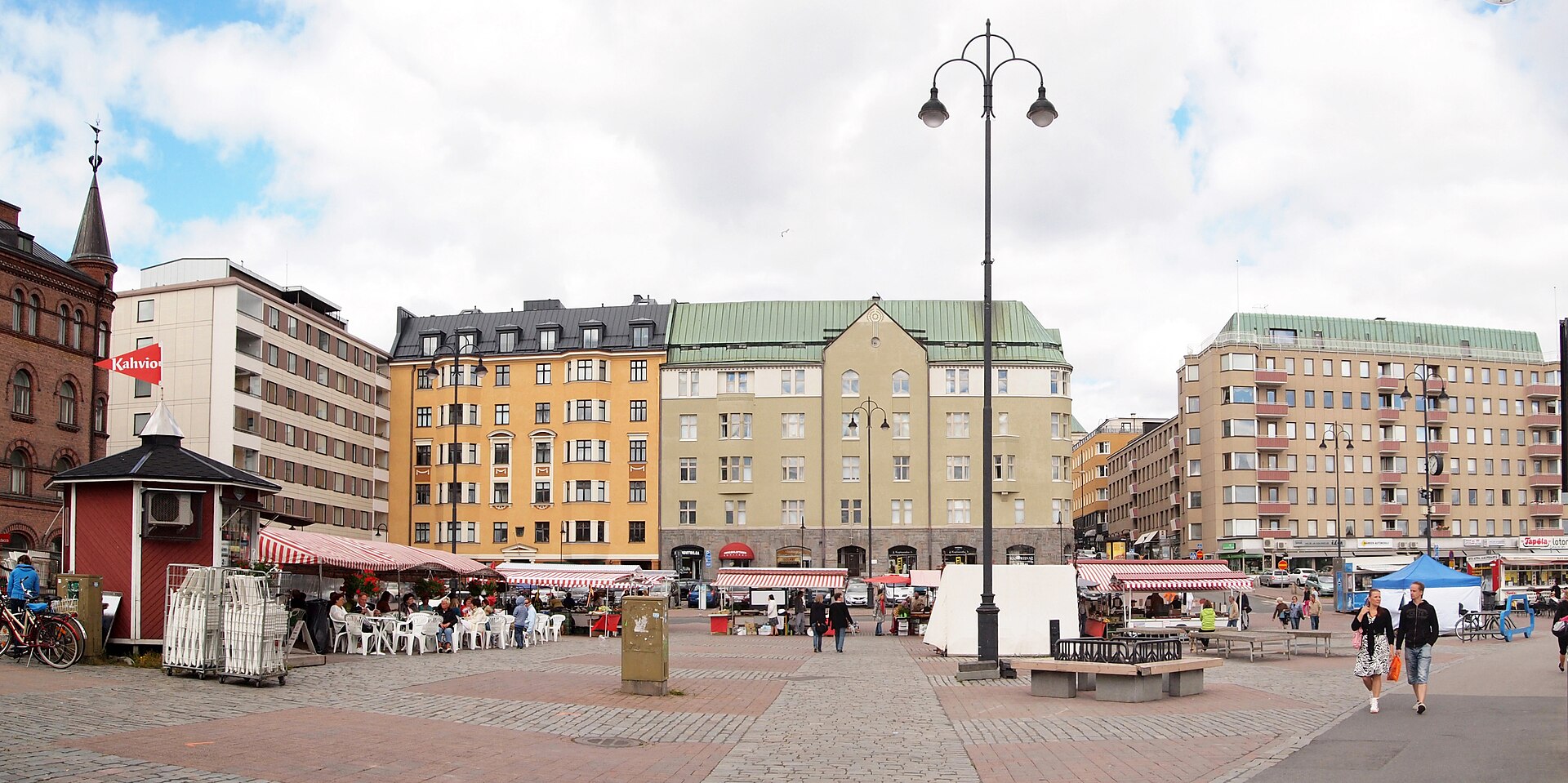
Tampere’s Laukontori market square is one of those places where the city’s past and present seem to settle into an easy rhythm. It sits along the Tammerkoski rapids, the same stretch of water that powered the mills and factories that turned Tampere into Finland’s industrial heart in the 19th century. The square itself is modest in size, framed by low-rise buildings that have seen generations of shopkeepers, fishermen, and townspeople pass through. There’s no grand monument here, no towering landmark—just the quiet hum of daily life unfolding against the backdrop of the rapids and the old brick warehouses that once stored grain and goods for the growing city.
The market has been a fixture in Tampere since the 1890s, though its role has shifted with the times. Back then, it was a bustling hub where farmers from the surrounding countryside brought their produce, dairy, and meat to sell directly to city dwellers. The square was also where fishermen unloaded their catch from the nearby lakes, Näsijärvi and Pyhäjärvi, which have long been central to the region’s identity. Over the decades, the market adapted—first to the rise of supermarkets, then to the changing habits of shoppers—but it never quite lost its purpose. Today, it’s a mix of old and new: a place where you can still buy fresh berries in summer, smoked fish in autumn, or handmade woolens in winter, alongside stalls selling modern Finnish street food and artisanal crafts.
What makes Laukontori special isn’t just what’s sold here, but how it feels. The square has a way of slowing time down, especially on a weekday morning when the air is crisp and the light slants low over the water. Locals come for their daily groceries, stopping to chat with vendors they’ve known for years. Tourists wander through, pausing to watch the rapids rush by or to sip coffee at one of the outdoor tables. The sound of the water is constant, a steady murmur beneath the clatter of dishes and the murmur of conversation. In winter, when snow dusts the rooftops and the market stalls are draped in fairy lights, the square takes on a different kind of magic—quieter, more intimate, as if the city has tucked itself in for the season.
The buildings around Laukontori tell their own stories. The red-brick warehouses, now repurposed as restaurants, offices, and small shops, were once part of Tampere’s industrial boom. Their thick walls and large windows were designed to store goods, not to impress, but there’s a certain charm in their utilitarian simplicity. Some of the older wooden stalls near the water’s edge have been there for decades, their paint faded by sun and rain, their counters worn smooth by generations of hands. Even the newer additions, like the sleek café that opened a few years ago, seem to settle into the square without disrupting its rhythm. It’s as if the place has a way of absorbing change without losing its character.
One of the most striking things about Laukontori is how it connects the city to its natural surroundings. The Tammerkoski rapids are more than just a scenic backdrop—they’re a reminder of the forces that shaped Tampere. The water once powered the factories that made the city wealthy, and today, it’s a draw for those who come to walk along the riverbanks or take a boat tour. In summer, you might see kayakers navigating the rapids, their paddles flashing in the sunlight. In winter, the water doesn’t freeze completely, but the edges ice over, creating a stark contrast between the dark, rushing current and the snow-covered banks. The market square sits right at this intersection of nature and urban life, a place where you can buy a loaf of rye bread and then step outside to watch the water tumble over the rocks.
Laukontori isn’t just a market—it’s a living piece of Tampere’s history. The square has seen the city grow from a small industrial town into a vibrant cultural hub, and it has adapted without losing its soul. There are no grand ceremonies here, no tourist traps designed to part visitors from their money. Instead, it’s a place where the everyday rituals of life play out in plain sight. On a busy Saturday, the square might be packed with shoppers, the air filled with the scent of grilled sausages and fresh coffee. On a quiet Tuesday morning, it might feel almost deserted, the stalls half-empty, the vendors taking their time to arrange their goods. Either way, there’s a sense of continuity here, a feeling that this is how things have always been—and how they’ll continue to be.
For those who take the time to linger, Laukontori offers a glimpse into the slower, more deliberate pace of life in Tampere. It’s the kind of place where you might strike up a conversation with a vendor about the best way to prepare smoked vendace, or where you might sit on a bench by the water and watch the world go by. The market doesn’t demand your attention—it simply invites you to be part of it, if only for a little while. And that, perhaps, is why it endures. In a city that’s constantly evolving, Laukontori remains a steady, unassuming presence, a reminder of the simple pleasures that make life worth savoring.