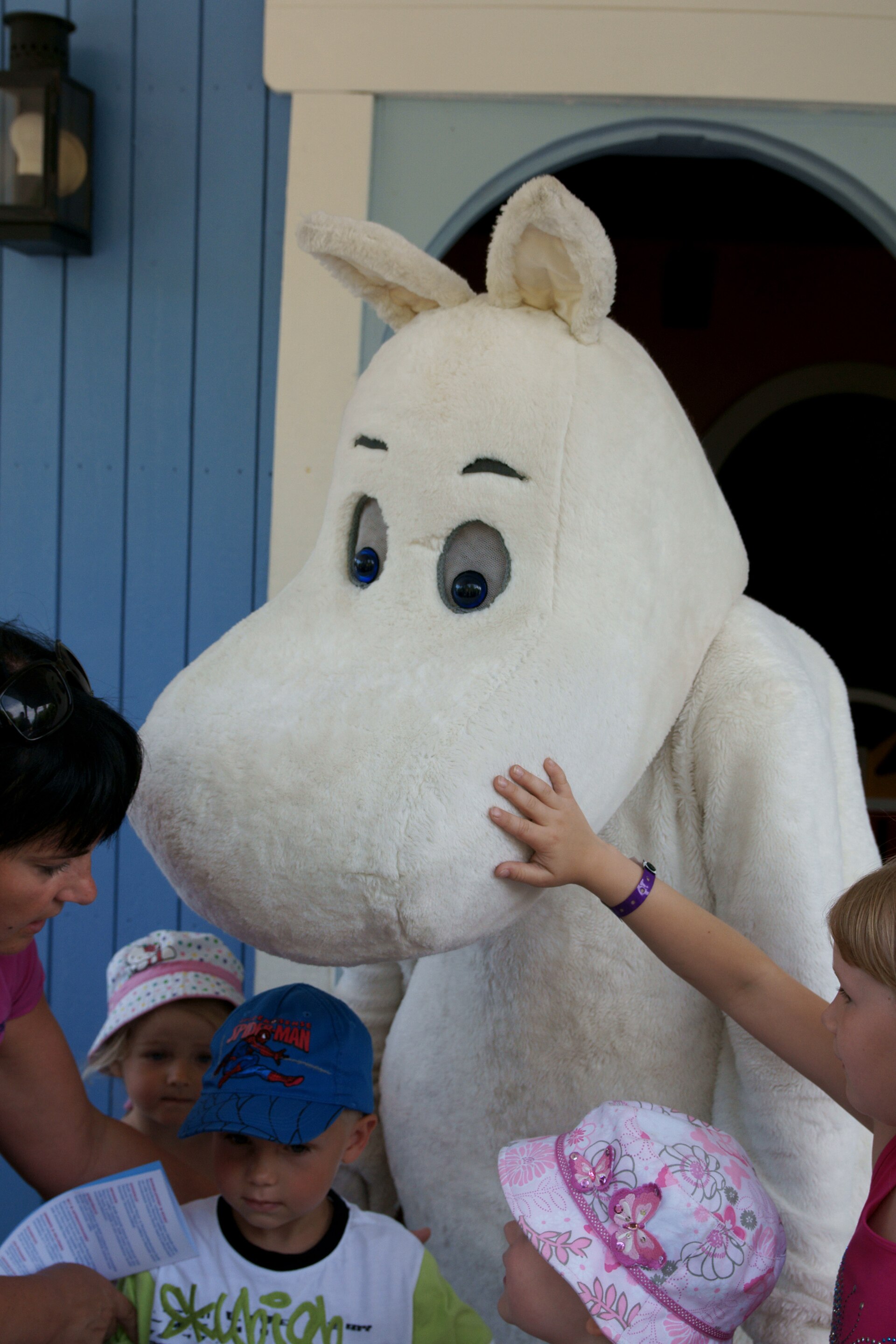
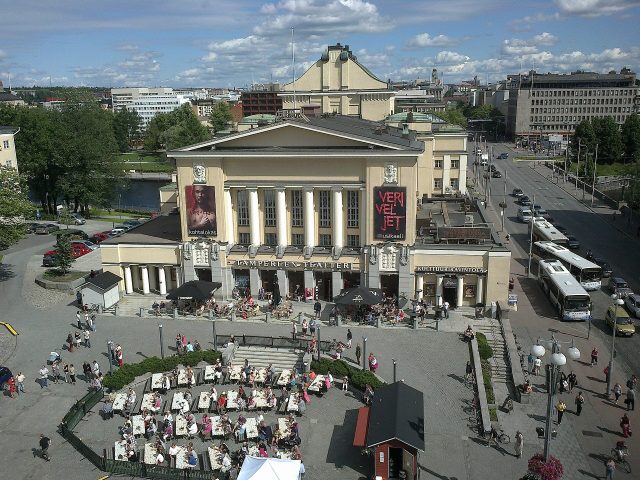
Tampere’s Moomin Museum is one of those rare places where childhood memories and quiet wonder seem to linger in the air. Tucked away in the city’s cultural heart, inside the Tampere Hall, it feels less like a traditional museum and more like stepping into the pages of Tove Jansson’s stories. The space is small but immersive, designed to draw visitors into the gentle, slightly melancholic world of the Moomins—a world where the ordinary and the magical coexist without fuss.
The museum’s origins trace back to the 1980s, when Jansson herself was involved in shaping its early concept. She wasn’t just the creator of the Moomin tales but a deeply private person who valued authenticity over spectacle. That spirit still guides the museum today. There are no flashy rides or loud interactive screens; instead, the exhibits unfold like a storybook, with original illustrations, handwritten notes, and delicate models of Moominvalley. The centerpiece is the blue five-story Moominhouse, a meticulously crafted miniature that feels alive with possibility. It’s the kind of place where adults find themselves leaning in just as closely as children, rediscovering something they might have forgotten.
What makes the museum special is how it balances nostalgia with quiet discovery. The exhibits don’t just showcase Jansson’s work—they reveal the layers beneath it. Her illustrations, often dismissed as simple or childish, carry a subtle depth. The Moomins themselves are creatures of contradictions: they crave adventure but fear the unknown, they love company but need solitude, they build homes that are both sturdy and fragile. The museum captures this duality, presenting the stories as something more than fairy tales. They’re meditations on family, fear, and the small joys of everyday life, themes that resonate far beyond Finland’s borders.
The space is intimate, almost like visiting someone’s home. The lighting is soft, the colors muted—blues, greys, and whites that evoke the Nordic landscape. There’s a sense of stillness here, as if the museum is holding its breath, waiting for visitors to slow down and notice the details. The original sketches, displayed in glass cases, show Jansson’s process: the way she refined a character’s expression with a single stroke, or how a landscape evolved from a rough pencil sketch to a finished watercolor. These aren’t just drafts; they’re fragments of a life spent observing the world with curiosity and care.
One of the most striking things about the museum is how it reflects Jansson’s own relationship with Finland. Born in Helsinki in 1914, she grew up in an artistic family—her father was a sculptor, her mother an illustrator—and spent summers on the remote island of Pellinge, where the sea and the sky blurred into endless horizons. Those landscapes seeped into her work, shaping the misty forests and stormy seas of Moominvalley. The museum doesn’t shy away from this connection. A section is dedicated to her life, with photographs of her as a young woman, her studio in Helsinki, and the tiny island cottage where she wrote some of her most famous stories. It’s a reminder that the Moomins weren’t just products of imagination; they were born from a very real, very Finnish sense of place.
The museum also doesn’t ignore the darker edges of Jansson’s work. While the Moomins are often seen as cheerful, her stories could be surprisingly somber. The museum includes excerpts from her later books, where the tone shifts—less whimsy, more introspection. Characters grapple with loneliness, change, and the passage of time. These themes are woven into the exhibits, not as afterthoughts but as essential parts of the narrative. It’s a side of the Moomins that many visitors, especially those who grew up with the animated series, might not expect. But it’s what gives the stories their lasting power.
For many Finns, the Moomin Museum is more than a tourist attraction; it’s a cultural touchstone. The Moomins are deeply embedded in Finland’s identity, a symbol of the country’s love for nature, simplicity, and understated humor. The museum doesn’t try to explain this connection—it simply lets it exist, in the quiet hum of visitors speaking in hushed tones, in the way children point at the Moominhouse with wide eyes, in the occasional laughter that breaks the stillness. It’s a place where different generations meet, where parents share stories with their kids, and where strangers bond over a shared love for a family of fictional creatures.
The museum’s location in Tampere adds another layer to its charm. The city itself has a quiet, unassuming character—industrial in parts, with red-brick factories turned into cultural spaces, but also green and lakeside, with parks that feel like extensions of the surrounding forests. The Moomin Museum fits right in, neither grand nor ostentatious, but deeply rooted in its surroundings. It’s the kind of place you might stumble upon by accident, or seek out after years of hearing about it, and find that it exceeds expectations not because it’s bigger or louder, but because it feels true to itself.
Visiting the Moomin Museum isn’t about ticking off a bucket list or snapping the perfect photo. It’s about slowing down, stepping into a world that feels both familiar and strange, and letting the stories unfold at their own pace. Whether you’re a lifelong fan or someone who’s only vaguely heard of the Moomins, the museum offers something rare: a chance to reconnect with the quiet magic of childhood, not through nostalgia alone, but through the quiet, enduring power of a story well told.