The Teatro Recreativo in Penonomé is one of those places that quietly holds more than just the history of a town—it carries the spirit of an era when culture was woven into everyday life. Built in the early 20th century, the theater witnessed the transformations of Panama, from its colonial past to the rapid changes of a young republic. Though not the grandest building in the country, it has a presence that lingers, its modest yet striking facade blending neoclassical design with local influences. There’s something unmistakable about it, a quiet dignity that sets it apart from the rest of the town’s architecture.
Inside, the theater still echoes with the grandeur of its past. The auditorium, though not vast, has remarkable acoustics, allowing music and voices to fill the space without distortion. Wooden balconies curve gently overhead, their details softened by time, while the ceiling’s delicate plasterwork and the warm glow of chandeliers create an atmosphere that feels both intimate and grand. This was never just a place for performances—it hosted political debates, community gatherings, and celebrations, a meeting point for people of all ages and backgrounds united by a shared love of art.
Penonomé, though far from the capital, has always been a town with deep cultural roots. In the early 1900s, it flourished as trade and agriculture boomed, and the Teatro Recreativo became a symbol of that growth. Its opening was a milestone not just for the town but for the entire Coclé province. At the time, Panama was still shaping its national identity, and places like this theater played a crucial role. They weren’t just venues for classical works; they gave voice to local poets, musicians, and playwrights finding their place in the world.
Like many historic theaters, the Teatro Recreativo has seen its share of neglect and revival. By the mid-20th century, as cinema and television drew audiences away from live performances, the building fell into disrepair. For years, it served as storage, an office, or stood empty, slowly deteriorating. But in recent decades, attitudes toward cultural heritage have shifted. Local authorities and enthusiasts recognized the theater’s value—not just as a structure, but as a living piece of history. Restoration efforts began, and today, the Teatro Recreativo is once again open to the public, though performances are sporadic.
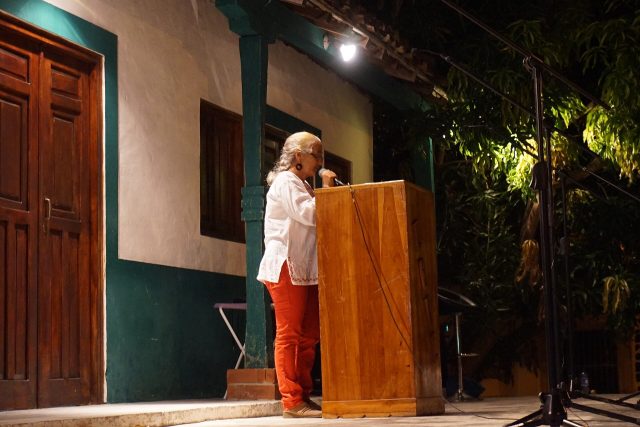
Visiting the theater is often a matter of timing—catching a touring act, a local festival, or one of the occasional lectures held within its walls. Yet even when the stage is dark, the space feels alive. The walls seem to remember every note played, every laugh from the audience, every hush before the curtain rose. For those interested in Panama’s history, the theater offers more than a glimpse into the past; it’s a place where the past feels tangible, almost within reach.
Penonomé itself moves at a different pace than the capital. There’s no rush here, no relentless energy—just a quiet rhythm where tradition and modernity coexist. The Teatro Recreativo fits perfectly into this unhurried way of life. It doesn’t try to be flashy or trendy; its charm lies in its authenticity. There’s no pretension, no grandiosity, just the quiet confidence of a place that has seen generations come and go.
If you find yourself in Penonomé, it’s worth stepping inside, even if nothing is happening that day. The building itself tells a story—one that doesn’t need a performance to be heard. You can walk through the auditorium, run your fingers along the worn wooden railings of the balcony, and imagine the hands that have done the same over the decades. In moments like these, the connection between past and present feels almost tangible. The Teatro Recreativo isn’t just a landmark; it’s a living piece of history, one that endures as long as there are people who care to remember.