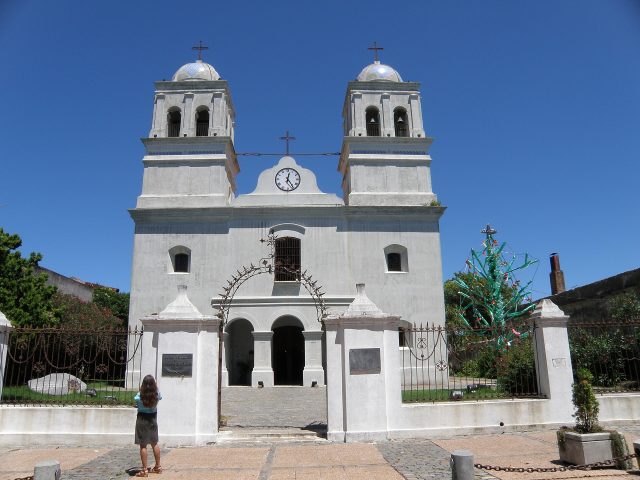
The Politeama Theatre in Chuy stands as a silent narrator of the town’s past. Built in the early twentieth century, it has seen Chuy evolve—a border town where Uruguayan and Brazilian cultures merge. The town sits where roads from Montevideo meet those stretching into Brazil. The border here blurs, blending two worlds instead of separating them. The Politeama made this duality real: plays in Spanish and Portuguese, films, concerts, and gatherings turned it into more than just a building.
The Politeama’s architecture follows the modest yet elegant style of small Uruguayan theatres from its time. Its facade, though small, shows the clean lines and careful details of neoclassical design. Inside, the layout balances capacity and comfort. Stalls, balconies, and boxes create an intimate feel. When such venues were rare, they became social hubs, and the Politeama was one of them.
The theatre’s history mirrors Chuy’s. In the early 1900s, the town thrived as a trading post, drawing travelers, merchants, and performers moving between Brazil and Uruguay. The Politeama offered them rest, entertainment, and a sense of belonging. The hall filled with music, drama, and silent films played with live orchestras—moments that let people step away from daily life. Renovations came, but the theatre’s core stayed the same: a place where art and life met.
Today, the Politeama still opens its doors, though less often than before. It hosts plays, local concerts, film screenings, and festivals. The auditorium keeps its old charm: high ceilings, moldings, and vintage chandeliers that seem to remember past audiences. Modern sound and lighting systems exist, but they haven’t erased the theatre’s history. For locals, the Politeama is more than a building. It’s where they marked milestones, felt first loves, and celebrated New Year’s Eve.
Chuy isn’t like Montevideo or Punta del Este. It’s quieter, less polished. The Politeama fits this—proud but unassuming, holding its history without being stuck in it. Walk through Chuy’s streets, and you can almost hear footsteps rushing to a show, voices mixing Portuguese and Spanish, the theatre as the town’s heart.
People now seek places like the Politeama. They want more than entertainment; they want connection, a past that feels alive. The theatre delivers this. Emotions linger here. Music plays. Visitors sit where performers once stood. The Politeama makes the past feel present.
In Chuy, the theatre might surprise you. The town lacks grand landmarks, but it has places with quiet charm. The Politeama is one. It asks little—just curiosity. Spend an hour inside, or catch a performance if you’re lucky. Either way, it leaves you with the sense of touching something real.
Chuy and its theatre show that history isn’t only made in capitals. Sometimes, it happens at the edges, where worlds meet. The Politeama isn’t just a theatre. It’s proof that art and life can coexist without losing what makes them true. There’s no luxury here, but there’s something rarer: memory, atmosphere, the spirit of a place that refuses to disappear.