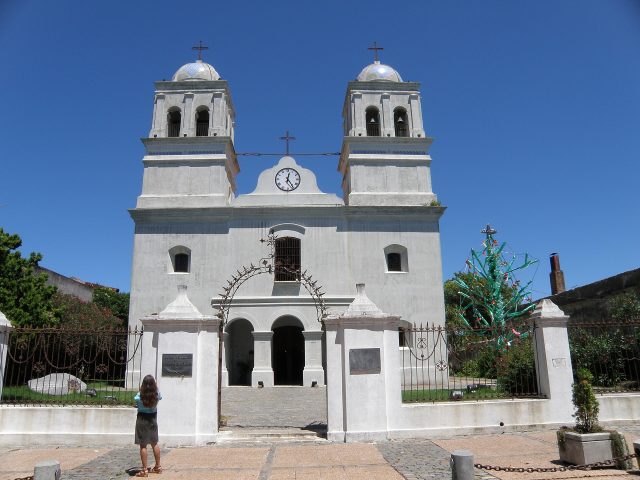
The Indigenous Culture Museum in Chuy is one of those rare places where history doesn’t just sit behind glass—it feels alive, almost as if the past is breathing through every object on display. Chuy itself is an unusual town, straddling the border between Uruguay and Brazil, where languages, currencies, and traditions blend seamlessly. The streets here tell a story of how thin the line between two countries can be. Yet in this unassuming border town, a piece of the region’s original heritage has been preserved, a reminder of the people who lived here long before European settlers arrived.
The museum is small, but its collection is thoughtfully arranged to give visitors a sense of the daily lives and beliefs of the indigenous groups that once inhabited what is now Uruguay. The exhibits include everyday tools, ceremonial objects, and intricate jewelry, each offering a glimpse into the world of the Charrúa, Chaná, and Guaraní peoples. The pottery is particularly striking—from simple utilitarian vessels to delicately crafted figurines—showing the skill of ancient artisans. Some of these pieces date back centuries, and their preservation speaks to the care taken to keep this history intact.
The museum’s own story is intertwined with Chuy’s past. The town has always been a crossroads, a place where traders, explorers, and curious travelers have left their mark. The idea for the museum took shape in the mid-20th century, when it became clear that the memory of indigenous cultures was fading. Local enthusiasts began gathering artifacts found in excavations or donated by nearby villagers. Over time, the collection grew large enough to warrant its own space, and the museum eventually found a permanent home in a historic building that suits its purpose perfectly.
The building itself is worth noting. It’s not a modern structure but an old house typical of southern Uruguay, with thick clay-and-stone walls, wooden beams, and narrow windows. The architecture alone transports visitors to another era. Inside, the space is divided into themed rooms—one for daily life, another for crafts, another for spiritual traditions. The exhibits aren’t arranged chronologically but rather in a way that lets visitors see the culture as a whole, not just as isolated fragments. This approach makes the experience feel more immersive, as if the objects are still part of a living tradition.
One of the most compelling parts of the museum is the reconstruction of an indigenous settlement. Here, you can see what Charrúa dwellings looked like—simple huts made of branches and animal hides, designed to be easily dismantled and moved. Nearby, tools for hunting and fishing are displayed: spears, bows, nets, and traps. These aren’t just relics; they tell a story of a people whose lives were deeply connected to the land. For the indigenous groups of this region, the earth wasn’t something to be owned—it was an extension of themselves, and that relationship is evident in every artifact.
The museum isn’t just about static displays. Occasionally, it hosts workshops where visitors can try their hand at traditional crafts like basket weaving, pottery, or wood painting. The instructors are often local artisans, some of whom have indigenous ancestry, and they share their knowledge with anyone interested in learning. These sessions attract both tourists and locals, especially children, who get to experience history firsthand rather than just reading about it in books.
What makes this museum particularly meaningful is its role in preserving the memory of peoples who were nearly erased by colonization. The Charrúa, for example, were known for their fierce resistance to Spanish rule, but by the 19th century, their numbers had dwindled to almost nothing. Today, descendants of indigenous groups make up a small fraction of Uruguay’s population, and museums like this one play a crucial part in keeping their heritage alive.
A visit here leaves you with mixed emotions. There’s pride in seeing how much has been saved, but also sadness for what was lost. Yet that’s precisely why places like this matter—they remind us that history isn’t just about dates and names. It lives in the objects we hold, the skills we pass down, and the stories we tell. In Chuy, where the past and present exist side by side, the Indigenous Culture Museum serves as a bridge between two worlds: the one that was and the one that remains.