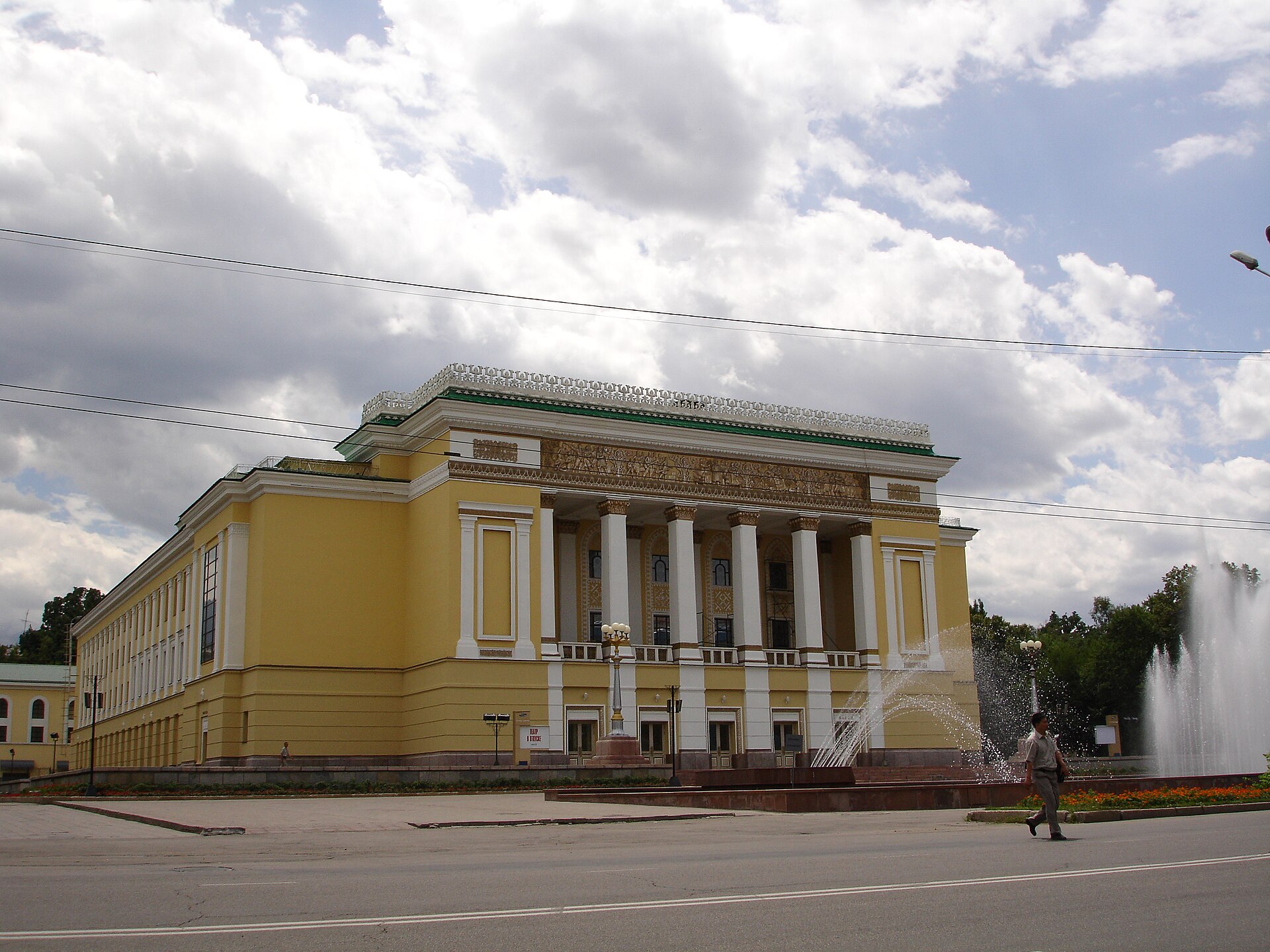
The Abai Opera and Ballet Theatre is one of those places in Almaty that doesn’t reveal itself at first glance. Tucked away from the city’s bustling avenues and modern shopping centers, it stands as a quiet monument to something deeper—an elegance that feels both timeless and distinctly Kazakh. Its white façade, framed by columns and sculptural figures, catches the eye from a distance, but the real impression comes when you step closer. Here, the city’s hurried rhythm slows, and the building’s grandeur becomes impossible to ignore.
The theatre’s story began in the 1930s, when Almaty was still the young capital of the Kazakh SSR. The era was one of ambitious construction, and culture was a key part of shaping the city’s new identity. The opera house was conceived not just as a venue for entertainment but as a symbol of progress, a place where art could unite and inspire. Completed in 1941, the building was designed by architects N. A. Prostakov and T. K. Basenov, blending classical European forms with Kazakh decorative motifs. The result is a structure that feels both familiar and unique—its portico and columns evoke the grandeur of old-world opera houses, while the intricate carvings and national patterns ground it in local tradition.
Inside, the theatre is just as striking. The auditorium, with its warm wood paneling and gilded accents, seats around fifteen hundred people, and the massive chandelier overhead could belong to any of the great European opera houses. Every detail, from the acoustics to the shape of the seats, is designed to draw the audience into the performance. The foyer retains much of its original charm, with mosaic panels and plasterwork that transport visitors back to the mid-20th century. When the orchestra begins to play or the dancers take the stage, the space seems to come alive, as if the walls themselves are breathing in time with the music.
For over eighty years, the Abai Theatre has been more than just a building—it’s a living part of Almaty’s cultural heartbeat. Its repertoire balances the classics—Tchaikovsky, Verdi, and the like—with works by contemporary Kazakh composers. Some productions, like Yevgeny Brusilovsky’s opera *Kyz Zhibek* or the ballet *Karagoz* set to Gaziza Zhubanova’s music, have become defining pieces of Kazakh musical theatre. The theatre doesn’t just preserve tradition; it also experiments, pushing boundaries while still drawing full houses for its most beloved performances.
To many locals, the theatre is more than a place to see a show—it’s woven into personal memories. Some first visited as children, wide-eyed at the towering Christmas tree and the magic of a holiday matinee. Others came for a school graduation or a first date, and now, years later, the sight of the building brings those moments rushing back. Over the decades, the theatre has hosted countless events: performances by legendary artists, festivals, and even political gatherings during the Soviet era. Even now, in a city full of new distractions, it remains a place where people seek something more than entertainment—a connection to something enduring.
The architecture of the theatre is worth noting on its own. It sits at the intersection of two central streets, yet it feels set apart, as if it exists in its own world. The white stone and columns stand out against the green foothills of the surrounding mountains, and at night, when the lights come on, the building seems to float above the street. A small park surrounds it, a quiet spot where locals often linger in warmer months. Whether it’s to sit on a bench, listen to the faint strains of music drifting from the open windows, or simply admire the building’s timeless beauty, the space invites reflection.
The theatre also serves as a bridge between generations. For older Almaty residents, it’s tied to memories of youth, of first encounters with opera, of a time when art was an essential part of life. For younger visitors, it’s a chance to engage with tradition, to understand why classical music and ballet still matter. You’ll often see school groups on tours, music students attending masterclasses, or simply people who come not for distraction but for something deeper. It’s a place where the past and present coexist, where the weight of history feels alive.
In recent years, the theatre has expanded its role, trying to stay relevant in a changing world. Alongside its regular performances, it now hosts symphony concerts, jazz nights, and lectures on classical art. The foyer occasionally features exhibitions on the theatre’s history or the work of contemporary artists. These efforts make it more than just a cultural institution—they turn it into a space where art engages in an ongoing conversation with the city and its people.
Visiting the Abai Opera and Ballet Theatre is a ritual in itself. There’s a sense of occasion to it: dressing a little more formally, arriving early to wander the foyer, flipping through a program to prepare for the evening. When the lights dim and the curtain rises, everything else fades away. For a few hours, the auditorium, the stage, and the music become their own world, governed by their own rules. Even if you’re not an opera aficionado or a ballet expert, there’s something undeniable about the experience—the way art can make you see the world differently, hear things you might have missed, and perhaps even discover something unexpected in yourself.