Gorky Central Park is where the city’s noise softens into the rustle of old trees. Opened in the 1930s, when Almaty was Alma-Ata and Kazakhstan part of the Soviet Union, it was built as a cultural hub—a place to escape daily life without leaving the city. Back then, parks like this were stages for music, theater, and dance. Locals came to unwind with a book, catch a concert, or sit and watch the world go by. Every path and bench was arranged to offer respite.
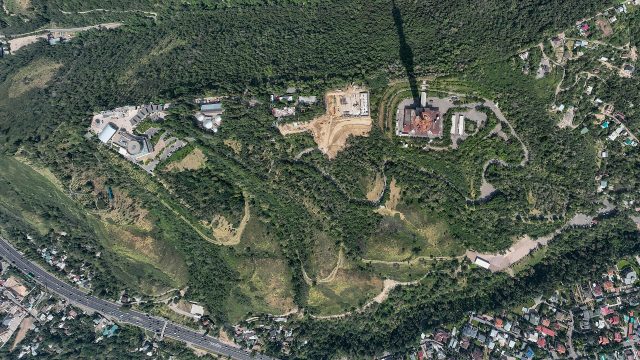
The park covers dozens of hectares. Wide walkways lead to fountains that once shot water high into the air on holidays. Now they flow gently, offering a cool mist in summer. At its heart is a large pond where you can rent a rowboat or sit by the water, watching ducks glide across. Weeping willows dip their branches into the pond, creating pockets of shade. The layout feels deliberate—every tree and bench placed with care, inviting you to slow down.
The architecture is simple. Low-slung pavilions in Soviet modernist style line the paths—clean lines, large windows, built for function. Some once housed reading rooms or concert stages. Today, they’re cafes, small galleries, or quiet spots to rest. Time has worn them down, but the ones left stand in harmony with the greenery.
The open-air summer theater is one of the park’s most enduring features. A wooden stage surrounded by benches, it hosts jazz, classical music, or local acts in warmer months. In winter, it falls silent, benches dusted with snow, waiting for the next season. Nearby, Soviet-era monuments dot the park—a bust of Maxim Gorky near the entrance, sculptures of workers, athletes, children.
The park has seen renovations, but its essence hasn’t changed. People of all ages gather here: young couples stroll, children play, older visitors sit on benches, playing chess or chatting. In summer, vintage carousels and roller coasters draw crowds. In winter, trees are strung with lights, and the pond becomes an ice rink, gleaming under floodlights.
What makes Gorky Park special? It doesn’t try to be trendy. It simply exists—like the old trees, the weathered benches, the fountains that have been here for generations. For many in Almaty, it’s a place to reconnect with something timeless: community, history, nature in the city. The park doesn’t demand attention. It invites you to notice the small things—the way sunlight filters through leaves, laughter from the playground, the scent of freshly cut grass.
Walking through Gorky Park feels like stepping into the city’s past. Faded posters on bulletin boards, cracks in the pavement, old photographs near the entrance—all tell a story. The park feels organic, shaped by the people who have walked its paths over the years. It doesn’t need to impress. It offers a space to breathe, move, or sit quietly by the water. Whether you come for concerts, boat rides, or a moment of peace, the park meets you where you are.
Today, Gorky Park is both a retreat and part of Almaty’s cultural fabric. It has weathered political shifts and time, yet remains what it was always meant to be: a green oasis in the city. It’s never overcrowded, never empty. The park has its own rhythm, steady and unhurried. Maybe that’s why people keep coming back—not for spectacle, but for the quiet assurance that some things endure. In a city that’s always changing, Gorky Park offers continuity.