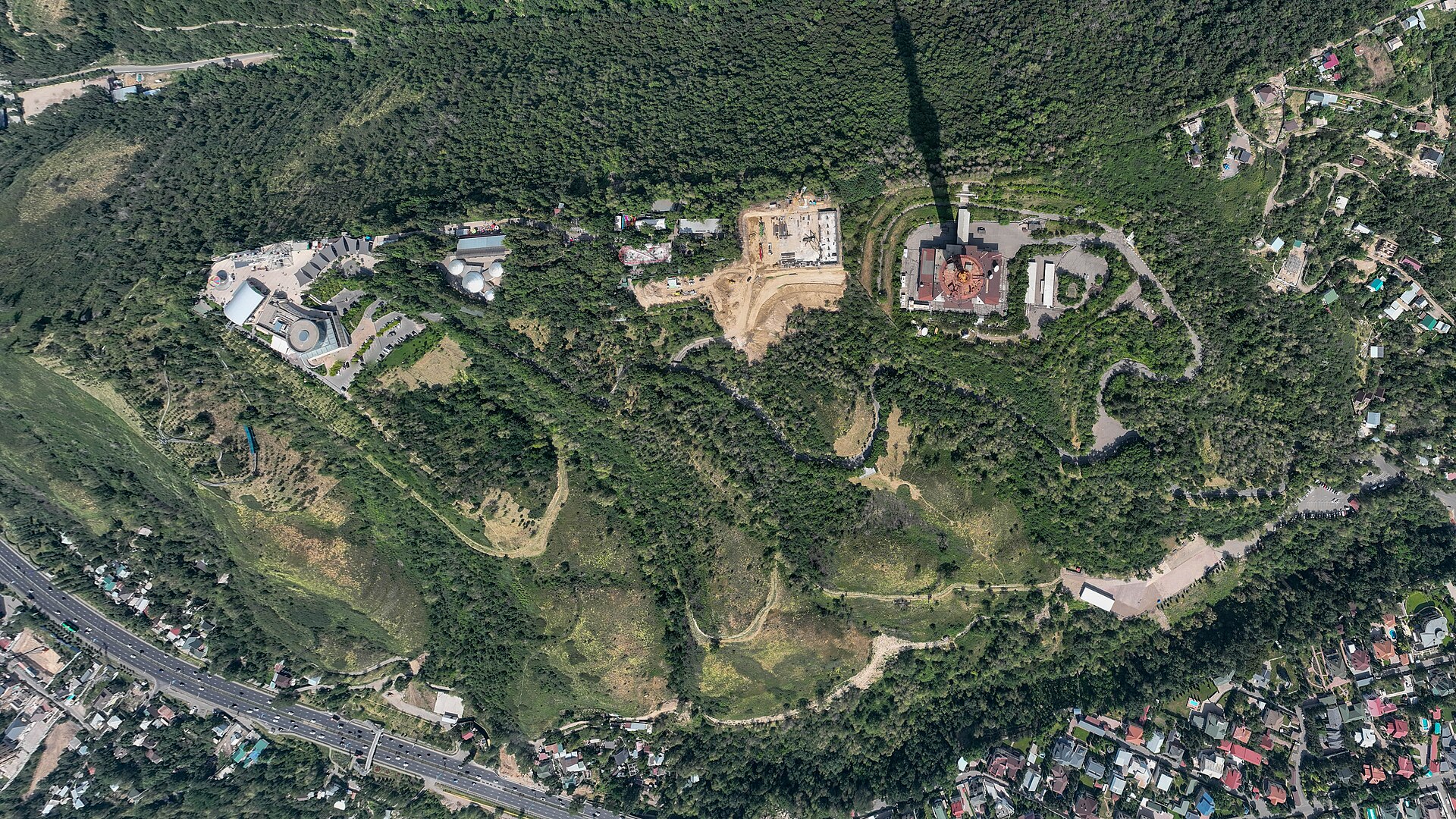
Kok-Tobe isn’t just a hill on the edge of Almaty—it’s where the city reveals itself in a way you don’t expect. From the top, you see how the green of parks and boulevards blends into the dense urban sprawl, and beyond that, the snow-capped peaks of the Zailiysky Alatau rise like a painting on the horizon. The name means Green Hill, and while today it’s more about attractions and cafes than untouched nature, the spirit of the place hasn’t faded. It’s one of those spots where people come not just for the sights, but for the feeling—like standing at the border between the city and the mountains, between movement and stillness.
The history of Kok-Tobe is woven into Almaty’s own story. During Soviet times, the hill was a favorite retreat for locals, who would hike up or take buses to picnic or simply soak in the views. In the 1960s, a cable car was built, connecting the summit to the city center, and since then, Kok-Tobe has been one of the city’s best vantage points. Today, the cable car still runs, though many prefer to drive or take a taxi up the winding road, where the view from the window alone can take your breath away.
The architecture here isn’t grand like in the historic center, but it’s not entirely ordinary either. At the top stands a small clock tower, a nod to London’s Big Ben, built in the 1990s when eclectic touches were in vogue. Nearby, a bronze statue of The Beatles sits on a bench, a quirky addition from the 2000s that draws constant crowds for photos. There’s also an alley of stars honoring Kazakh celebrities, with handprints embedded in bronze plaques. It all gives the place a slightly theatrical air, as if Kok-Tobe isn’t just a hill but a stage for small, everyday stories.
The real reason people come, though, is the view. From the observation deck, Almaty sprawls out below, nestled in the foothills. On clear days, you can pick out individual buildings in the center, and if the weather cooperates, the snow-covered peaks loom in the distance. At night, the city lights up, turning Kok-Tobe into one of the most romantic spots around. Families often visit with kids—the summit has a small amusement park with a Ferris wheel, a funhouse, and even a mini-zoo. For adults, there are cafes and restaurants where you can sit with coffee or wine, watching the city from above.
Kok-Tobe changes with the seasons. In summer, it’s lively and crowded, with rides spinning, music playing, and the scent of fresh pastries drifting from the cafes. Autumn turns the hill golden, the air sharper, the views crisper. Winter brings sledding and snow-covered paths, while spring covers the slopes in bright green. Each season gives the place its own character, but one thing stays the same: Kok-Tobe always offers a sense of space and freedom.
For locals, the hill is part of daily life. People jog here in the mornings, families stroll on weekends, and young people gather in the evenings to sit on benches and talk. Tourists often see it as a must-visit, but those who linger begin to realize it’s not just about the views or the rides. It’s where you can feel the city’s rhythm, its connection to the mountains and the sky, its mix of calm and energy.
Kok-Tobe isn’t Almaty’s most majestic or historically significant spot. It’s more like a point on the map where the city meets nature, and people meet memories. Some come for the first time to take a pretty photo, while others return again and again because it’s easy to forget the hustle here and just enjoy the moment. That’s its real value—not in monuments or attractions, but in the atmosphere the place itself creates.