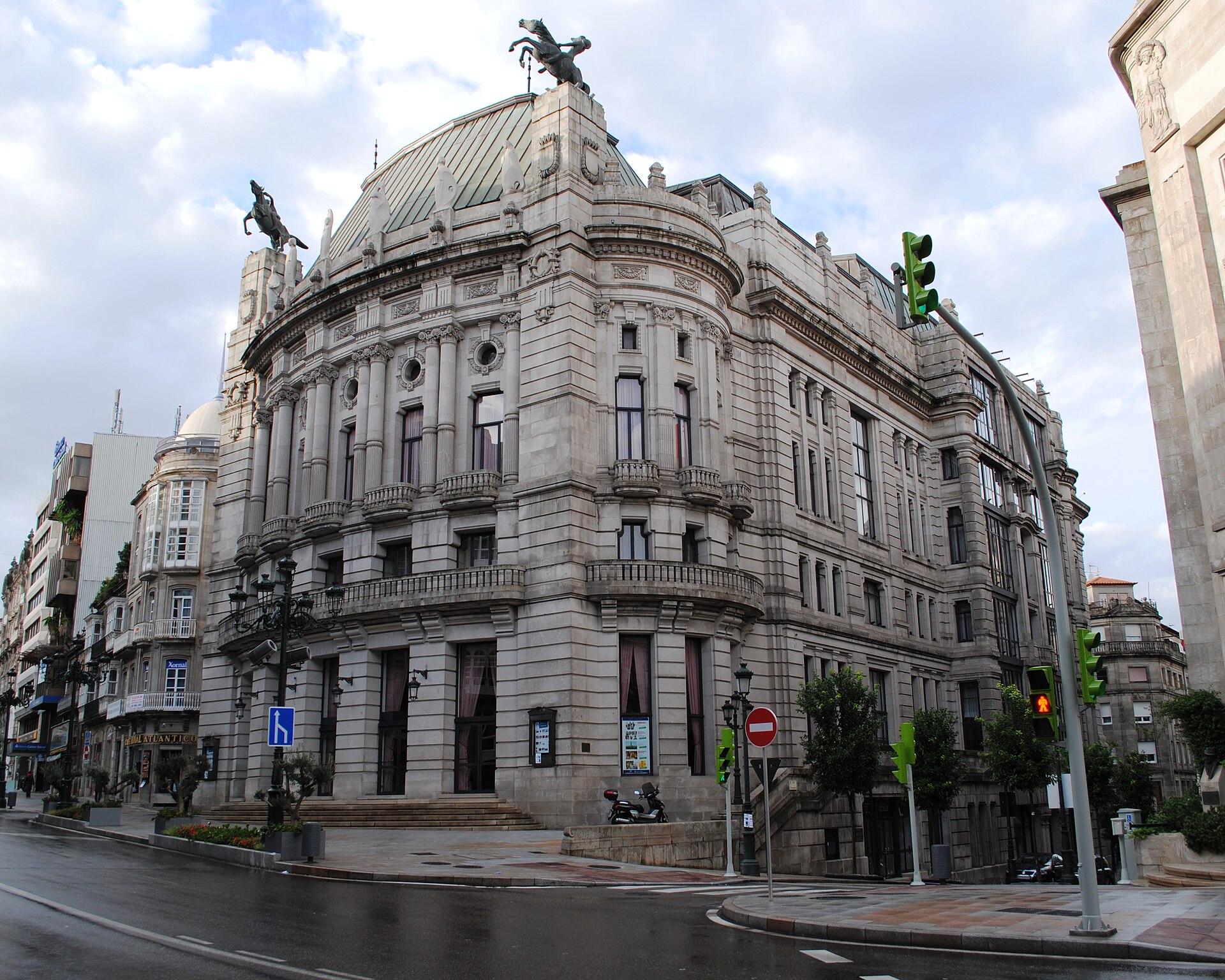
The García Barbón Theatre in Vigo is one of those rare places where time seems to stand still, preserving the spirit of a bygone era. Built at the dawn of the twentieth century, it isn’t just a building—it’s a living symbol of the city’s cultural life, where art once intersected with everyday existence in a way that felt almost ceremonial. The architecture itself tells a story: ornate facades, intricate plasterwork, soaring ceilings, and graceful balconies all evoke an age when attending the theatre was an event, a reason to dress in your finest and gather with others in anticipation.
The theatre owes its existence to José García Barbón, a local philanthropist whose vision was to give Vigo a cultural space worthy of comparison with Europe’s grandest venues. He entrusted the project to architect Miguel de la Torre, who drew inspiration from the opulent theatres of Paris and Vienna. The result was more than just a performance hall—it became an architectural landmark, its elegance turning heads as people passed by. Even today, the building stands as a testament to the ambition of its creators, a reminder of a time when culture was both a luxury and a necessity.
Step inside, and the grandeur continues. The auditorium, with its plush red velvet seats, gilded details, and a massive crystal chandelier, exudes an air of old-world sophistication. Every element—from the acoustics to the lighting, even the arrangement of the balconies—was designed to draw the audience into the performance. The foyer, with its original mosaic floors and delicate stucco work, feels like a portal to the early 1900s, when the theatre first opened its doors. It’s easy to imagine the excitement of those early visitors, stepping into a space that must have felt like a palace of dreams.
Like many historic venues, the García Barbón Theatre has weathered its share of challenges. By the mid-twentieth century, it had fallen into disrepair, a fate common to many cultural institutions of its time. But in the 1990s, a careful restoration brought it back to life, preserving its original charm while ensuring it could meet the demands of modern audiences. Today, the theatre is far more than a relic—it’s a vibrant part of Vigo’s cultural scene, hosting everything from classical plays and operas to concerts, film screenings, and festivals. It adapts without losing its essence, offering something for every taste.
For locals, the theatre is woven into the fabric of their lives. Many remember visiting as children, whether for holiday performances or school productions, and later returning as adults to share the experience with their own families. It’s a place where traditions are kept alive, not as museum pieces, but as living, evolving parts of the city’s identity. The programming reflects this balance—classic works sit alongside contemporary experiments, ensuring that each generation finds something to connect with.
Vigo may not have the same fame as Spain’s more tourist-heavy destinations, but places like the García Barbón Theatre give it a character all its own. This isn’t just a stop on a sightseeing itinerary; it’s a place where you can feel the pulse of real city life. The streets around the theatre hum with energy—cafés spill onto sidewalks, shops display their wares, and the nearby waterfront adds a touch of maritime charm. It’s easy to picture the scene a century ago: the same facades, the same murmur of conversation, the same sense of anticipation as the lights dimmed and the curtain rose.
What makes the García Barbón Theatre special isn’t just its beauty or its history, but the way it continues to matter. It’s a monument to the people who built it, the artists who performed there, and the audiences who filled its seats decade after decade. Today, it remains a gathering place, a stage for stories told through music, drama, and art. And perhaps that’s why it endures—not just as a building, but as a beloved part of Vigo’s soul. Whether you come for a performance, a tour, or simply to admire the architecture, the theatre offers a quiet reminder of how culture can shape a city, one act at a time.