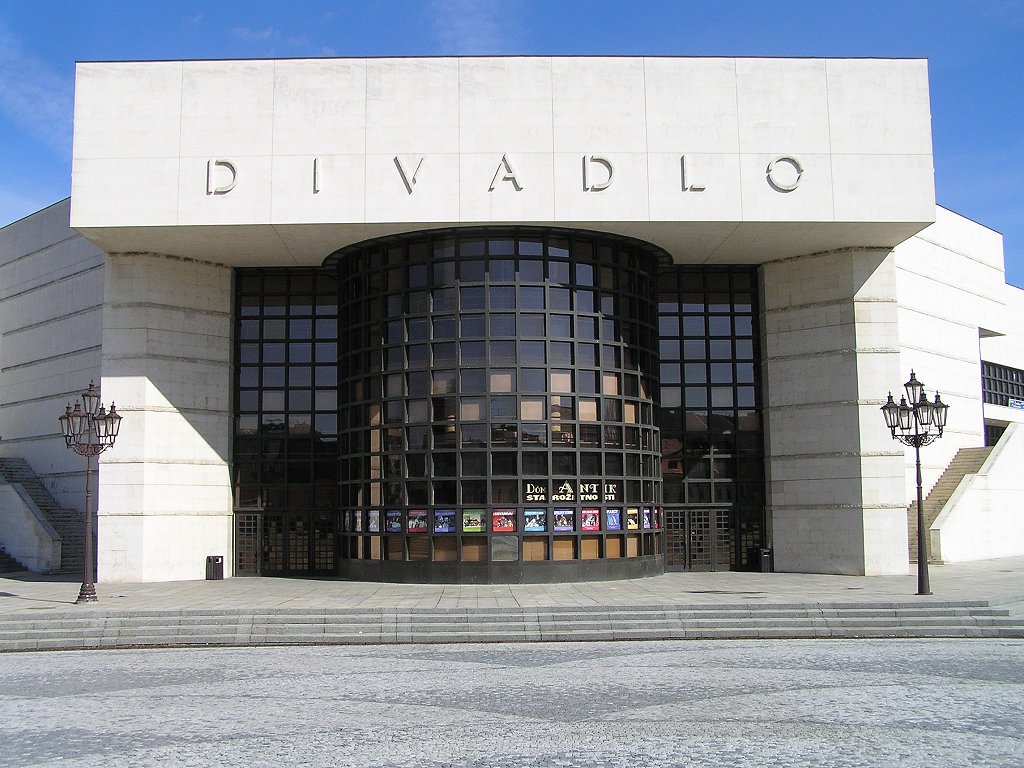
Nitra is a city where history and modernity intertwine at every turn, and the Andrej Bagar Theatre stands as more than just a cultural landmark—it’s a living testament to how art can shape a place. Named after one of Slovakia’s most influential actors and directors of the 20th century, the theatre embodies the spirit of a nation’s creative revival. Built in the mid-20th century, when Slovakia was rebuilding its cultural identity after the devastation of World War II, the theatre became a symbol of renewal. It wasn’t just a stage for performances but a space where new traditions took root and bold experiments flourished, reflecting the optimism of an era determined to reclaim its voice.
The building itself is a quiet dialogue between form and function, a hallmark of the modernist style that defined public architecture in postwar Slovakia. Its clean lines and understated elegance give it a timeless quality, while large windows flood the interior with natural light, creating an inviting atmosphere. The grand foyer, with its high ceilings and marble staircases, still carries the echoes of the intellectuals and artists who once gathered here. Inside, the theatre retains the charm of its era—ornate chandeliers cast a warm glow over the auditorium, heavy velvet curtains frame the stage, and the faint rustle of programs before a show begins feels like a ritual passed down through generations.
For decades, the Andrej Bagar Theatre has been more than a venue; it has been a cornerstone of Slovak dramatic art. During the Soviet era, it became a vital platform for both classical and contemporary works, showcasing the talents of directors whose names would later resonate beyond Slovakia’s borders. The theatre embraced experimentation, staging everything from adaptations of Slovak literature to avant-garde productions that sparked debate and divided audiences. Even after Slovakia gained independence, the theatre continued to evolve, adapting to new artistic trends while staying true to its mission of pushing boundaries.
Today, the theatre’s repertoire remains as diverse as ever. Audiences can enjoy timeless classics by Chekhov or Shakespeare alongside modern works by Slovak playwrights, as well as musical performances that blend tradition with innovation. A special emphasis is placed on engaging younger audiences—school groups are frequently invited to matinees, and the theatre works to cultivate a new generation of theatregoers. Each season brings fresh surprises, whether it’s a revival of a forgotten play or a premiere that captures the attention of the entire country.
Andrej Bagar, the man after whom the theatre is named, was a towering figure in Slovak culture. Born in the early 20th century, he rose from humble beginnings to become one of the most revered actors of his time, known for his masterful interpretations of classic roles. But he was more than just an actor—he was a director, a teacher, and a mentor who inspired those around him. His legacy is woven into the very fabric of the theatre, a reminder that art should be bold, inclusive, and unafraid to challenge conventions.
Visiting the theatre offers more than just the chance to see a performance. Guided tours take visitors behind the scenes, revealing the intricate workings of a theatrical production—from the mechanics of stage design to the stories behind historic costumes and sets. For many, it’s a revelation: the theatre transforms from a mere building into a living organism, where every detail, from the dressing rooms to the rehearsal spaces, has its own narrative. First-time visitors often find themselves captivated by the sense of mystery and creativity that permeates the space, as if the walls themselves hold secrets from past performances.
Nitra may be a small city, but its cultural scene is vibrant, and the Andrej Bagar Theatre is at its heart. It hosts touring companies, participates in international festivals, and draws art lovers from across Slovakia. In the summer, performances spill into the streets, turning public spaces into open-air stages, while in winter, the theatre becomes a warm refuge from the cold, offering not just shelter but the emotional warmth of shared stories. The building itself seems to breathe with the rhythm of the city, a constant presence in Nitra’s daily life.
What makes the theatre truly special is its ability to make time feel different. An evening spent here is an escape from the rush of the outside world, a chance to lose yourself in the stories unfolding on stage. After the final curtain, the old streets of Nitra invite you to wander, each cobblestone a reminder of the centuries that have shaped this place. The theatre and the city are inseparable, their histories intertwined in a way that gives Nitra its unique character. If you ever find yourself here, take the opportunity to step inside—you might leave with a new understanding of what theatre can be.