Nitra is one of those places travelers often overlook, overshadowed by Bratislava’s charm or the dramatic peaks of the High Tatras. Yet it’s here, on a quiet hill above the old town, that you’ll find St. Emmeram’s Cathedral—a place where Slovakia’s layered history feels almost tangible. This cathedral stands where Nitra was once the heart of Great Moravia, one of Europe’s earliest Slavic states. Today, it remains an active church, drawing the faithful and those curious about Slovak culture’s roots.
The cathedral’s story begins in the 9th century, though its current appearance is the result of centuries of transformation. Originally, it was a modest rotunda commissioned by Prince Pribina, founder of the Nitra Principality. By the 11th century, a Romanesque basilica had replaced it, though only fragments of that structure survive. The most striking part of the cathedral is the 14th-century Gothic Chapel of St. Emmeram, with its slender arches and stained glass. The contrast between the chapel’s lightness and the solidity of the older walls reflects changing tastes and beliefs.
The main nave is adorned with frescoes from different periods, depicting saints’ lives and biblical scenes. The Baroque altar, with its gilded details and angelic figures, catches the light. Beneath the cathedral lies a crypt where the remains of Nitra’s earliest princes rest, including Pribina. It’s a reminder that this city was once a political and religious center shaping Slovak identity.
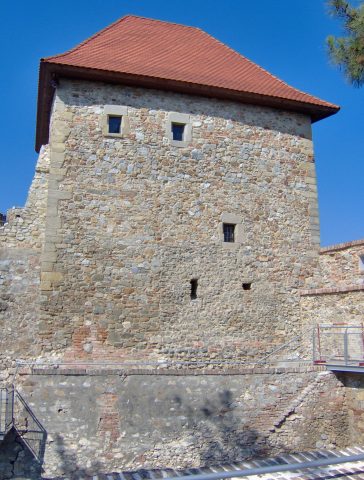
St. Emmeram’s Cathedral is part of Nitra Castle, which once served as a fortress. Today, the castle complex includes medieval walls, the bishop’s palace, and a museum. From the hilltop, the view stretches over the city and the Nitra River valley. On clear days, the horizon seems endless, and you can imagine the generations who stood here before.
The cathedral’s name hasn’t always been St. Emmeram. Originally dedicated to St. Hippolytus, it was rededicated in the 18th century after Empress Maria Theresa’s reforms. St. Emmeram, a Bavarian bishop, became the new patron, reflecting the region’s shifting allegiances. Such changes show how religion, power, and art have always been closely linked here.
The cathedral remains a place of worship, its doors open to visitors. Services, weddings, and baptisms take place here, and on feast days, the organ fills the space. Even on ordinary days, there’s a stillness that invites reflection. This isn’t a place for rushing; it’s somewhere to pause and listen to the echoes of the past.
For those interested in history, the cathedral offers layers of architectural styles—Romanesque columns, Baroque altars, medieval frescoes, and modern restorations. Every stone and painting has its own story. Look closely, and you might spot a faint inscription in Old Church Slavonic on one of the walls, a rare reminder of Nitra’s role in spreading Christianity among the Slavs.
The cathedral is also tied to the legacy of Cyril and Methodius, the Byzantine brothers who brought Christianity and the Slavic script to these lands. The crypt houses an exhibit on their mission, showing how the region’s spiritual culture took shape.
Visiting St. Emmeram’s Cathedral isn’t just about seeing a landmark. There are no crowds, no souvenir stalls, no rushed tours. Just quiet, old stones, and the sense that time moves differently here. That’s why this place feels compelling—it doesn’t demand attention but simply exists, where every stone holds a memory.