Takht-e Soleyman is one of those rare places where history doesn’t just linger in stone—it breathes. Tucked into the mountains of northwestern Iran, near the small town of Takab, this archaeological site was once the sacred heart of the Zoroastrian world. Today, it stands as a quiet witness to the rise and fall of empires, the shift of religions, and the passage of cultures. Though time has worn away much of its grandeur, the moment you climb the hill where it rests, the weight of its past is impossible to ignore.
At the center of Takht-e Soleyman lies an artificial lake, fed by underground springs. The water is startlingly clear, with a faint blue tint that catches the light, and even in the heat of summer, it remains cool. Local stories say the lake never runs dry, and its true depth has never been measured. For Zoroastrians, this was the dwelling place of Ahura Mazda, the supreme deity, and the water was believed to hold healing powers. Later, under the Sassanids, the lake became part of purification rituals, drawing pilgrims to its shores. The ruins around it hint at a once-magnificent temple complex, though now only fragments remain.
The most significant structure was the Fire Temple of Adur Gushnasp, one of the three greatest Zoroastrian fire temples of antiquity. Here, a sacred flame was said to have burned continuously for seven centuries, tended by priests and revered by kings. Sassanid rulers came here before battles to seek divine favor, and after victories, they returned with offerings. The temple wasn’t just a religious site—it was a symbol of imperial power, a place where faith and authority intertwined.
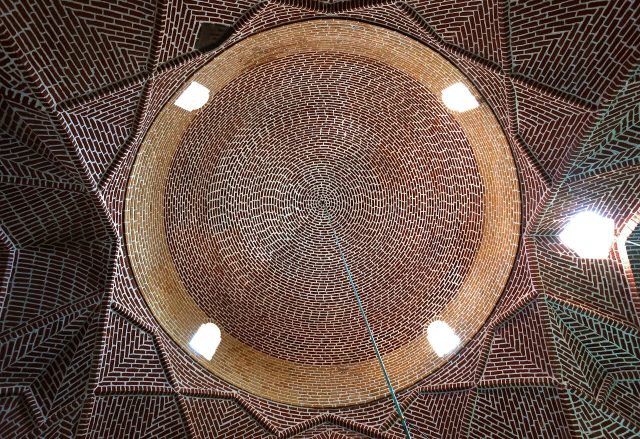
The architecture of Takht-e Soleyman blends strength with elegance. Massive stone walls, built from large blocks, still bear traces of intricate carvings and inscriptions. The gates that once led into the complex were adorned with reliefs, and colonnades framed the inner courtyards. One of the most striking features is the four-arched hall, known as an iwan—a hallmark of Sassanid design that later influenced Islamic architecture. Even in ruin, these structures reveal the skill of the craftsmen who built them, their work enduring long after the empire that commissioned it faded away.
After the fall of the Sassanid Empire, Takht-e Soleyman didn’t lose its significance entirely. During the Mongol period, new buildings rose here, including a palace and a mosque, though little of them remains today. Archaeologists have found evidence of repairs and modifications, suggesting the site was still in use, even if its purpose had changed. Over time, nature reclaimed much of it—grass and shrubs grew over the stones, and the complex slipped into obscurity. Yet its legacy lived on in local stories and historical records, a quiet echo of its former glory.
Today, Takht-e Soleyman is more than just a historical monument—it’s a place where the past feels tangible. Unlike the crowded tourist sites of Persepolis or Isfahan, it remains largely untouched by mass tourism, which only adds to its allure. The silence is broken only by the wind rustling through the grass and the occasional call of shepherds tending their flocks nearby. In the evening, as the sun dips behind the mountains, the stones take on a golden hue, and the lake reflects the last light, creating a sense of peace that lingers long after you leave.
Visiting Takht-e Soleyman isn’t just about walking among ruins—it’s about stepping into history. You can spend hours wandering the remnants of walls, imagining the sound of prayers, the glow of the sacred fire, the solemnity of ancient ceremonies. Each stone holds the memory of those who built, worshipped, and lived here, and that memory makes the place feel alive, despite the centuries that have passed.
For anyone drawn to Iran’s history, Takht-e Soleyman is a must-see. It may not have the fame of Persepolis or the grandeur of Isfahan, but that’s precisely what makes it special. There are no crowds, no pushy guides—just you, the ancient stones, and the wind carrying stories for those willing to listen. This is a place for those who value depth as much as beauty, who see in ruins not just the past, but a connection to something greater.