On the outskirts of Tekab, where the Zagros Mountains give way to arid plains, the Imamzadeh Shahzadeh Ibrahim mausoleum stands quietly. It’s not a place you’ll find on most tourist maps, but that’s part of its appeal. Here, history isn’t just preserved—it’s lived, breathed in the quiet rituals of daily life. The mausoleum is dedicated to Ibrahim, a descendant of the Prophet Muhammad, a figure deeply revered in Iran. For locals, it’s more than a monument; it’s a spiritual anchor, a place where faith and tradition are woven into the fabric of everyday existence.
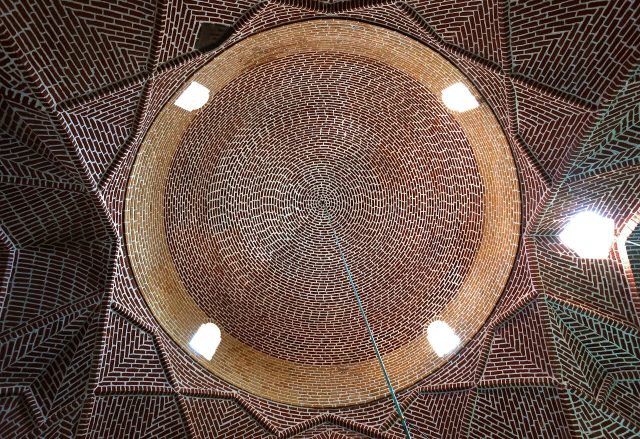
The building itself is unassuming, especially when compared to the grand mosques of Isfahan or Shiraz. Yet there’s a quiet strength in its simplicity. The structure is a modest cube of pale brick, its high portal catching the sunlight in soft, shifting hues. A small minaret rises above the entrance, and a turquoise-tiled dome crowns the whole. Inside, the walls are adorned with Quranic calligraphy, the floor laid with local stone. There’s no gold or ornamentation, just a sense of reverence in every detail, a space shaped by devotion rather than grandeur.
The origins of the mausoleum stretch back to the medieval period, though no one knows exactly when it was first built. Some believe it dates to the Safavid era, when Shiite culture flourished in Iran. Others suggest the site may have been sacred long before, with the current structure emerging from later renovations. Whatever its true history, the mausoleum has long been a spiritual hub for the region, particularly for nomadic tribes who saw Ibrahim not just as a saint but as a protector in times of hardship.
Inside, the atmosphere is one of quiet focus. Visitors speak in hushed tones, even children, as if the weight of centuries lingers in the air. In one corner, elderly men recite prayers, their voices low and steady. Women in black chadors leave offerings at the tomb—coins, sweets, or scraps of fabric—while others reach out to touch the green-draped sarcophagus. On religious holidays, the mausoleum comes alive with the scent of incense and the murmur of Quranic verses, a rare moment when the space feels almost crowded.
The small courtyard surrounding the mausoleum is enclosed by a low wall. Old trees provide shade for travelers, their branches swaying gently in the breeze. Nearby, simple graves mark the resting places of locals, many of whom considered it an honor to be buried close to Ibrahim. Under the trees, you might find shepherds resting with their flocks or vendors selling tea and flatbread. Life here moves at its own pace, unhurried, and even the occasional visitor soon falls into its rhythm.
Tekab isn’t a city that draws crowds. It’s a quiet place where mornings begin with the hum of the bazaar—vendors selling fruit, spices, and fresh bread—and evenings settle into stillness. The mausoleum is one of the few reasons outsiders might pass through, but for those who do, it offers something rare: a glimpse of Iranian culture stripped of pretense. There are no grand performances here, no carefully curated experiences. Just the quiet persistence of faith and tradition, as natural as the landscape itself.
What makes this place special isn’t its size or splendor, but the way it exists—unassuming, enduring. It doesn’t demand attention like the famous shrines of Qom or Mashhad, yet it leaves a deeper impression. Perhaps because it feels like a living part of the land and the people who hold it dear. In a country where history is often grand and dramatic, the Imamzadeh Shahzadeh Ibrahim mausoleum is a reminder that sometimes, the most meaningful stories are the quiet ones.