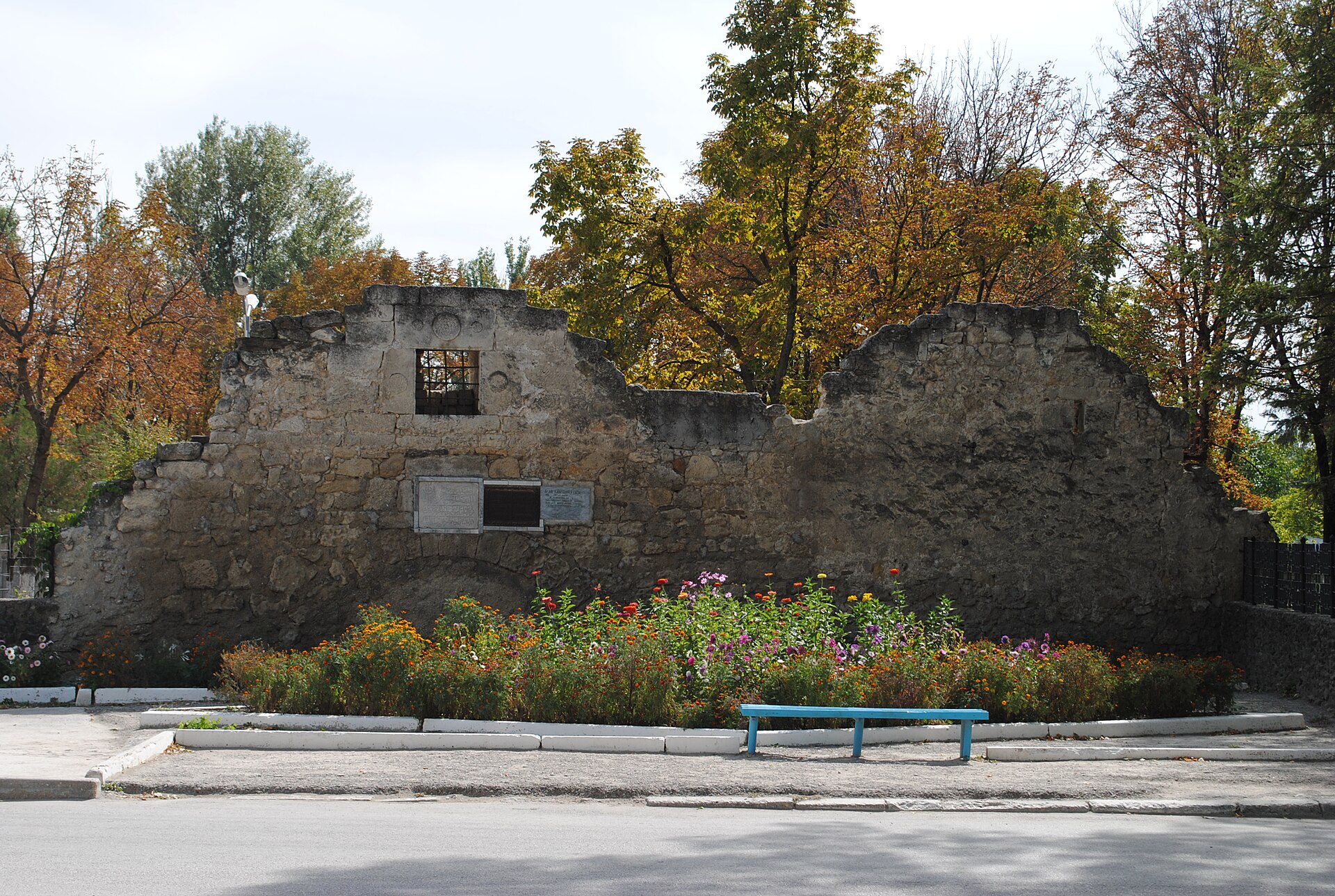
Tash-Khan is one of those places that slips under the radar for most travelers, yet in Belogorsk, it carries the weight of a local legend. The name, translating from Turkic as "Stone House," hints at what once stood here—a structure now reduced to ruins, but one that holds a story worth uncovering. Perched on a low hill at the edge of the city, these crumbling walls were once part of the estate of Nikolai Ivanovich Lykov, a first-guild merchant whose influence shaped the region in the late 19th century.
Lykov’s estate took shape in the 1890s, when Belogorsk was still known as Alexandrovsk and just beginning to emerge as a commercial and administrative hub. Having made his fortune in gold mining and trade, Lykov didn’t settle for an ordinary home. Instead, he commissioned a mansion that blended European elegance with classical touches—a grand two-story building with columns, balconies, and spacious interiors. Local accounts suggest the finishing touches were lavish: imported marble for the floors, stained glass windows crafted in Germany, and halls designed to impress. The estate wasn’t just a residence; it was a statement of wealth and ambition in a town still finding its footing.
Around the house, Lykov laid out a garden that mirrored the refinement of the architecture. Fruit trees, gazebos, and a small pond turned the grounds into a retreat where the region’s elite gathered. Merchants, officials, and military officers attended balls, receptions, and musical evenings here, making Tash-Khan a social hub. But Lykov’s influence extended beyond entertainment. He invested in Alexandrovsk’s growth, funding churches, schools, and hospitals, turning his estate into more than a private domain—it became a place where decisions about the town’s future were discussed over tea or brandy.
The revolution of 1917 marked the beginning of the end for Tash-Khan. Like many wealthy landowners, Lykov was swept up in the upheaval, and his estate was seized by the state. Over the decades, the building served various purposes—a school, a community club, a warehouse—each use chipping away at its former grandeur. By the 1960s, neglect had taken its toll: the stained glass vanished, the marble was stripped away, and the roof collapsed. Today, only fragments of the walls remain, overgrown with grass and shrubs, yet even in decay, they offer a glimpse of what the mansion once was.
What keeps Tash-Khan from fading into obscurity is its raw connection to the past. There are no museum plaques, no guided tours, no polished exhibits—just the quiet persistence of history in its most unfiltered form. Standing among the ruins, it’s easy to imagine the clink of glasses, the murmur of conversations, and the footsteps of guests who once filled these halls. The absence of restoration gives the place an authenticity that no curated display could replicate. It’s a rare spot where the past doesn’t feel distant, but tangible, as if the walls still hold echoes of the lives that passed through them.
For Belogorsk, Tash-Khan is a reminder that history isn’t always made of grand events or famous names. It’s also built from the everyday: the ambitions of a merchant, the gatherings of a community, the slow erosion of time. The ruins have become a local landmark, drawing occasional visitors—some leave flowers, others sit on the weathered stones, gazing out at the city below. Over the years, stories have woven themselves into the place: tales of hidden treasures buried beneath the house, whispers of footsteps heard at dusk. Most are likely just legends, but they add to the mystique, turning a pile of bricks into something more.
The hill where Tash-Khan stands offers a quiet vantage point over Belogorsk. From here, the modern city sprawls below—apartment blocks, railway lines, and the distant expanse of the Amur region. It’s a place that invites reflection, not just on the history of the estate, but on the fleeting nature of human endeavors. Buildings rise and fall, fortunes are made and lost, and all that remains are fragments like these, waiting to be noticed.
If you find yourself in Belogorsk, a visit to Tash-Khan is worth the short walk. It won’t take long, but it offers something rare: a chance to see the city through the lens of its past. There’s no fanfare, no crowds, just the quiet presence of history in its most unvarnished form. For now, the ruins remain as they are—a silent witness to a time that’s gone, but not entirely forgotten. Whether they’ll ever be restored or given new life is uncertain, but in their current state, they hold a kind of honesty that’s hard to find elsewhere. Sometimes, the most compelling stories aren’t the ones preserved in museums, but the ones left to the wind and the weeds.