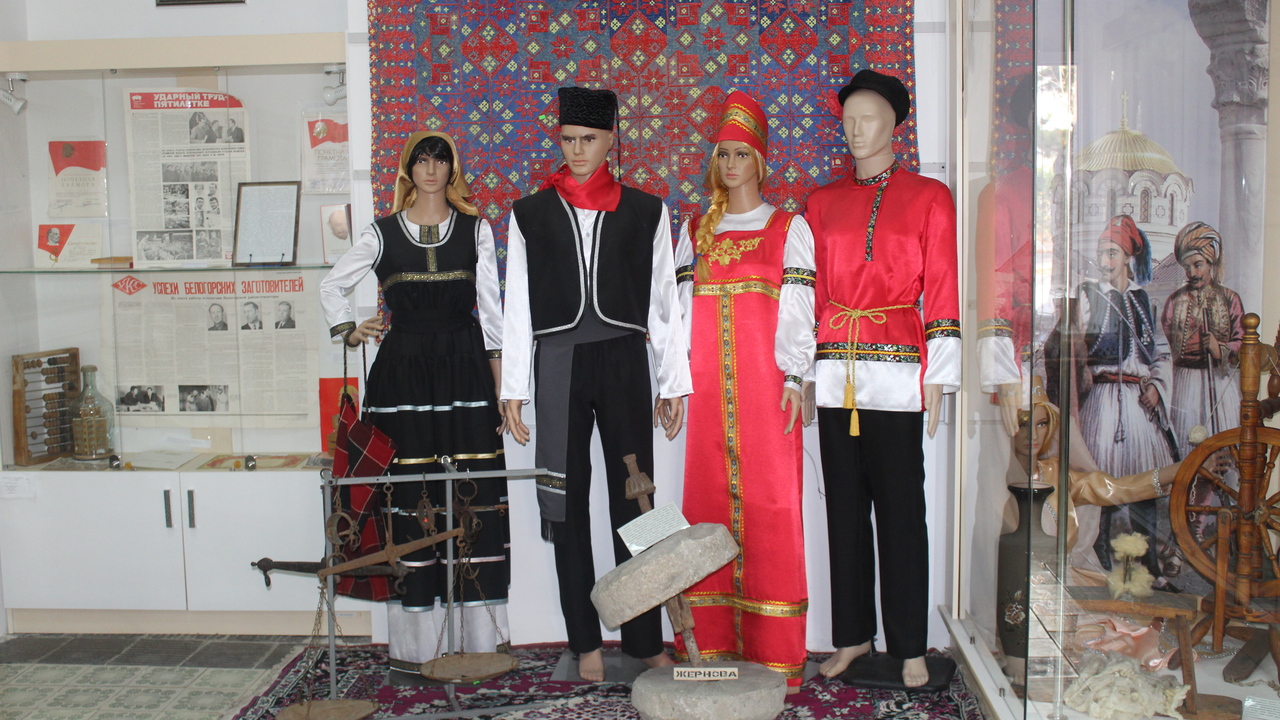
The past doesn’t just sit behind glass at the Belogorsk Local History Museum—it lingers in the details. Housed in a building that has stood through decades of the city’s changes, the museum feels like a quiet conversation with the people who lived here. There’s no polished storytelling for tourists. Instead, the exhibits speak for themselves: a chipped teacup from a settler’s home, a faded letter from the front, a miner’s pickaxe worn smooth by years of use. These objects don’t need drama; their wear and tear tell the story.
The museum started in the mid-20th century, when local enthusiasts wanted to preserve the memory of a city still defining itself. Back then, Belogorsk was a cluster of wooden houses and new streets, where every artifact—whether a photograph of the first railway workers or a schoolteacher’s handwritten diary—held a piece of the region’s story. Today, the collection includes thousands of items, from prehistoric tools found in the Amur River basin to Soviet-era relics. What stands out is how these objects are displayed: not as isolated curiosities, but as fragments of a larger human experience.
One section focuses on the settlement of the Far East. The exhibits don’t romanticize the past. They show the hard realities of frontier life: the tools of early farmers, rough-hewn furniture from peasant huts, maps tracing the slow expansion of the Trans-Siberian Railway. Displays on the indigenous peoples of the region weave their traditions and struggles into the broader narrative of colonization. The effect is immersive, as if the museum has peeled back time to reveal how this land was shaped.
The war years are given their own space. Here, the tone shifts. Belogorsk, like many Soviet cities, sent its people to fight in World War II. The museum preserves their memory not through grand monuments, but through the small details: letters from soldiers, photographs of those who never returned, ration cards, factory ledgers. These items don’t glorify war. They remind you that behind every statistic were real people—women working double shifts, children collecting scrap metal, families sending care packages to the front. The exhibits don’t shy away from the cost of victory, but they focus on resilience, on the quiet heroism of those who kept life going.
For those interested in the natural world, the museum offers a look at the Amur region’s ecosystems. Displays include taxidermied animals—lynxes, foxes, bears—and herbariums of local plants. A small diorama recreates the Amur River valley, with its rolling hills and dense forests. It’s a modest but clear introduction to the region’s biodiversity. The exhibits also touch on environmental challenges, like deforestation and industrialization, though these are presented as context rather than a call to action.
The building itself is unassuming. Built in the mid-1900s, it reflects the functional elegance of its time: high ceilings, large windows, clean lines. The interior is spacious, letting visitors move freely between exhibits. The layout is intuitive, guiding you from one era to the next without rigid signage. It’s a space that invites you to linger.
The museum stays active with rotating exhibitions. These might focus on a local factory’s history, a forgotten artist’s work, or contemporary issues like urban development. Occasionally, it hosts talks with historians, veterans, or explorers, turning the space into a community hub. These events are low-key but add a layer of vitality.
Guided tours are available for those who want to dig deeper. The local historians leading them don’t just recite facts. They share stories—about the family who lived in the house on the corner of a long-gone street, or how a seemingly ordinary tool was used in unexpected ways. These narratives reveal the hidden layers of the city’s history, the kind of details that don’t make it into textbooks but make the past feel real.
The Belogorsk Local History Museum isn’t special because of its size or fame. It’s special because it feels honest. Whether you spend an hour or an afternoon here, you’ll leave with a sense of connection to the people who came before, to the land they shaped. In a world where so much is fleeting, the museum offers something rare: a tangible link to the past.