Lenin Square in Belogorsk is one of those places where the rhythm of a small city intersects with its past. It sits at the heart of town, and if you walk across it at different times of day, you’ll notice how its mood shifts. Mornings are quiet—just a few people hurrying to work, pigeons pecking at the pavement, and the occasional sound of a shopkeeper unlocking a door. By afternoon, the square comes alive. Schoolchildren gather near the fountain after classes, elderly locals chat on benches, and vendors roll out their goods onto the sidewalk. As evening falls, the square fills with those who simply want to stroll, sit, or watch the sunset, their voices blending into the soft hum of the city.
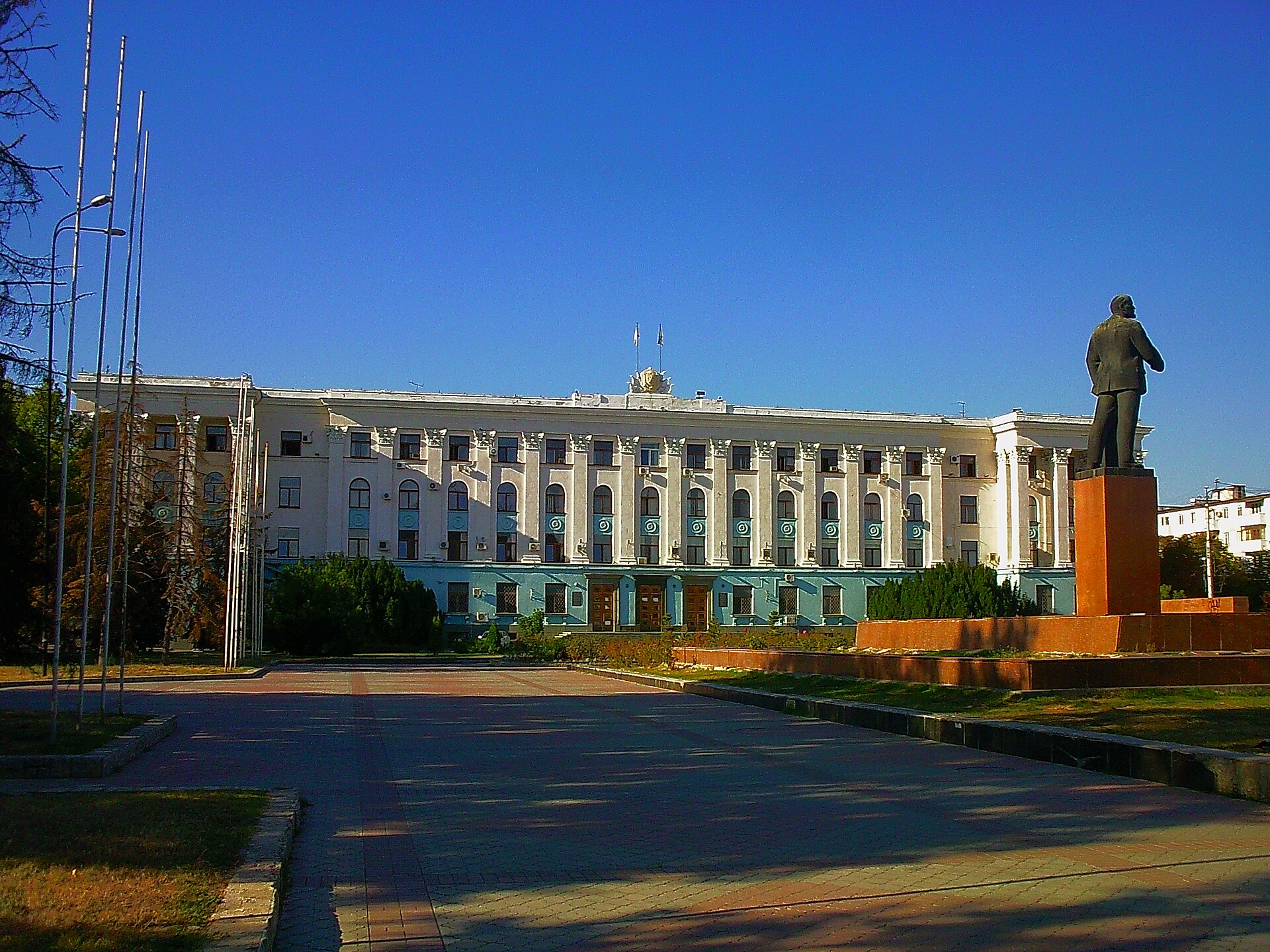
The architecture here is unassuming but telling of its time. Most of the buildings are two or three stories high, with wide windows and straightforward facades—typical of mid-20th-century construction in the Russian Far East. These structures were built for practicality, not grandeur, yet there’s a certain harmony in their simplicity. Clean lines, symmetry, and a lack of ornamentation give the square a balanced, almost understated look. The most prominent building is the local administration, its columns and modest portico hinting at the Stalinist Empire style, though here it’s executed with restraint rather than pomp.
The Lenin statue in the center is a familiar sight in cities that once bore his name. Erected in the 1960s, when Belogorsk was still called Kuibyshevka-Vostochnaya, it stands on a low pedestal. Unlike many other Lenin monuments, this one doesn’t point into the distance but instead holds its hands slightly lowered, as if listening. For locals, it’s neither a relic nor a symbol—just a fixture of the landscape. Flowerbeds surround it, bright with summer blooms or dusted with snow in winter, depending on the season.
The square hasn’t always been the city’s focal point. Before its current form, the area was a bustling market square in old Kuibyshevka-Vostochnaya, where farmers and traders gathered. In the 1930s, as the city grew into a transport and industrial hub, the first stone buildings appeared. After the war, the square was redesigned, its layout formalized, and it was renamed in Lenin’s honor—a common practice across the Soviet Union. Even when many cities renamed their streets and squares in the 1990s, this one kept its name, perhaps because by then it had become part of the city’s identity rather than just a political statement.
Today, Lenin Square is more than just an administrative center. It’s where the city gathers for events—New Year’s celebrations, Victory Day concerts, open-air markets, and seasonal fairs. In summer, you might find temporary rides or stalls selling ice cream and drinks. In winter, the square transforms into an ice rink, drawing families and children. On these days, the square buzzes with energy, a reminder that even in a small town, there are traditions and moments worth celebrating.
Despite its public nature, the square has quiet corners. Behind the Lenin statue, a small grove of poplars and birches offers shade in summer and a snowy retreat in winter. The trees create a sense of seclusion, a place where people can sit on benches away from the main thoroughfare. It’s one of those spots where the city feels almost intimate, as if time slows down just a little.
To an outsider, Lenin Square might seem like any other provincial town square in Russia. But if you look closer, you’ll notice details that make it distinct. The old-fashioned streetlamps, the patterned pavement that was recently replaced but kept its original design, the mix of modern and Soviet-era shop signs. These small things create a sense of continuity, as if the city isn’t just standing still but evolving at its own pace, carrying its history with it.
Lenin Square isn’t the kind of place that dazzles at first glance. There are no grand cathedrals, no striking monuments, no extravagant fountains. Its charm lies in its ordinariness—it doesn’t try to impress but simply exists as part of daily life. For some, it’s a meeting point; for others, a shortcut to work; for a few, just a backdrop for photos. But spend a day here, and you’ll realize the square is more than just concrete and buildings. It’s a living space, shaped by the people who pass through it, reflecting the quiet, unhurried character of the city itself.