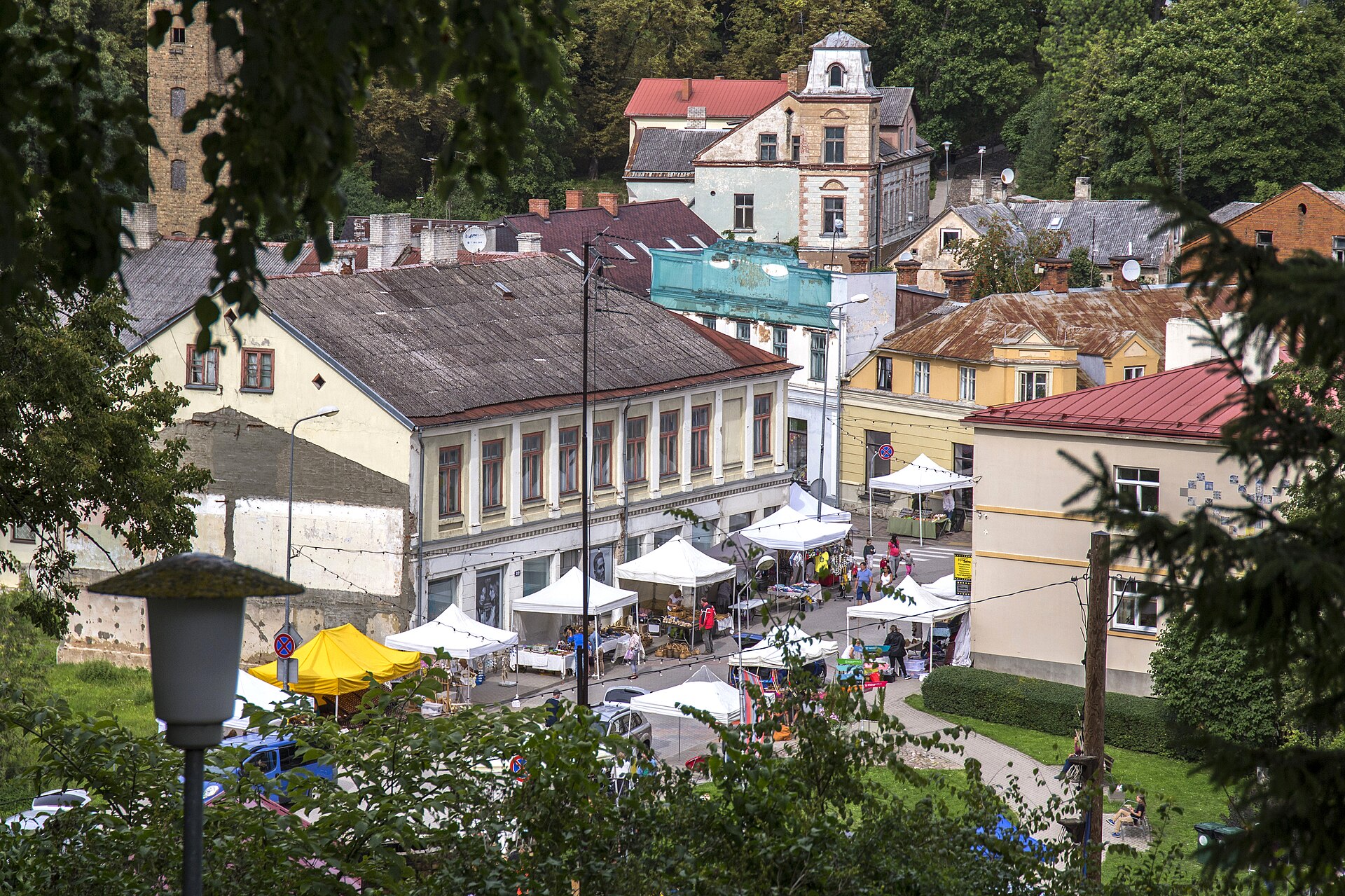
Talsi Market isn’t just a place to buy groceries or household goods—it’s the living pulse of a small Latvian town, where the rhythm of daily life unfolds in its most unfiltered form. There’s no rush here, no overwhelming crowds or blaring noise like in big cities. Instead, what you find is something increasingly rare in modern shopping centers: a sense of authenticity, a slower pace, and the quiet understanding that time moves differently in places like this. The market has been part of Talsi for decades, woven into the fabric of the town not just as a commercial hub, but as a gathering spot where people come for conversation, news, or simply to feel connected to the place they call home.
The architecture of the market is unassuming, designed for function rather than spectacle. Low pavilions with wide aisles, covered walkways that shield visitors from rain or sun—everything about the space feels practical and welcoming. Inside, it’s bright and airy, with enough room to move even on the busiest days. Locals take it for granted, while visitors often remark on how different it feels from the sterile, overdesigned markets elsewhere. There are no flashy signs, no aggressive sales pitches, no manufactured urgency. The market exists as it always has, without pretense, as if it were the most natural thing in the world.
What you’ll find on the stalls reflects the essence of rural Latvia. Fresh vegetables and fruit grown in nearby gardens, homemade cheeses and curd, smoked meats prepared the traditional way, honey from local apiaries, and fish caught in the Gulf of Kurzeme. Seasonal produce takes center stage—berries and mushrooms in summer, potatoes and sauerkraut in autumn, pickles and preserves in winter. Many vendors grow or make what they sell, and that personal touch is evident in how they present their goods. There’s no pressure to buy, no hard sell. If you ask for advice on how to prepare something, they’ll gladly share tips, sometimes even a favorite recipe.
Beyond food, the market offers a mix of everyday items—clothing, shoes, household goods—and the occasional handmade craft. You might stumble upon vintage finds, old tools, or household items that have long disappeared from regular stores. For some, these are just curiosities; for others, they’re tangible pieces of history, reminders of a way of life that’s fading. In recent years, small stalls selling handmade goods have become more common: knitted socks, wooden toys, pottery. These aren’t mass-produced souvenirs but the work of local artisans, people who create out of passion and share their skills with the community.
More than anything, Talsi Market is a place where the spirit of the town reveals itself. Neighbors catch up on news, swap recipes, or simply nod in quiet acknowledgment as they pass. For many older residents, the market is a fixed part of their routine—a morning stop for bread, a chat with a vendor who’s known them for years, the small rituals that make up a life. Younger generations see it differently, perhaps as a way to support local producers or to find something unique, but it’s no less a part of their world. The market doesn’t try to be anything other than what it is, and that’s its strength. It’s not a tourist attraction, not a place designed to impress outsiders. It’s for the people who live here, and that authenticity is what makes it special.
Of course, visitors do come, especially those looking for a glimpse of Latvia beyond Riga or the popular coastal resorts. But even they quickly realize that the market isn’t a living museum—it’s a working part of the town, where life happens in real time. There’s no script here, no staged performances. Just the quiet hum of daily existence, where people come and go, buy what they need, and sometimes linger a little longer than necessary.
Time moves slowly at the market, and that’s part of its charm. Vendors arrange their goods without hurry, shoppers take their time choosing, children weave between the stalls, and elderly men and women sit on benches, watching the world go by. Even on the busiest days, there’s a sense of calm, a feeling that this is a place where you can step out of the relentless pace of modern life and just be. Maybe that’s why it draws people in—it offers a moment of stillness, a connection to something real and enduring.
The market hasn’t stayed frozen in time. New products appear, vendors come and go, and tastes evolve, but the core of what makes it special remains unchanged. It’s a place where tradition and modernity coexist, where old recipes sit alongside new ideas, and where the people of Talsi continue to gather, as they always have. In that sense, the market is more than just a collection of stalls—it’s a microcosm of the town itself, a reflection of its past, its present, and the quiet, unshakable bonds that hold it together. For those who know it, that’s what makes it irreplaceable.