The Church of the Dormition in Gelendzhik is one of those rare places where time seems to slow down. Perched on a gentle hill, it overlooks the town and the coastline, offering a quiet retreat even when the resort bustle swirls below. The church itself is modest in size, but its white walls and golden domes stand out against the greenery and the sea, drawing the eye almost effortlessly. It’s not just a place of worship—it’s a piece of Gelendzhik’s history, where faith, tradition, and the memories of those who built the town are woven together.
The story of the church begins in the late 19th century, when Gelendzhik was still a small settlement on the cusp of becoming a resort. In 1897, local residents and parishioners pooled their resources to build the first wooden church, dedicated to the Dormition of the Mother of God. It was a humble structure, but it quickly became a spiritual anchor for both locals and visitors. The early 20th century brought turbulent times—revolution, civil war, and later, the Soviet era, when many churches were destroyed or repurposed. The Church of the Dormition survived, though it lost some of its original character along the way.
The stone church we see today was built in the 1990s, after the collapse of the Soviet Union, when religious life in Russia began to revive. It stands on the same site as the original wooden church, preserving a sense of continuity. The architecture is typical of Orthodox churches in southern Russia: whitewashed walls, golden domes, and a bell tower. Inside, the space feels airy and bright, with frescoes adorning the walls and a classic iconostasis. There’s no excessive ornamentation, just a quiet sense of peace that seems to linger in the air.
Gelendzhik is a town where leisure and everyday life blend seamlessly, and the Church of the Dormition offers a respite from the constant motion. People come here not only for services but also to sit in silence, light a candle, or simply take in the view from the hill. The church is especially striking at dawn or dusk, when the sunlight bathes the sea and mountains in warm hues, and the building seems to glow from within. On feast days like the Dormition of the Mother of God or Easter, the church fills with worshippers, and the atmosphere becomes particularly solemn.
Beyond its religious role, the church serves as a cultural hub for the town. It hosts charity events, concerts of sacred music, and gatherings for parishioners. For many locals, it’s a place to seek guidance, share concerns, or simply talk with the priest. In recent years, small tours have been organized for visitors interested in the church’s history and Orthodox traditions. These aren’t crowded tourist groups but rather intimate gatherings for those genuinely curious about the culture and heritage of the area.
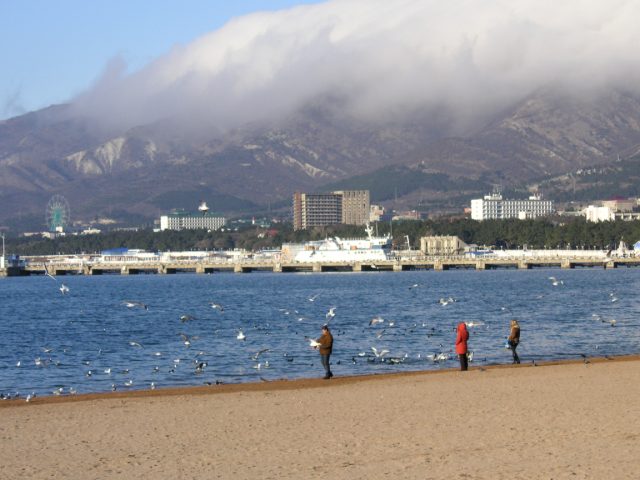
The surroundings of the church are just as noteworthy. The hill it stands on is lush with greenery, and the views of Gelendzhik Bay and the Caucasus Mountains are breathtaking. Nearby, a small cemetery holds the graves of notable townspeople, including veterans of the Second World War. It’s a reminder that Gelendzhik isn’t just a resort—it’s a town with a layered past, where each generation has left its mark.
The Church of the Dormition isn’t just an architectural landmark; it’s a living place where traditions continue. Here, people pray, baptize their children, hold weddings, and say their final goodbyes. For some, it’s a place of solace; for others, part of their daily routine; and for many, simply a quiet corner to reflect. Whatever the reason for visiting, the church leaves a lasting impression, much like Gelendzhik itself—a town where the sea, mountains, and history create something truly unique.