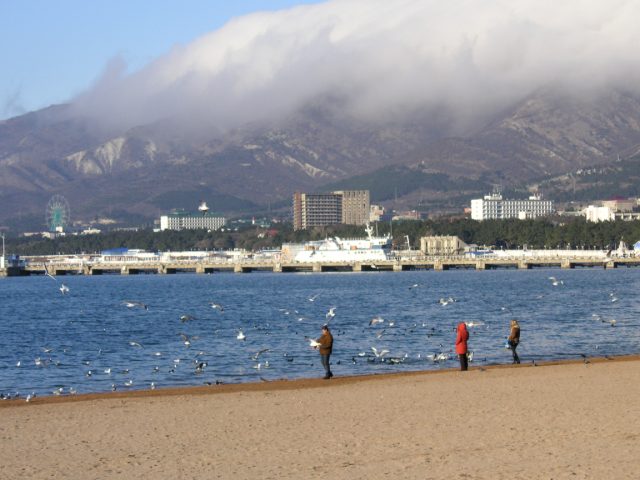
The city meets the sea here, where waves murmur against the rustle of leaves and the air smells of salt and pine. The park stretches along the coast, a green space between resort life and the Black Sea. Open areas, clusters of trees, and winding paths lead to viewpoints over the bay. On hot afternoons, families sit under the canopies. In the evenings, people gather by the water with coffee or local wine, watching the sunset.
The park’s history mirrors Gelendzhik’s. In Soviet times, it hosted festivals, concerts, and celebrations under the open sky. Wooden stages once held bands, and dance floors filled on summer nights. Some things have changed—old attractions replaced by cafes and paths—but the park’s character remains. It still feels southern, a place where time slows and worries fade with the breeze.
The architecture is simple, meant to serve. Small pavilions, cafes, and kiosks blend into the landscape. The embankment has wooden walkways for watching the sunset or listening to waves. A few old lampposts with wrought-iron details remain, while bike paths and picnic areas fit naturally into the scene.
The waterfront is the park’s busiest spot. The promenade flows into the beach, where strollers, sunbathers, and children play. In summer, the atmosphere shifts as the day cools. Small concerts or festivals sometimes happen, but even without them, the air feels lively—warm, salty, and full of the sea’s presence.
The park has long been a cultural hub. It has hosted art exhibitions, craft fairs, poetry readings, and open-air film screenings. Now, such events are less frequent, but the park still gathers people. In summer, you might find street musicians or portrait artists. Winter makes it quieter, where empty paths invite solitary walks and bare trees frame the sea differently.
For many in Gelendzhik, the park is essential. There are no rigid schedules—just the freedom to move from one corner to another. Some come for solitude, finding a quiet bench under the trees. Others seek the crowd. Children play in the playgrounds or feed ducks at the pond. Adults often sit in cafes by the water, eating fresh fish and seasonal fruit.
Gelendzhik has grown into a major resort, but the park remains a place that feels like home. There’s no grandeur, just ease and natural beauty. People return not for attractions but for the simple pleasure of sitting by the water, listening to the waves, and realizing they don’t need to be anywhere else.