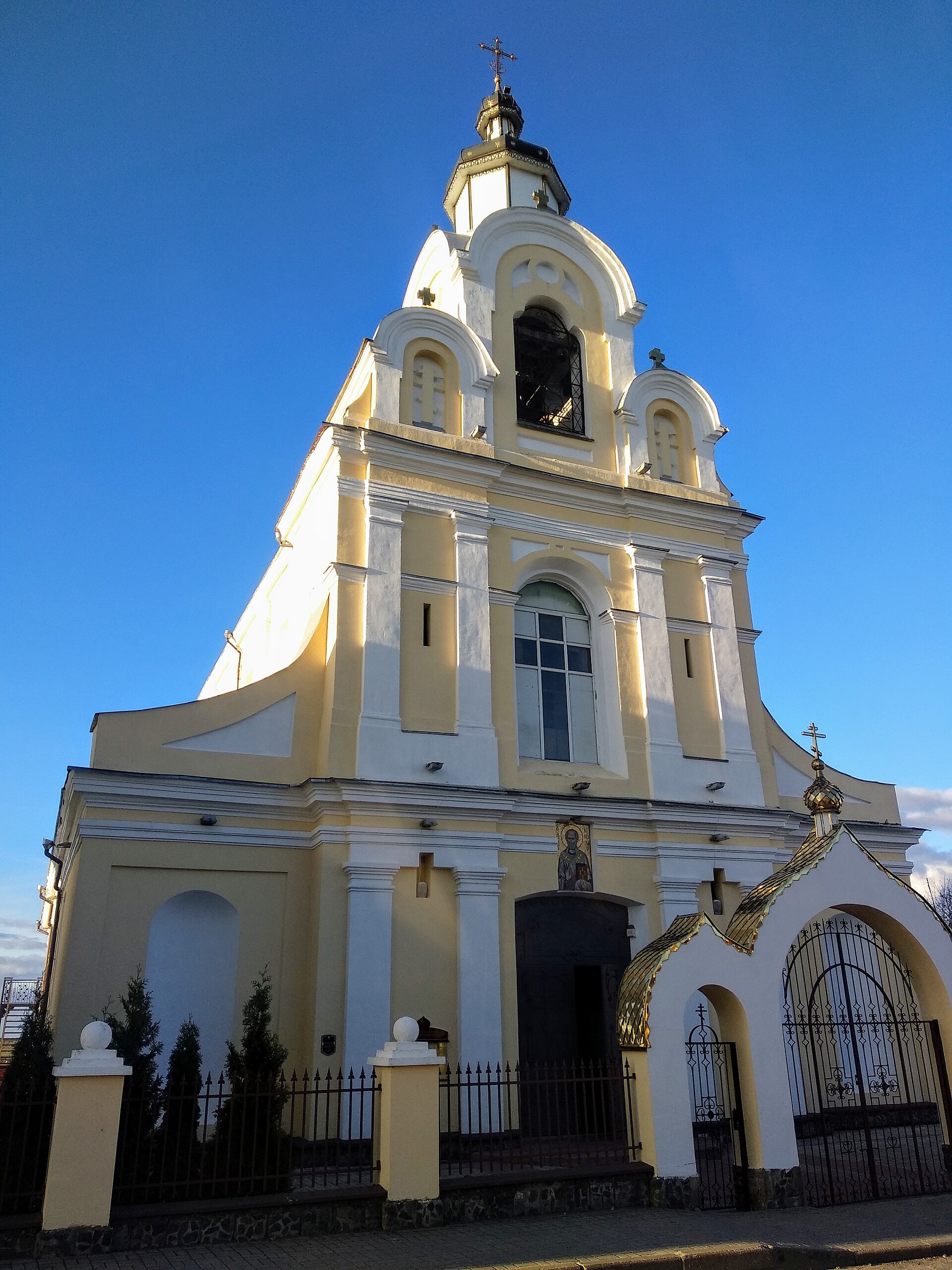
Navahrudak is one of those Belarusian towns where history lingers in the air, settling into the gentle slopes of its hills and the quiet rhythm of its old streets. Among its most enduring landmarks is the Church of St. Nicholas, a building that has stood for generations not just as a place of worship but as a silent witness to the town’s many transformations. Perched on a slight rise, the church seems to watch over Navahrudak with a quiet dignity, a reminder of the time when this town was the capital of the Grand Duchy of Lithuania and its churches shaped the region’s spiritual and cultural identity.
The church was built in the mid-19th century, when Navahrudak was part of the Russian Empire and Orthodoxy was taking root in the western borderlands. It was designed in the Russo-Byzantine style, a deliberate choice that reflected the architectural trends of the time, drawing inspiration from the grand churches of Moscow and St. Petersburg. The building is solid and imposing, with five domes rising above the town, yet its interior feels surprisingly light and open, as if inviting contemplation rather than awe. The contrast between the austere exterior and the serene atmosphere inside makes it a place where one can pause and breathe, away from the noise of the world.
What many visitors don’t realize is that the church stands on the site of an even older temple, one that dates back to the 16th century. Back then, Navahrudak was the center of an Orthodox eparchy, and its churches played a vital role in the religious life of the region. Over the centuries, the town endured wars, shifting borders, and changes in faith, yet the Church of St. Nicholas endured, surviving fires, neglect, and even closure during the Soviet era. When it was returned to the faithful in the late 20th century, it resumed its role as a spiritual anchor for the community, as if no time had passed at all.
Inside, the church is a treasure trove of 19th-century religious art. The frescoes and icons, painted in a traditional style, have weathered the years with remarkable grace. The iconostasis, in particular, is a masterpiece of craftsmanship—carved, gilded, and intricately detailed, it serves as a reminder of how faith and artistry once intertwined within these walls. Even those who aren’t religious can appreciate the skill and devotion that went into creating such a space. The soft light filtering through the windows, the scent of incense lingering in the air, and the quiet murmur of prayers all contribute to an atmosphere that feels both timeless and deeply personal.
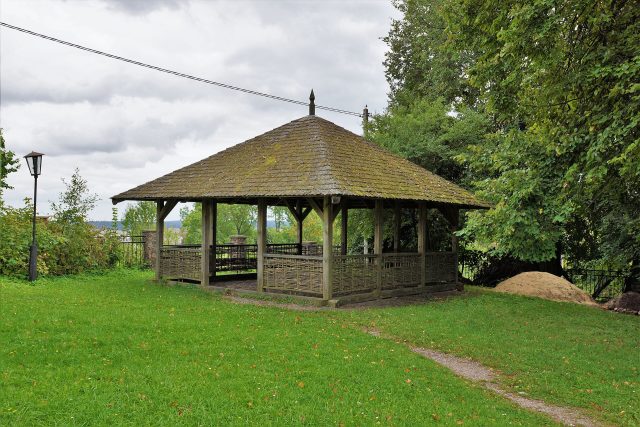
Navahrudak has long been called a town of poets and heroes, a place where the past feels alive in the cobblestone streets and crumbling castle ruins. The most famous of its sons, the poet Adam Mickiewicz, is said to have drawn inspiration from its landscapes, and his presence still lingers in the town’s quiet corners. The Church of St. Nicholas is very much a part of this legacy. It has seen the town at its highest and lowest points, standing firm through wars, occupations, and ideological shifts. The small park that surrounds it offers a place to sit and reflect, watching the play of light on the old stone walls while the rest of the world moves at its usual hurried pace.
The church is visible from almost anywhere in the town center, its domes rising above the low-slung buildings like a beacon. It fits seamlessly into the landscape, its sturdy silhouette softened by the trees that cluster around it. In summer, the green leaves provide shade, and the golden domes gleam under the sun, while in winter, the church takes on a fairy-tale quality, its whitewashed walls dusted with snow. There’s something reassuring about its permanence, as if it has always been there and always will be, a constant in a world that changes too quickly.
For those who take the time to explore it, the Church of St. Nicholas is more than just a historical monument—it’s a living chronicle of Navahrudak. It has survived fires, wars, and decades of neglect, yet its essence remains unchanged. Today, it continues to serve its original purpose, hosting services, baptisms, and weddings, just as it has for over a century. Stepping inside, one is struck by the stillness that fills the space, the kind of quiet that only old churches seem to hold. It’s a place where time slows down, where the weight of history feels tangible, and where even a brief visit can leave a lasting impression.
Navahrudak isn’t a town that draws crowds of tourists, and that’s part of its charm. It doesn’t put on a show for visitors; instead, it lets them discover its stories at their own pace. The Church of St. Nicholas is very much in keeping with this spirit. It doesn’t demand attention, but those who seek it out will find something far more rewarding than a quick photo opportunity. It stands as it always has, patient and unassuming, waiting for those who are willing to look a little closer.