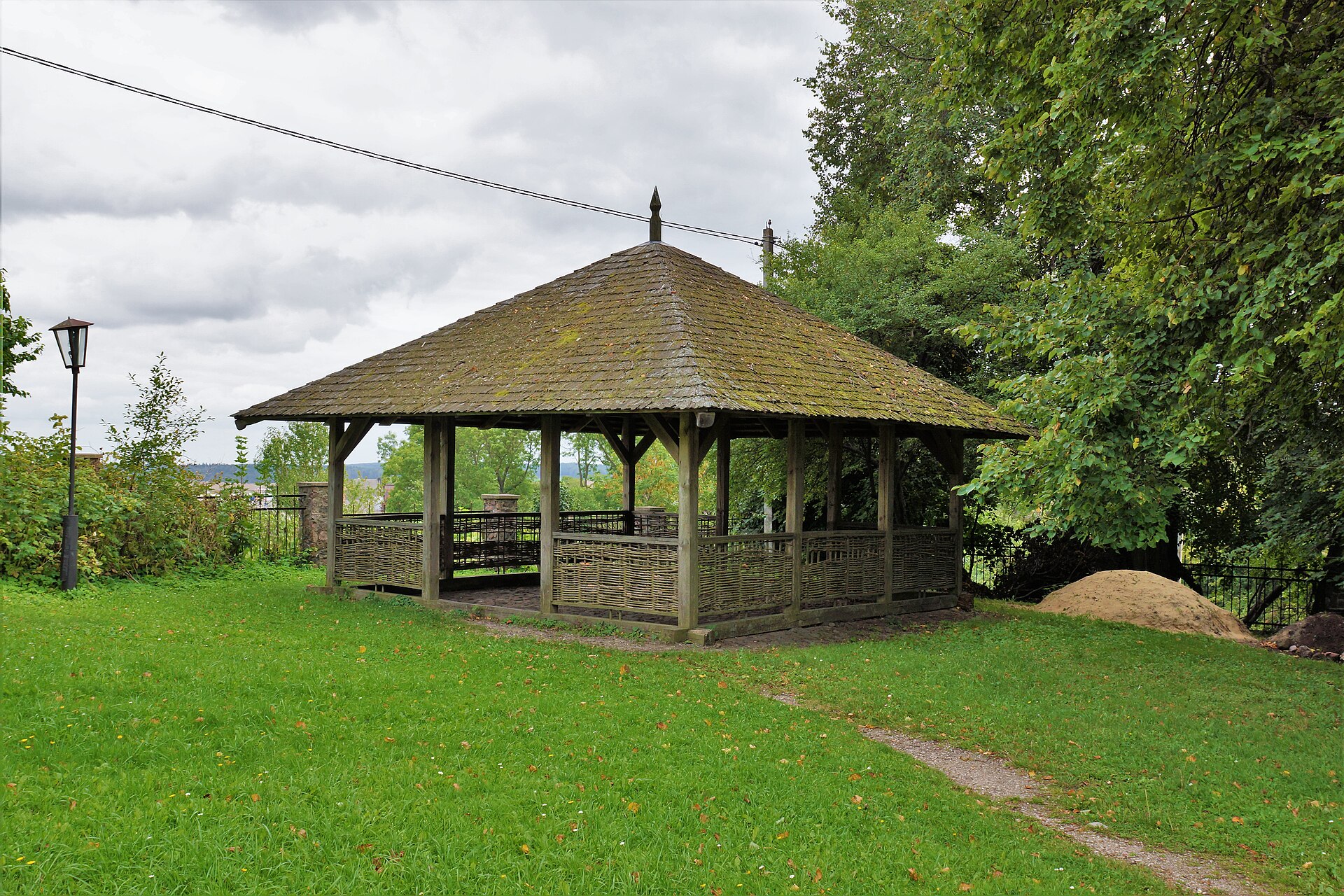
Navahrudak is a quiet town in western Belarus, one of those places where history lingers in the air like the scent of old books. It’s best known as the birthplace of Adam Mickiewicz, the poet whose words shaped Polish and Belarusian literature, and whose childhood home now stands as a museum. The house itself is unassuming—a wooden structure with a steep roof and small windows, much like the homes of the minor gentry in the late 18th and early 19th centuries. Stepping inside feels less like entering a museum and more like walking into a moment frozen in time, where the past hasn’t so much faded as settled into the walls.
The interior has been carefully restored to reflect the domestic life of Mickiewicz’s family. His father, Mikołaj, was a lawyer and a man of some learning, and the house would have been filled with the quiet hum of intellectual conversation. The furniture is simple but well-made, the kind that would have been passed down through generations. A tiled stove stands in one corner, its surface cool to the touch now, but once the heart of the home, where the family gathered in winter. Books line the shelves, their spines worn from use, and everyday objects—quills, ink pots, a spinning wheel—hint at the rhythms of daily life. It’s easy to imagine Mickiewicz’s mother, Barbara, sitting by the window with her needlework, or the young poet himself curled up in a corner, lost in a book.
The museum doesn’t just preserve the physical space of Mickiewicz’s childhood; it also traces the evolution of his work. One room is dedicated to his poetry, with early editions of his books displayed alongside translations into languages he might never have heard spoken. There are facsimiles of his manuscripts, their looping script a reminder of how much labor went into creating something that now feels effortless. Portraits of Mickiewicz hang on the walls, painted by his contemporaries, capturing him at different stages of his life—young and intense, older and weary, but always with that same sharp gaze. Some of the items on display were donated by his descendants, small personal belongings that connect the visitor to the man behind the legend.
For Mickiewicz, Navahrudak wasn’t just a hometown; it was the landscape of his imagination. The rolling hills, the dense forests, the ruins of the old castle on the outskirts of town—all of these seeped into his writing. As a boy, he would have listened to the stories of local peasants, tales of battles and ancient kings, of ghosts that wandered the countryside at night. These stories found their way into his poetry, blending with his own experiences to create something entirely new. The museum does a good job of showing this connection, with maps and illustrations that recreate the Navahrudak of Mickiewicz’s youth. It’s a place where history and literature overlap, where the land itself seems to whisper lines from his verses.
One of the most striking parts of the exhibition is the section devoted to *Pan Tadeusz*, Mickiewicz’s epic poem written in exile. Though he composed it far from Belarus, the poem is steeped in the landscapes and customs of his homeland. The museum has models of the manor houses that inspired the setting, as well as period maps that show how the region looked in the early 1800s. It’s a reminder of how deeply Mickiewicz’s work was rooted in this place, even when he was thousands of miles away. Visitors can almost see the scenes he described—the hunts, the feasts, the quiet moments of reflection—unfolding in the very hills that surround the town.
Over the years, the museum has become more than just a static display. It hosts literary events, readings, and discussions about Mickiewicz’s legacy, drawing scholars and enthusiasts from across Belarus and beyond. School groups often visit, and there are interactive elements now, like audio guides that let visitors explore at their own pace or workshops where they can try their hand at transcribing old manuscripts. The museum has adapted to modern times without losing its sense of intimacy, making it a place where history feels alive rather than preserved under glass.
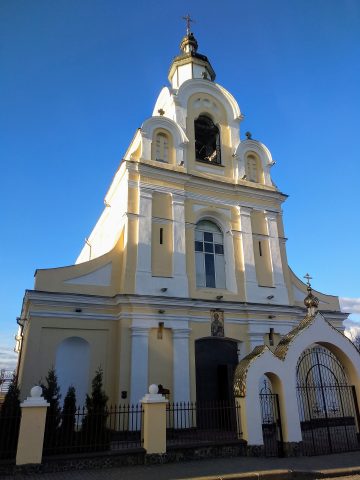
Navahrudak itself is worth exploring after a visit to the museum. The town has a layered history, from its days as a fortified settlement in the Grand Duchy of Lithuania to its role in more recent centuries. The ruins of the old castle, perched on a hill overlooking the town, are a stark reminder of its medieval past. Nearby, churches and cathedrals stand as testaments to the different faiths and cultures that have shaped the region. Walking through Navahrudak, it’s easy to see why Mickiewicz was so deeply influenced by this place. The streets, the buildings, even the light filtering through the trees—it all feels like a living extension of his poetry.
A visit to the Adam Mickiewicz House-Museum isn’t just about seeing where a famous poet grew up. It’s about understanding how a place can shape a person, how the details of everyday life— the sound of rain on a wooden roof, the smell of bread baking in the oven, the stories told by a grandmother—can become the foundation of something enduring. The museum doesn’t try to mythologize Mickiewicz; instead, it presents him as a man who was formed by his surroundings, whose work was a way of preserving a world that was already slipping away. For anyone interested in literature, history, or simply the quiet power of a well-told story, this place offers something rare: a chance to step into the past without leaving the present behind.