Perched on a gentle hill on the outskirts of Kremenets, St. Nicholas Monastery is a place where the pace of life slows. From here, you can see the ancient earthworks of Kremenets Castle and the rolling green hills of Volhynia—a landscape that has remained largely unchanged for centuries. The monastery doesn’t dominate the skyline with grand facades or towering spires. Instead, it sits quietly, offering a pause from the rush of the world.
The origins of the monastery are unclear, though its history is deeply tied to the region. By the 16th century, it was already an established Orthodox community, closely linked to Prince Konstanty Ostrogski, a key defender of Orthodoxy in Volhynia. In those turbulent years, the monastery served as both a spiritual refuge and a fortress, resisting raids and invasions. Later, in the 17th century, it was rebuilt in stone, taking on the form that has endured, with only minor changes, to this day.
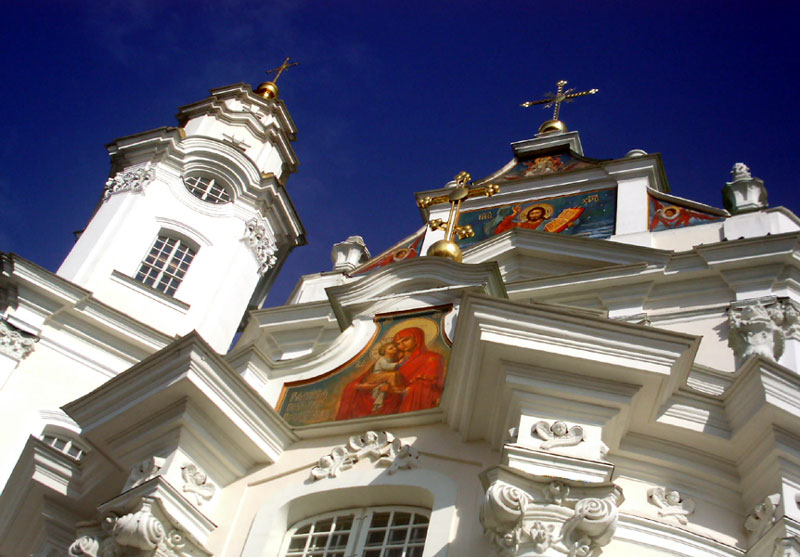
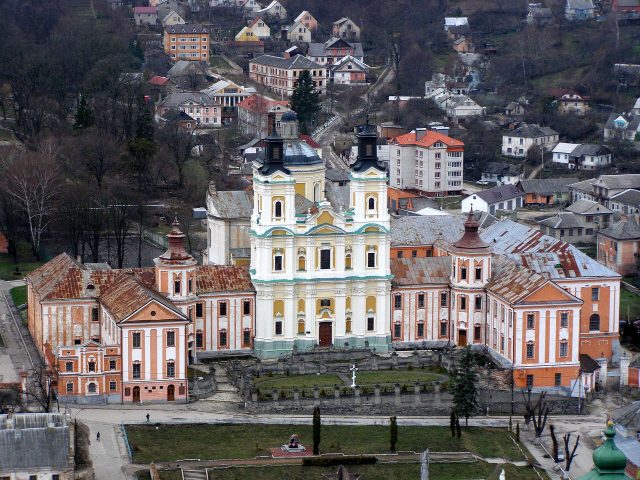
The architecture of St. Nicholas Monastery reflects survival and adaptation. The main church, dedicated to St. Nicholas, blends local traditions with the softer lines of Baroque. Its walls, built from local stone, have weathered into a warm, honeyed hue. Inside, the space is simple but rich in detail. The 19th-century iconostasis preserves traditional iconography, while the faded frescoes on the walls hint at the skill of the artists who painted them. The bell tower, modest in height but well-proportioned, rises above the complex, its silhouette familiar to locals.
The monastery has witnessed history firsthand. In the 18th century, when Volhynia fell under Polish rule, it became a sanctuary for Orthodox clergy fleeing persecution. Later, under Russian imperial rule, it regained some stability but never fully regained its former prominence. The Soviet era brought closure, neglect, and the threat of repurposing. Yet even then, locals visited in secret, drawn by something deeper than tradition.
Today, St. Nicholas Monastery remains a living community, though one that moves to its own rhythm. There are no crowds, no guided tours, no souvenir stalls—just silence, broken by the tolling of bells, the rustle of leaves, or the murmur of prayer. The monks live simply, tending to the church, working in the vegetable patches, and maintaining traditions like hand-bell ringing. Visitors can stay in the guest cells, stepping away from modern life’s noise.
Kremenets is a town suspended in time. Tucked among hills, it lacks the bustle of more famous Ukrainian destinations. Its quiet streets are lined with centuries-old houses, their facades bearing the marks of history. The ruins of the old castle loom nearby, while other churches and landmarks tell their own stories. But St. Nicholas Monastery is different—it isn’t just a relic; it’s a place that still holds meaning for those who visit.
A visit here isn’t about checking off sights. It’s about presence—sitting on a bench under an old linden tree, watching the light shift across the hills, or walking paths trodden by countless others before you. There’s a small chapel by a spring, said to have healing waters, though the real healing might come from the stillness. The air feels thick with history, with prayers and lives lived within these walls.
If you come to this part of Ukraine, take your time. Spend an hour at the monastery, or a day. Walk the paths, listen to the silence, watch the clouds drift. You won’t find anything flashy—just old stone, trees, and the occasional toll of a bell. The monastery doesn’t try to impress. It simply endures, a quiet place of faith, memory, and resilience. And sometimes, that’s enough.