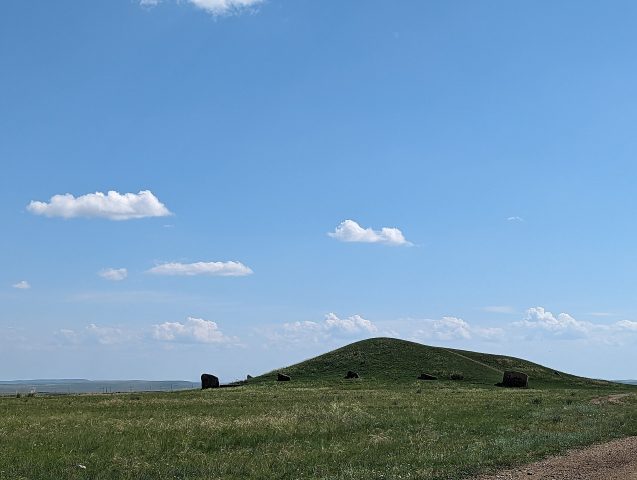
Sunduki rises from the Khakassian steppe like a chain of ancient chests, their weathered surfaces carved by wind and rain. These aren’t random cliffs—they’re clusters of stone that seem arranged by design, their shapes shifting with the light. From afar, the name fits: the formations resemble giant trunks, their contours softened by time. Up close, the illusion fades, replaced by something stranger. A jagged ridge becomes a dragon’s spine; a rounded boulder, a sleeping bear. Geologists call it differential erosion, but the rocks feel like more than just sedimentary layers.
For the Khakas people, Sunduki has always been sacred.
Archaeologists have found petroglyphs here—deer, hunters, and symbols no one fully understands. Some carvings are 5,000 years old. The rocks also hold burial sites, their locations chosen deliberately, facing the rising sun. Today, the site remains a place of pilgrimage. Locals leave offerings at the base of certain formations, and during festivals, the steppe fills with the sound of throat singing and drumming.
Walk among the Great Sunduki at dawn, and the stone feels alive. The largest formation, a 30-meter monolith, looms like a sentinel. Nearby, the Lesser Sunduki are a maze of smaller rocks, some hollowed into shallow caves. A few have smooth walls, polished by centuries of wind; others are split by deep cracks, their edges sharp enough to cut. The best light comes in the late afternoon, when the sun turns the stone amber and the shadows stretch long across the steppe.
The steppe here is vast and empty. The wind carries the scent of wormwood and dry grass, and the only sounds are the rustle of leaves and the occasional cry of a hawk. At night, the sky is a bowl of stars, the Milky Way a bright smear across the darkness. It’s the kind of place where you can sit for hours and hear nothing but your own breath.
There are no hotels near Sunduki, no restaurants or guided tours. Most visitors camp, pitching tents in the shadow of the rocks. A few designated sites offer fire pits and basic toilets, but many prefer to sleep under the open sky. The ground is hard and uneven, the nights can be cold even in summer, and the wind never really stops. But the silence is worth it.
In June, during the summer solstice, Sunduki becomes a stage for ancient rituals. Locals gather to light fires, dance in circles, and toss juniper branches into the flames. The Khakas believe the rocks hold power, that the spirits of their ancestors linger here. Even if you don’t share that belief, it’s hard not to feel something. The air hums, the stone radiates warmth, and for a moment, the past feels close enough to touch.
Reaching Sunduki takes an hour by car from Abakan. The road is paved at first, then turns to dirt, winding through fields before ending at the edge of the steppe. There’s no public transport, no taxis waiting at the trailhead. In summer, the heat is relentless—bring water, a hat, and sunscreen. In winter, the snow turns the landscape into a monochrome dream, the rocks dusted white, the steppe silent and still. Spring and fall are windy, the air sharp with the scent of thawing earth or falling leaves.
Sunduki doesn’t reveal itself all at once. The first time you see it, the rocks might just look like rocks. But stay a while, walk among them, touch their surfaces. The longer you look, the more you see: faces in the stone, stories in the cracks. It’s the kind of place that changes you, not with grandeur, but with quiet persistence. The steppe remembers. The rocks remember. And if you listen, they’ll tell you why.