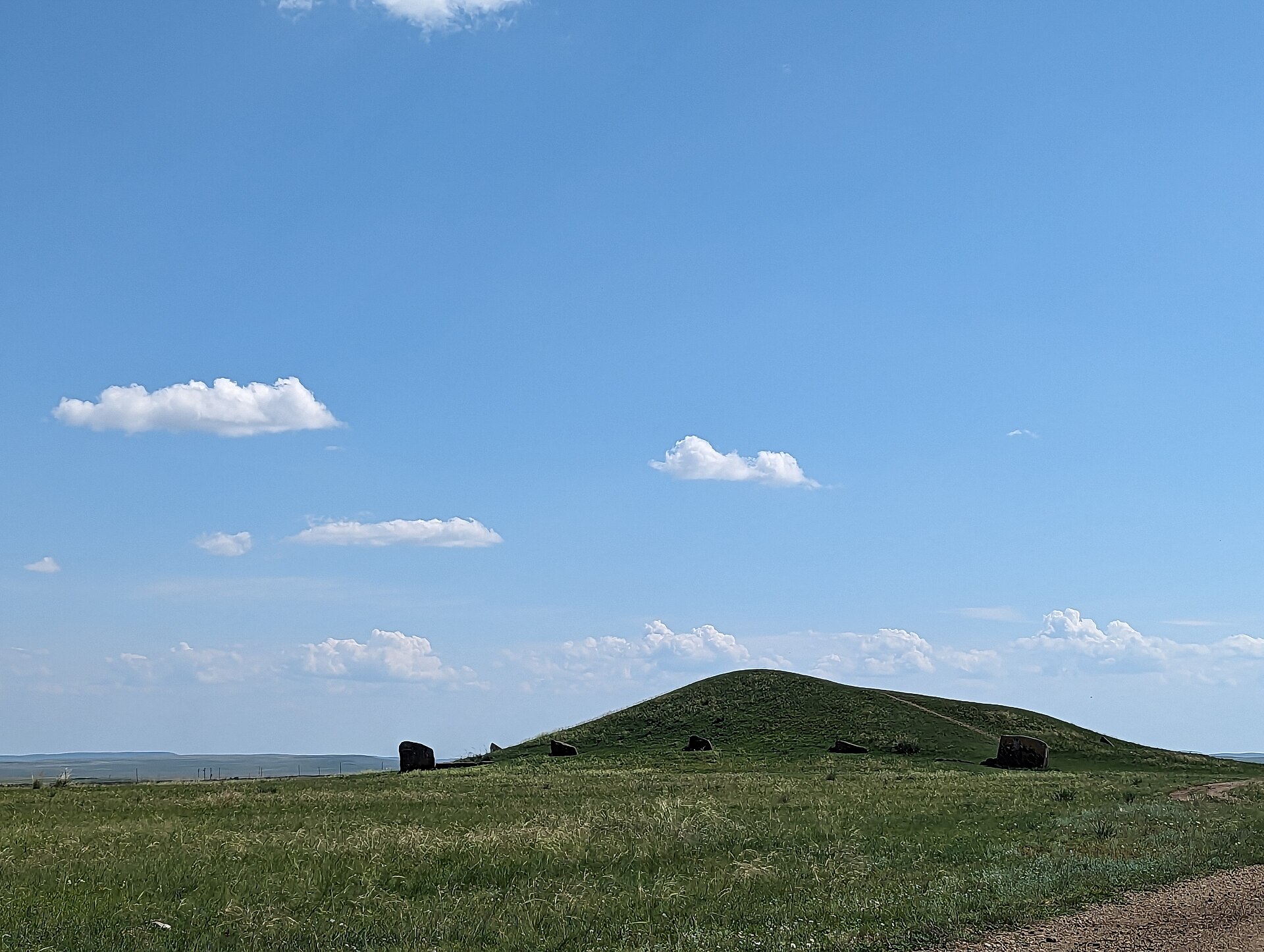
The Salbyk Kurgan is one of those rare places where history isn’t just something you read about—it’s something you can almost touch. Rising from the vast steppes of Khakassia, not far from Abakan, this ancient burial mound is a silent witness to a time when the people of the Tagar culture shaped these lands with little more than their hands and ingenuity. Built over two thousand years ago, it’s part of a larger necropolis, a final resting place for those who once called this harsh yet beautiful landscape home.
What makes the Salbyk Kurgan stand out is its sheer scale. Twelve meters high and nearly a hundred meters across, it’s a monumental feat of engineering for its time. The earthen mound was once encircled by a stone fence, fragments of which still remain, hinting at the care and effort put into its construction. Archaeologists believe it was the burial site of someone of great importance—a tribal leader, perhaps, or a person of high status. The discovery of wooden frameworks inside the mound suggests that the builders had a sophisticated understanding of how to support such a massive structure, a testament to their skill and knowledge.
The kurgan isn’t alone in these steppes. Across Khakassia, similar mounds dot the landscape, each telling its own story of the Tagar people. But Salbyk is one of the best-preserved, its secrets still partially intact despite the looting that many others suffered. Excavations in the mid-20th century uncovered artifacts that offered glimpses into the lives of those who lived here—bronze and iron tools, jewelry, pottery, and even human remains. These finds painted a picture of a culture deeply connected to the land, one that thrived in a world far removed from our own.
The steppe around the kurgan is quiet, almost timeless. In summer, the air is thick with the scent of wormwood and dry grass, while winter blankets the ground in snow, smoothing the contours of the landscape. There’s a sense of stillness here, as if the land itself is holding its breath. For the Tagar people, these mounds weren’t just graves—they were sacred spaces, bridges between the living and the dead. Even now, standing on top of the kurgan, it’s easy to feel the weight of that connection, as if the past isn’t as distant as it seems.
Visiting Salbyk isn’t like walking through a museum. There are no glass cases or detailed plaques, no guided tours or crowds. Instead, it’s an experience that relies on imagination and a willingness to listen. The wind carries stories across the steppe, and the silence invites reflection. What must it have been like to live here, to build something so enduring in a land that offers little mercy? The kurgan doesn’t give answers, but it asks the right questions.
The landscape around the mound stretches endlessly, broken only by the distant outline of mountains. These were the same landmarks the Tagar people used to navigate their world, the same horizons they saw every day. There’s a sense of continuity here, a reminder that while civilizations rise and fall, the land remains. The kurgan is a marker of that endurance, a physical link to a past that might otherwise be forgotten.
For those who seek out places like Salbyk, it’s not just about history—it’s about the feeling of standing where others once stood, of seeing what they saw. There’s no fanfare, no grand entrance, just the quiet dignity of a place that has withstood the test of time. The steppe is vast, the kurgan is still, and the wind is the only guide. It’s a place for those who appreciate the quiet power of the past, where the stories of ancient people are written not in books, but in the earth itself.