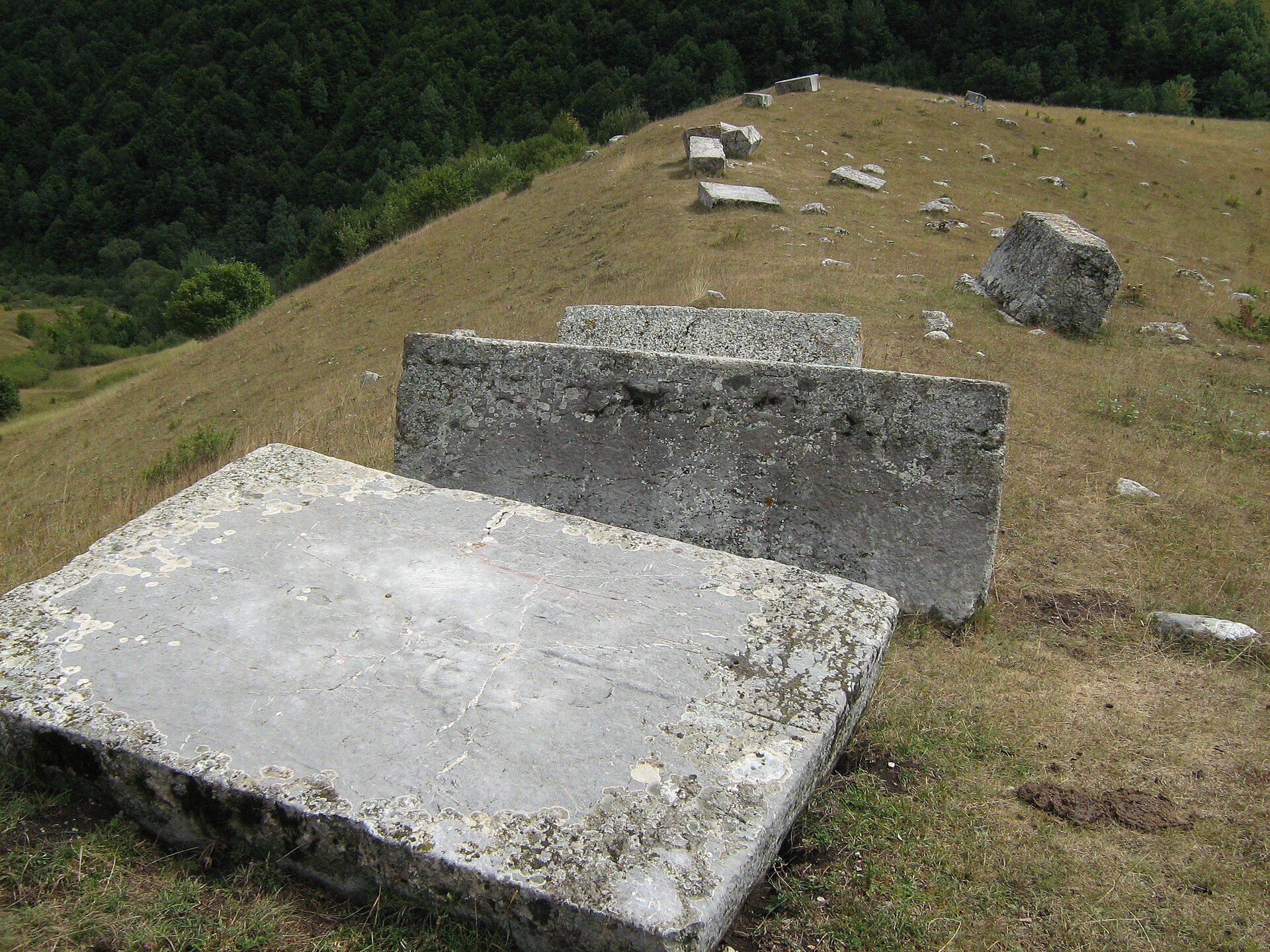
The rolling hills around Priboj in western Serbia hold medieval tombstones called stećci. These stones, scattered across the landscape, appeared between the twelfth and sixteenth centuries in a region where Orthodox Christianity, Catholicism, and the Bosnian Church coexisted. The Bosnian Church, often labeled heretical, left behind these carved stones as its lasting mark. They reflect a cultural crossroads where faiths, languages, and political loyalties mixed, leaving historians and archaeologists with unanswered questions.
Some stećci show crosses, crescents, or solar wheels carved into them. Others depict hunting scenes or geometric patterns resembling older Slavic designs. A few bear faint inscriptions in Cyrillic or Glagolitic script, though most have eroded over time. The symbols puzzle researchers—were they religious, remnants of pagan traditions, or just decoration? The stones, cut from local limestone or sandstone, often resemble human shapes, lying flat or standing upright. Unlike noble mausoleums, many stećci mark graves of farmers, artisans, or merchants, showing this tradition once belonged to all levels of society.
The stećci near Priboj sit in a quiet corner of Serbia, away from Belgrade or Novi Sad. The landscape here unfolds in gentle waves of forest and meadow, dotted with small villages. There are no crowds or guided tours. Some stones stand in open clearings; others hide in the undergrowth, found only by those who search. The lack of commercialization makes the visit feel personal, as if you’ve discovered something the modern world hasn’t fully claimed.
The medieval Bosnian state shaped the history of these stones. The Bosnian Church, distinct from Catholic and Orthodox traditions, developed its own burial customs, with stećci as its most visible sign. When the Ottomans arrived in the fifteenth century, many monuments were destroyed or abandoned. Yet in remote villages like those around Priboj, they survived as silent witnesses to a lost era. Today, UNESCO recognizes the stećci as Intangible Cultural Heritage, highlighting their importance for the Balkans.
Standing among these stones makes you wonder about the lives they mark. Were these graves of soldiers, farmers, or merchants? The stećci don’t say, but they remind us that history isn’t just about kings and battles—it’s also about ordinary people whose names have faded. The stones, weathered by time, seem to hold onto a past that refuses to disappear.
The stećci around Priboj remain part of the living landscape. Locals graze livestock in the fields where the stones stand, and wildflowers grow around them. Sometimes, you’ll find fresh flowers or coins left on a stećak—a quiet gesture of respect from those who still feel connected to the past. This isn’t a place for quick photos. It’s a place for reflection, where the weight of centuries lingers.
If you visit, take your time. Walk the narrow paths through the hills, past stećci half-buried in grass. Listen to the birds and the rustle of leaves. You might meet a local who shares a legend—how one stone marks a tragic lover’s grave, or another was placed by a warrior who never returned. Or you might sit on a stone as the sun sets, feeling how the past and present seem to merge here. The stećci aren’t just relics. They hold stories time has nearly erased, and in their silence, they ask you to listen.