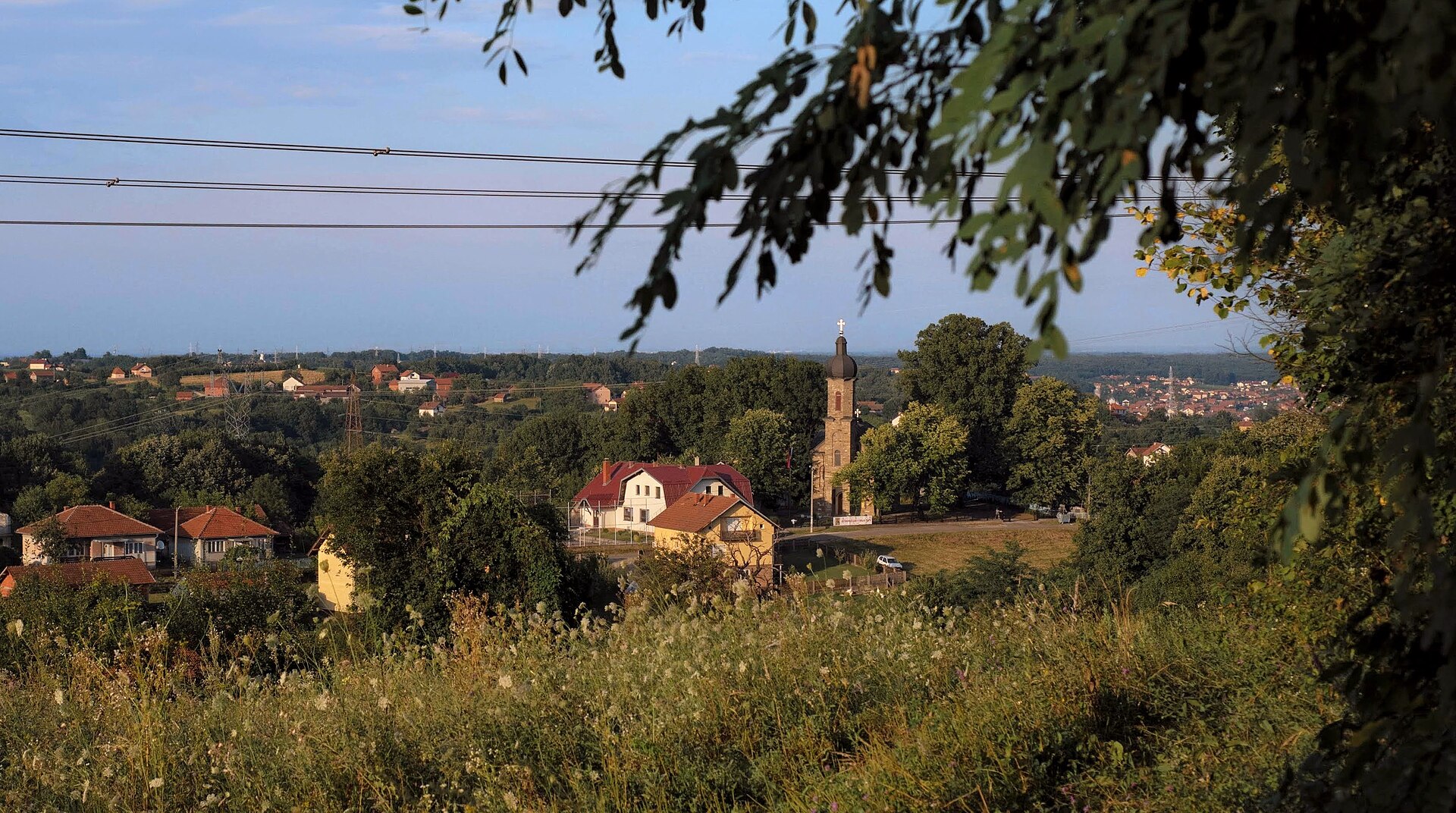
Perched on a gentle hill above the town of Priboj, the Church of Saint Elijah feels like a quiet guardian of the place. It doesn’t demand attention with grand facades or towering spires, but there’s something about its unassuming presence that lingers long after you’ve left. The whitewashed walls and modest bell tower blend seamlessly into the landscape, framed by low houses and green slopes that roll down toward the town. This is a church built not for spectacle, but for purpose—a place where the weight of history and faith rests lightly, yet unmistakably.
Priboj itself has always been a crossroads, tucked in the western reaches of Serbia near the border with Bosnia and Herzegovina. Over the centuries, the town has absorbed the rhythms of different cultures: Serbian, Ottoman, and Austro-Hungarian influences have all left their mark on its streets, its food, and its way of life. The Church of Saint Elijah emerged in the 19th century, a time when Serbia was gradually shaking off Ottoman rule and reclaiming its Orthodox Christian identity. In those years, churches weren’t just places of worship; they were symbols of resilience, a way for communities to reaffirm their roots after centuries of foreign domination. This one, small and unadorned, stands as a testament to that quiet defiance.
The architecture is classic for its time and place—a single dome rising above a rectangular base, with a semicircular apse on the eastern side. It’s a design that nods to medieval Serbian traditions while embracing the simpler, more restrained styles of the 19th century. Inside, the space feels intimate, almost domestic. The iconostasis, with its traditional paintings, divides the altar from the nave, while wooden benches line the walls. The air is thick with the scent of beeswax and incense, and the flickering candlelight casts long shadows across the frescoes. These murals are typical of Balkan Orthodox art: not overly dramatic, but deeply expressive, with figures that seem to carry the weight of centuries in their solemn, almost weary expressions.
Saint Elijah, or Ilija, holds a special place in Serbian Orthodox tradition. More than just a biblical prophet, he’s seen as a protector—a figure who shields farmers from drought and famine, who brings rain when the earth is parched. In a region where agriculture has always been the backbone of life, his veneration runs deep. Folklore paints him as both stern and benevolent, a saint who punishes the wicked but rewards the faithful. Every year on August 2nd, the church becomes the heart of the community, drawing locals and visitors from nearby villages for the feast day. The celebrations are modest but heartfelt: prayers, hymns, and shared meals that reinforce the bonds between people and their land.
Priboj isn’t a town that appears on many tourist maps, and the Church of Saint Elijah isn’t the kind of place that draws crowds. That’s precisely what makes it special. There are no souvenir stalls or guided tours here, just the quiet hum of daily life. The church sits slightly apart from the town center, surrounded by a small park where families stroll in the evenings. In summer, the shade of the trees offers relief from the heat, while autumn turns the ground into a carpet of rustling leaves. Winter wraps the church in snow, softening its outlines, and the smoke from the chimney hints at the warmth inside. Come spring, the blossoming trees seem to embrace the building, as if nature itself is paying homage.
For those who take the time to visit, the church offers more than just a glimpse into Serbian Orthodoxy. It’s a window into the way faith and history intertwine in everyday life. There are no grand relics or famous artworks here, nothing that would make it into a guidebook. But that’s the point. What remains is something far more subtle: the sense of continuity, of a place that has witnessed generations come and go without fanfare. The church doesn’t preach or perform; it simply endures, a silent witness to the passage of time.
The best time to visit is on a weekday, when the church is at its quietest. There’s no admission fee, though a small donation is customary if you’d like to contribute to its upkeep. If you’re lucky, you might catch a service, or you can simply sit for a while, watching how the light filters through the windows and dances across the icons. It’s the kind of place where time seems to slow down, where the outside world fades into the background. Many who come here expecting little leave with something unexpected—a quiet clarity, a moment of stillness that stays with them long after they’ve returned to the noise of daily life.