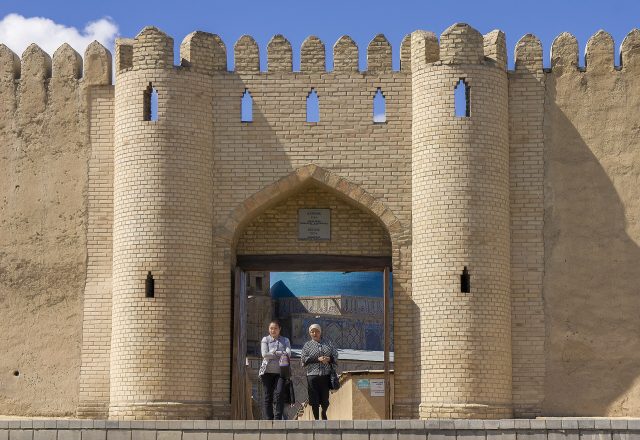
Old Ikan’s local history museum is one of those quiet places where the past doesn’t just sit behind glass—it lingers in the air, in the way sunlight falls through the windows, in the stories that seem to rise from the floorboards themselves. Tucked away in this small Kazakh town, the museum isn’t grand or flashy, but it holds something far more valuable: a sense of continuity, a thread connecting the people who live here now to those who walked these same streets centuries ago. It’s not a place you visit to check off a tourist attraction; it’s a place where history feels personal, where the weight of time settles gently on your shoulders.
The town of Old Ikan itself is easy to overlook if you’re rushing through Kazakhstan’s more famous destinations. It doesn’t have the dramatic landscapes of the steppe or the modern skyline of Almaty, but it has something else—a layered past that unfolds like the pages of a well-worn book. Long before it became a Soviet agricultural hub or a quiet provincial town, it was a stop on the Silk Road, one of those unassuming places where merchants, pilgrims, and wanderers paused to rest, trade, and exchange stories. The museum doesn’t just preserve artifacts from these eras; it preserves the idea of Old Ikan as a crossroads, a place where different cultures, ideas, and ways of life intersected.
The museum’s exhibits are arranged to guide you through these layers, each room offering a glimpse into a different chapter of the town’s history. The first hall feels like stepping into the distant past, where the objects on display—clay pots, arrowheads, fragments of jewelry—speak of the nomadic tribes who once roamed these lands. There’s a roughness to them, a sense of utility that contrasts with the intricate designs of later periods. These weren’t just tools or decorations; they were part of a way of life shaped by the rhythms of the steppe, where survival depended on mobility and adaptability. The museum doesn’t romanticize this past, but it doesn’t reduce it to mere relics either. Instead, it invites you to imagine the hands that shaped these objects, the fires they were warmed by, the voices that once filled the silence of the open land.
The next section shifts to the 19th century, when Old Ikan became part of the Russian Empire. Here, the exhibits take on a more familiar form—photographs, documents, household items that could belong to any small town of the era. But there’s something striking about seeing them here, in this specific place. Old maps show the town’s gradual expansion, its streets taking shape around a central square, its wooden houses giving way to brick. Personal items—letters, pocket watches, a merchant’s ledger—hint at the lives of people who might otherwise be forgotten. One display features the belongings of a local teacher, including a well-worn copy of a Pushkin poem, its pages yellowed with age. It’s a small detail, but it says so much about the town’s place in the broader currents of history, about how even in a remote corner of the empire, ideas and culture found their way in.
The Soviet era occupies its own room, and it’s impossible to walk through it without feeling the weight of the 20th century pressing down. Photographs of collective farms, tractors, and factory workers line the walls, their black-and-white tones giving them a sense of inevitability, as if this were the only possible path for the town’s future. But the most moving part of this section is the display dedicated to World War II. Letters from soldiers, medals, faded photographs of young men in uniform—these aren’t just historical records; they’re fragments of lives interrupted. One exhibit shows a soldier’s diary, its pages filled with hurried, uneven handwriting. The last entry is dated just days before he was killed. It’s the kind of thing that makes history feel immediate, painful, and real. The museum doesn’t shy away from this pain, but it also doesn’t let it overshadow the resilience of those who lived through it.
The final hall brings you back to the present, where Old Ikan’s story continues. Here, the exhibits are brighter, more colorful—paintings by local artists, photographs of festivals, handmade crafts that blend tradition with modern creativity. There’s a sense of pride in this room, a quiet confidence that the town’s history isn’t just something to be preserved but something to build on. One display features children’s drawings of their hometown, their bright crayon colors a stark contrast to the muted tones of the older exhibits. It’s a reminder that history isn’t just about the past; it’s about the people who carry it forward.
What makes this museum special isn’t just its collection, but the way it feels alive. There are no crowds here, no hurried tourists snapping photos before moving on. Instead, there’s time—to linger over a display, to ask the staff a question, to sit for a moment and let the stories sink in. The people who work here know the town’s history intimately, and they’re happy to share it, not in the polished way of a guidebook, but in the way of someone who’s lived it. They’ll point out details you might have missed, tell you about the person who donated a particular item, or explain how a certain tradition has evolved over time. It’s this personal touch that makes the museum feel less like a repository of the past and more like a conversation with it.
Old Ikan’s local history museum isn’t just a place to learn about the town; it’s a place to feel it. In a world where so much of travel is about seeing the biggest, the most famous, the most photogenic, this small museum offers something different—a chance to slow down, to connect, to understand that history isn’t just about grand events or famous names. It’s about the quiet moments, the everyday lives, the people who built a town and kept it going, even when the rest of the world moved on. For anyone passing through Old Ikan, the museum is a reminder that sometimes the most meaningful places aren’t the ones that make it into guidebooks, but the ones that make you pause and think about what it means to belong somewhere.