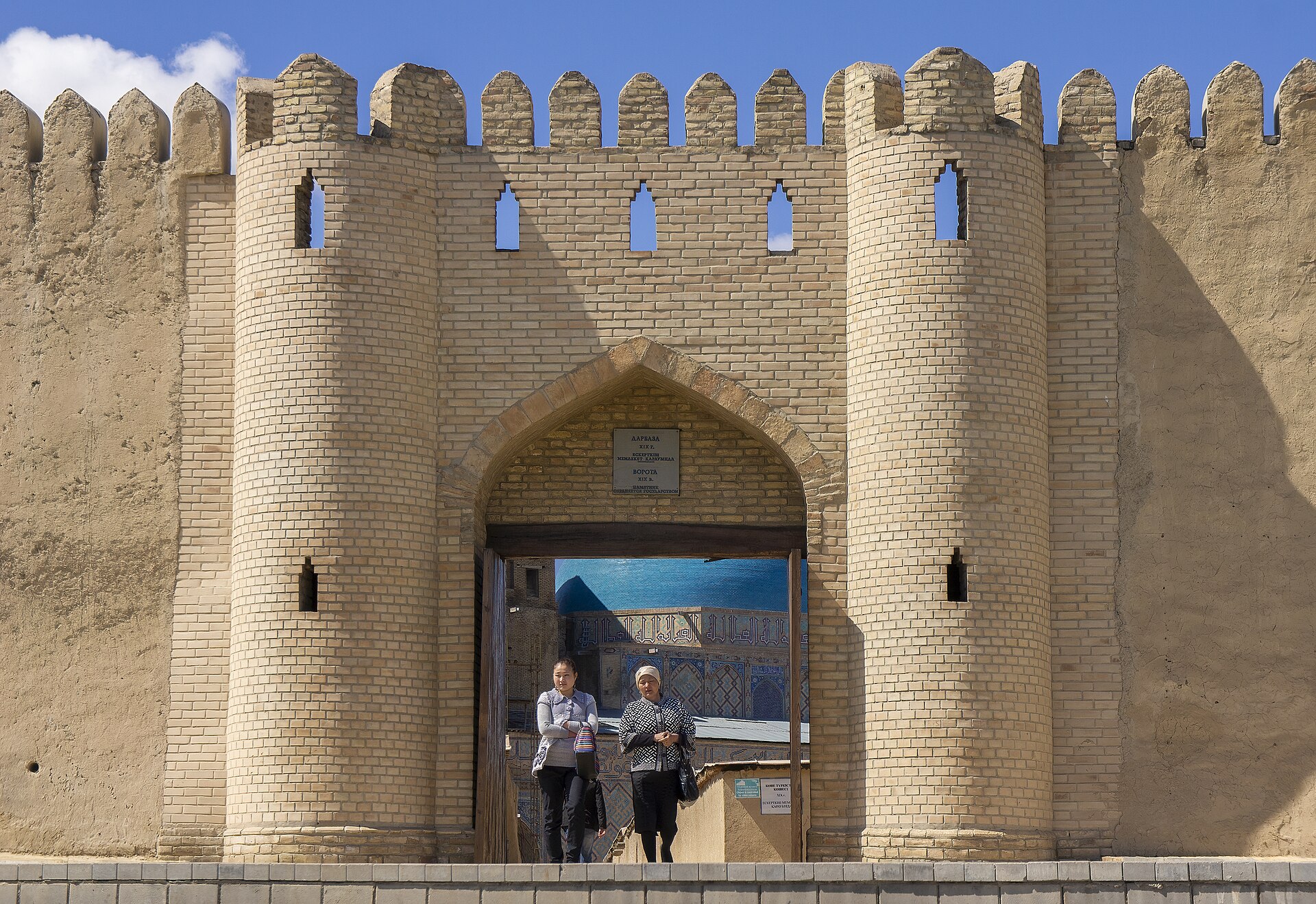
The Khoja Ahmed Yasawi Mosque stands on the edge of Turkestan, a city once known as Old Ikan, where the past isn’t just preserved in stone—it breathes. This isn’t merely a place of worship; it’s a monument to an era when the region was a crossroads of trade, culture, and spiritual seeking. Its walls have witnessed the rise and fall of empires, the shifting tides of power, and the quiet persistence of faith.
Construction began in the late 14th century under Timur’s decree, a ruler whose ambitions often outstripped his lifetime. He sought to honor Khoja Ahmed Yasawi, a Sufi poet and thinker whose teachings had shaped Central Asian Islam. Yasawi, born in these lands, had long been revered, his tomb a pilgrimage site before the mosque even existed. Timur envisioned a complex of unparalleled scale, but his death in 1405 left the project unfinished, its grand design frozen in time.
The mosque’s architecture is one of the earliest examples of the Timurid style, which later became a blueprint for buildings across Samarkand and beyond. The main portal, adorned with intricate tilework and Arabic calligraphy, leads into a courtyard framed by galleries. At its heart, a dome stretches over eighteen meters wide—a feat of engineering for its time. Inside, the walls bear traces of carved alabaster and faded murals, though centuries have worn away much of the detail. The mausoleum of Khoja Ahmed Yasawi remains a place of devotion, drawing pilgrims who come to pay their respects.
For centuries, the mosque was more than a religious site. It was a center of learning, where scholars, poets, and theologians gathered in its halls. Libraries flourished, and madrasas taught the Quran alongside medicine, astronomy, and mathematics. Turkestan was a spiritual hub of the region, and the Yasawi complex was its beating heart. Even as dynasties rose and fell, the mosque endured as a symbol of continuity, its influence stretching far beyond its walls.
Today, the mosque serves as both an active place of worship and a museum. Exhibits trace the history of Islam in Central Asia, the life of Yasawi, and the architectural techniques of the medieval era. It’s a rare place where the sacred and the historical coexist—where visitors might walk past a guided tour in one hall while prayers unfold in another. The balance between reverence and curiosity feels natural here, as if the building itself invites both reflection and discovery.
The surroundings of the mosque tell their own stories. Turkestan is a city layered with history. Nearby stands the mausoleum of Rabi’a Sultan Begim, Timur’s wife, its quiet elegance a contrast to the mosque’s grandeur. An ancient cemetery nearby holds gravestones etched with Arabic script, their inscriptions worn by time. The narrow streets of the old city carry the weight of centuries, their atmosphere shifting with the seasons—spiced with the scent of fresh bread in summer, hushed under winter’s quiet.
Time moves differently here. Even when visitors arrive, there’s no rush, no sense of performance. People come not just for photographs or guided tours, but to stand beneath the arches, to listen for the echoes of the past. The mosque doesn’t offer spectacle; it offers presence. The stones, the faith, the memories—all of it is real. And in some small way, those who walk through its doors become part of that continuity, stepping into a story that began long before them and will endure long after.