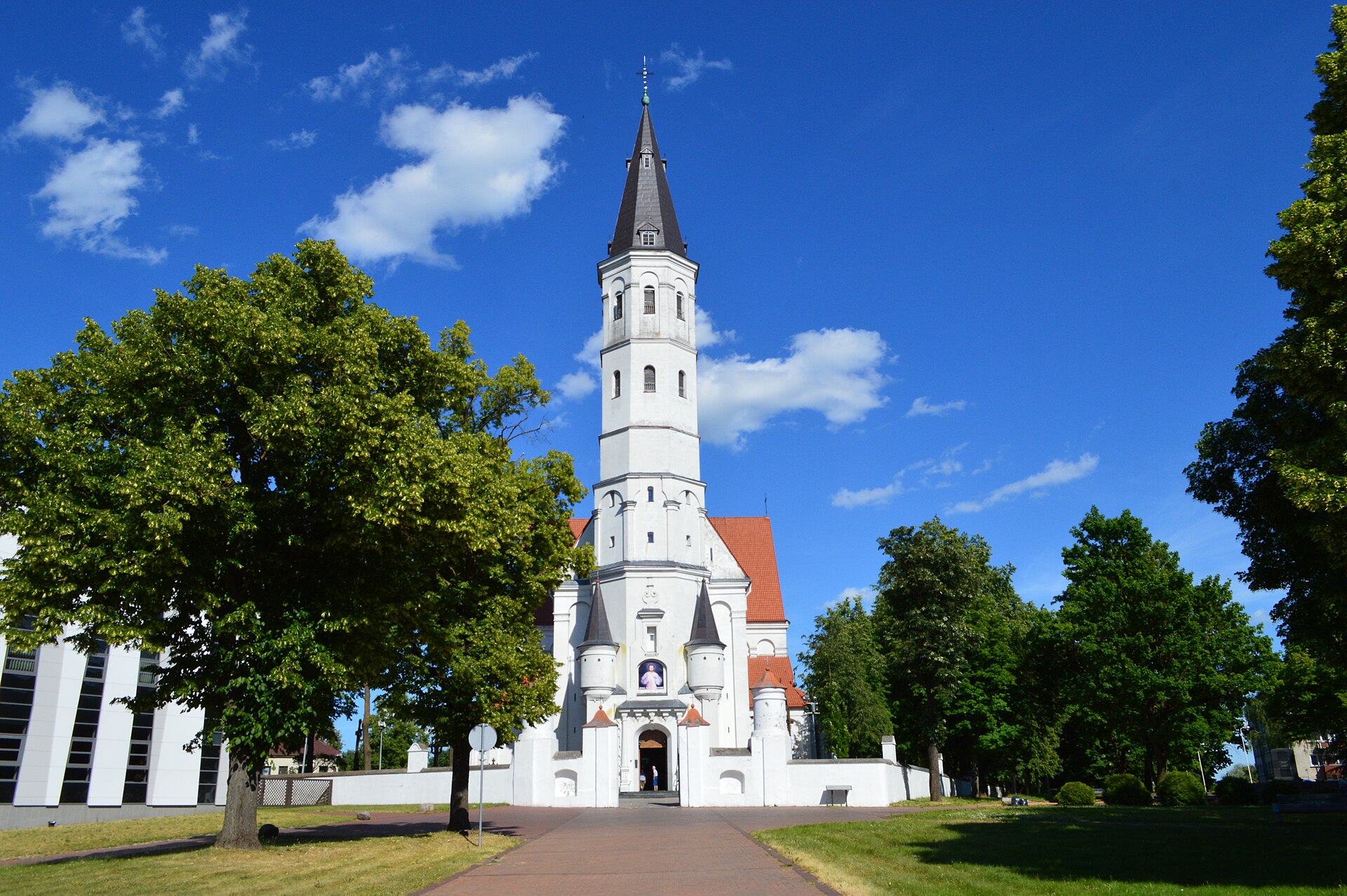
Šiauliai’s Cathedral of Saints Peter and Paul doesn’t announce itself at first glance. Tucked slightly away from the city’s busier streets, it stands quietly in the center. The white walls, tall pointed windows, and sturdy clock tower create a familiar silhouette among Lithuania’s churches, yet it retains its own identity.
The cathedral’s history stretches back to the mid-17th century, when Šiauliai was a trading hub at the crossroads of the Grand Duchy of Lithuania. The first wooden church on this site appeared in 1445 but suffered damage from fires and wars. The stone structure began construction in 1617, a project that took nearly fifty years. During that time, Lithuania endured wars with Sweden, uprisings, and shifting powers. The cathedral survived fires, occupations, and even repurposing—during the Soviet era, it served as a warehouse and later a museum of atheism. Yet each time, it returned to its original purpose.
The architecture tells a story of compromise. At first glance, it resembles a late Gothic church, but closer inspection reveals Renaissance and Baroque elements added over the centuries. The facade is unadorned, balanced. The main entrance is framed by a semicircular arch, above which once stood a statue of the Virgin Mary, lost during the Soviet period. The clock tower, completed in the 19th century, has since become part of Šiauliai’s skyline. Inside, high vaults and slender columns create a sense of lightness.
The interior holds fragments of the cathedral’s past. Parts of 17th-century frescoes remain on the walls. The Baroque altar, crafted by local artisans, carries a quiet elegance. The 19th-century organ still fills the space during services. Wooden choir lofts with carved railings add warmth. Many details were damaged or removed during the Soviet era, but restoration efforts have brought back some of the former beauty.
For Šiauliai, this cathedral is a symbol of resilience. The city has often been on the front lines of history: armies marched through it, uprisings flared within its walls, and in the 20th century, it endured occupations. Through it all, the cathedral remained a constant—a place where people marked life’s milestones or found silence. Even in the darkest times, baptisms, weddings, and funerals continued here. Today, it hosts religious services, organ concerts, art exhibitions, and lectures.
Visiting the cathedral offers a chance to step into a place that moves at its own pace. Unlike Vilnius or Trakai, it feels intimate. You can sit on one of the wooden pews, listening to the echo of footsteps, or climb to the choir loft for a different view. In summer, sunlight streams through the tall windows; in winter, the space grows quiet.
This isn’t a place that demands attention. It simply exists, as much a part of the city as the streets outside. Some things endure, and this cathedral is one of them. History isn’t just remembered here—it’s still alive.