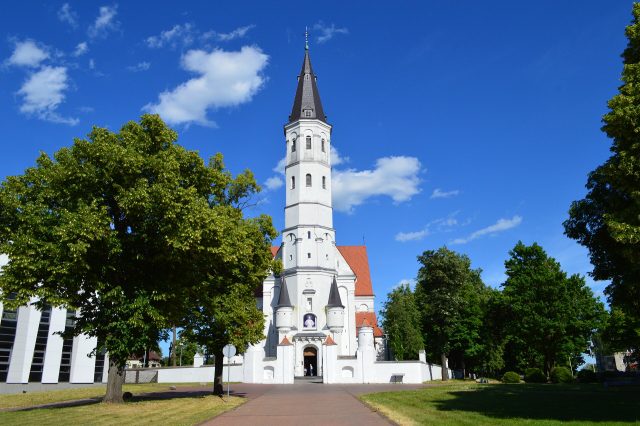
Šiauliai Drama Theatre might not be the first place that catches your eye when you arrive in the city, but that’s part of its quiet charm. Tucked away in the heart of Šiauliai, it has been a cultural anchor for over a century, not just for the locals but for all of northern Lithuania. Unlike the grand theatres of the capital, this one doesn’t rely on pomp or spectacle. Instead, it offers something more intimate—a connection between the stage and the audience, where the focus is on stories that feel close to home rather than just entertainment.
The theatre’s roots stretch back to the late 19th century, when Šiauliai was a thriving hub of trade and industry. The city’s cultural scene was vibrant even then, and the first professional theatre troupe took shape in rented halls before eventually finding a permanent home in the early 1900s. Over the decades, the building has weathered wars, political shifts, and economic ups and downs, yet it has always remained a place where art endures. The current structure is the result of several renovations, but it still carries the echoes of its past, a quiet testament to resilience.
From the outside, the theatre is unassuming—functional rather than flashy, designed to blend with the city’s modest architecture. The facade is simple, with large windows that let in natural light, while the interior follows the classic theatre layout: high ceilings, comfortable seating, and a stage framed by a traditional curtain. Recent updates have modernized the space without erasing its history, so today it balances old-world charm with contemporary comfort. There’s no pretension here, just a warm, inviting atmosphere where the audience can lose themselves in the performance.
The repertoire at Šiauliai Drama Theatre is varied, but it always makes room for Lithuanian playwrights. While you’ll find classics like Shakespeare and Chekhov, the theatre has a particular fondness for national stories—tales of ordinary lives, questions of identity, and reflections on the past. The productions aren’t about chasing awards or international acclaim; they’re about speaking to the people who walk through the doors. The actors perform with a sincerity that resonates, and the audience responds in kind, creating a rare sense of trust between the stage and the seats.
Beyond the performances, the theatre is a gathering place. The foyer often hosts exhibitions by local artists, literary readings, and discussions, turning the space into more than just a venue for plays. For many in Šiauliai, it’s a kind of cultural club—a place to see a show, yes, but also to meet like-minded people, share ideas, and feel part of something bigger. This is especially true during festivals, when performers and visitors from across Lithuania converge on the city. For a few days, the theatre becomes a crossroads of generations and perspectives, a reminder of how art can bring people together.
In a city like Šiauliai, where cultural life isn’t as bustling as in Vilnius or Kaunas, the theatre plays an outsized role. It’s a lifeline for those who don’t want to lose touch with the arts, offering a space where creativity thrives without the need for grandeur. There are no celebrity names or lavish sets here, but what you will find is something often missing in bigger cities: a sense of belonging. The audience and the performers aren’t separated by the usual barriers; they’re on the same wavelength, sharing an experience that feels personal and real.
Visiting Šiauliai Drama Theatre isn’t just about seeing a play—it’s about getting a sense of the city itself. Šiauliai isn’t a tourist hotspot; it’s a typical Lithuanian town with its own rhythms, history, and character. The theatre isn’t a museum piece; it’s a living space where stories unfold every night, reflecting the lives of the people who come to watch. That’s why it matters so much to the locals and why it offers something special to visitors who want to understand Lithuania beyond its capital.
If you find yourself in Šiauliai, stop by the theatre even if you’re not there for a show. Wander through the foyer, grab a coffee from the buffet where the scent of fresh pastries lingers in the air, or take a seat in the auditorium before the lights dim. You might just discover what makes travel worthwhile—not the flashy sights, but the quiet moments where you stumble upon something genuine.