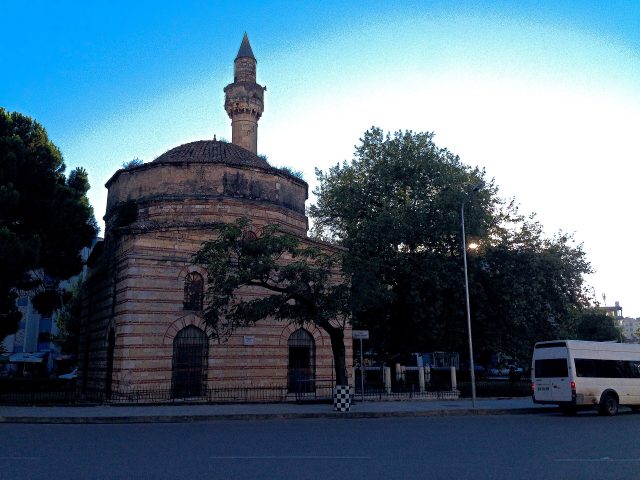
The Cathedral of St. Mary in Vlorë is one of those quiet places that doesn’t demand attention but stays with you. Perched on a gentle rise near the city center, it stands slightly apart from the bustle of daily life, preserving the memory of a time when Vlorë was more than just a port on the Adriatic—when it was a place where faith, trade, and culture intersected.
Built in the late 18th century, the cathedral emerged when Vlorë had long since lost its status as the capital of a medieval principality but remained an important city under Ottoman rule. Albania at the time was predominantly Muslim, yet Christian communities along the coast maintained their practices. The Cathedral of St. Mary was one of the few Orthodox churches to survive without being demolished or repurposed as a mosque. Its endurance may have been due to Vlorë’s character as a city of merchants and sailors, where different faiths coexisted out of necessity.
The architecture is unassuming. The building is sturdy, with thick walls, small windows, and a pitched roof—elements suited to the climate and the modest means of its builders. The facade has a plain portal and a few decorative touches that hint at Byzantine influences. Inside, the space is small but bright, with a high ceiling and a wooden iconostasis likely crafted by local artisans. The cathedral was always meant to be a gathering place for prayer and community.
The cathedral withstood centuries of Ottoman rule and the repression of religion under communism. In 1967, Albania declared itself the world’s first atheist state, and countless religious sites were destroyed or repurposed. The Cathedral of St. Mary escaped this fate. After the fall of communism, it was returned to the Orthodox Church, and services are held here again.
Vlorë’s history is layered, and the cathedral reflects its contradictions. The building is a patchwork of eras: Ottoman-era construction, Soviet-era repairs, and modern restorations. The bell tower was added in the 20th century, while some interior frescoes have been restored in recent years. These changes make it feel like a living document of the city’s past—a place used, adapted, and preserved by generations.
The Cathedral of St. Mary serves as both a place of worship and a small museum. Inside, you’ll find old icons, religious artifacts, and documents that offer glimpses into the life of Vlorë’s Orthodox community. The collection is modest, but for those interested in Albania’s religious history, it shows how faith persisted even under official hostility. Nearby, the Muradie Mosque, which dates to the same period, offers another perspective on the city’s religious coexistence.
Visiting the cathedral doesn’t take much time. The atmosphere is peaceful, almost forgotten, and that’s part of its appeal. The small courtyard offers a quiet spot to sit and look out over the city. Vlorë isn’t a city of grand landmarks, and the Cathedral of St. Mary doesn’t announce its importance. But if you take the time to look, its weathered stones tell a story of Albania’s long and complicated history.