St. Joseph’s Cathedral in Asmara is one of those places that makes you pause, even if you’ve never been particularly drawn to architecture or religion. It stands in the heart of the city, on a square where different eras and cultures intertwine, its Gothic spire immediately catching the eye. Tall and slender, with a sharp pinnacle, it looks as if it were lifted straight from medieval Europe, yet it fits seamlessly into Asmara’s skyline, where Italian colonial heritage meets local traditions.
Built in the early 20th century when Eritrea was under Italian rule, the cathedral became a symbol of that period. The Italians brought more than just their language and cuisine—they also brought their architectural tastes, and St. Joseph’s is a striking example. Designed by architect Oreste Scanavini and completed in 1922, it was inspired by the Gothic cathedrals of northern Italy. But local craftsmen and materials left their mark: the walls are made of indigenous stone, and the details bear the imprint of Africa’s climate and culture.
The interior is just as impressive as the exterior. High vaulted ceilings, stained-glass windows depicting biblical scenes, and sturdy columns create a sense of grandeur and space. The main altar is adorned with marble and gilding, while the wooden pews, though decades old, retain their warmth and solidity. Unlike some European churches, there’s no cold pomp here—just a welcoming, almost homely atmosphere, as if the cathedral has truly become part of the city’s life rather than just a monument.
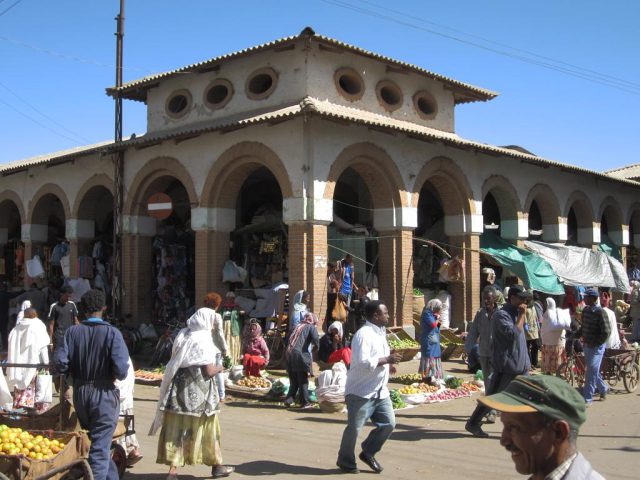
St. Joseph’s is more than a religious center; it’s an important historical site. During Italian colonial rule, it was the heart of Asmara’s Catholic community, and after Eritrea gained independence, it remained significant for both locals and visitors. The square in front is always lively—markets spring up during the day, and in the evenings, people gather under the shade of trees or sit on the steps, watching the illuminated facade.
What makes the cathedral fascinating is how it bridges cultures. The Italians built it for themselves, but over time, it became part of Eritrea’s identity. Today, services are held in multiple languages, including Tigrinya and Arabic, and locals cherish it as much as their traditional places of worship. This is what makes St. Joseph’s special: it’s not just a relic of a foreign past but a living place that evolves with the city.
Climbing the bell tower rewards you with a breathtaking view of Asmara. The city sprawls below, with its straight streets, low-rise buildings, and patches of greenery. In the distance, hills rise against the horizon, and the sky feels so vast and clear that the clouds seem within reach. The climb isn’t easy, but the effort is worth it—the cathedral looks even more majestic from above, and the city reveals its unique beauty.
St. Joseph’s has witnessed eras come and go. It survived colonial rule, wars of independence, economic struggles, and social change, standing firm as a symbol of resilience. Its walls hold more than religious relics; they carry the stories of people who have come here over the years—some to pray, others to escape the heat or find a moment of quiet in the city’s bustle.
When visiting, take time to notice the details. The intricately carved wooden doors leading to the side chapels, the old clock on the tower still keeping time, the memorial plaques honoring those who built and maintained the cathedral—these small touches turn a visit into more than just sightseeing. They offer a glimpse into the past.
Asmara is often called an open-air museum, and St. Joseph’s Cathedral is one of its finest treasures. It may not have the fame of Rome’s cathedrals or Paris’s churches, but that’s part of its charm. There are no crowds, no rush—just the chance to feel the spirit of the place, its history, and its quiet dignity. The cathedral asks nothing of its visitors except curiosity and respect, and in return, it offers something rare: a connection to something real, something enduring.