Asmara has a way of surprising visitors with its quiet, unassuming layers of history. One of those surprises is the Pushkin Monument, a bronze bust of the Russian poet standing on a small square in the heart of the city. It’s not the kind of place you’d expect to find in Eritrea, and that’s part of what makes it intriguing. The monument doesn’t demand attention, but for those who pause to look, it offers a glimpse into the unexpected connections that shape a place.
The story of how Pushkin ended up in Asmara is tied to the broader history of Eritrea’s relationship with the world. During the Soviet era, the country received support in its struggle for independence, and cultural exchanges followed. Pushkin, as a symbol of Russian literature, became part of that legacy. For many Eritreans who studied Russian language and culture, his name is familiar, and the monument stands as a quiet reminder of those ties. It’s not a grand gesture, but a subtle one, reflecting how art and history can bridge divides.
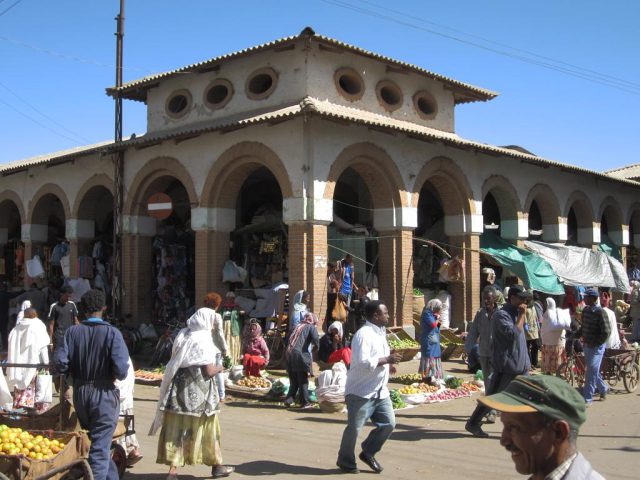
Asmara itself is a city that feels like an open-air museum. Its streets are lined with Italian colonial architecture from the 1930s—Art Deco facades, futurist designs, and rationalist buildings that give the city a timeless quality. The Pushkin Monument fits naturally into this setting, another thread in the fabric of a place where African, Italian, and Soviet influences intertwine. The square where it stands is unassuming, with a few benches and trees providing shade, a quiet spot away from the bustle of the city.
The bust itself is simple, depicting Pushkin in a thoughtful pose, his head slightly tilted as if lost in thought. There’s no pomp or grandeur to it, just a respectful tribute to the poet. The surrounding area is equally understated—flower beds, a few trees, and the occasional passerby. It’s not a place that draws crowds, but those who do stop often find themselves reflecting on how a Russian poet came to be honored in the middle of Africa.
For Eritrea, a country with a complex history of colonization and struggle, the monument is more than just a cultural curiosity. It’s a symbol of the connections that persist despite political and geographical distances. The country’s path to independence was long and difficult, and its relationship with the outside world has been shaped by both conflict and cooperation. The Pushkin Monument is a small but meaningful part of that story, a reminder that culture can transcend borders.
Pushkin’s own life was one of cultural blending—his African heritage, Russian upbringing, and European influences made him a figure who resonated across different worlds. In a way, his presence in Asmara feels fitting. The city itself is a mix of traditions, where Italian cafes sit alongside African markets, and where the past is always present in the architecture. The monument doesn’t shout its significance, but it quietly underscores how much of the world is interconnected.
Around the square, life goes on as usual. People walk by on their way to work, stop for coffee at nearby cafes, or sit on benches enjoying the evening breeze. The monument doesn’t disrupt the rhythm of the city; it simply becomes part of it. For those who take the time to notice, it’s a small discovery, a moment of connection between two distant cultures.
Asmara isn’t a city that thrives on spectacle. It moves at its own pace, and the Pushkin Monument is no exception. There are no guided tours here, no plaques with lengthy explanations. Just a bronze bust, a square, and the quiet hum of the city around it. For some, that’s enough. It’s a place where history isn’t announced but felt, where the past lingers in the details. And perhaps that’s what makes it worth finding.