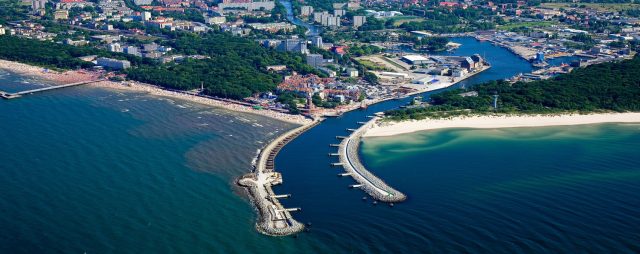
Kołobrzeg is a town where the past lingers in the salt-tinged air, its streets lined with the quiet dignity of centuries. Perched on the Baltic coast, it carries the weight of history lightly, as if the waves themselves have smoothed its edges over time. Among its most enduring landmarks stands St. John the Baptist Cathedral, a structure that has watched over the town through prosperity, war, and renewal. More than just a building, it is a living record of Kołobrzeg’s evolution from a medieval trading hub to the resilient coastal town it is today.
The cathedral’s origins trace back to the 13th century, when Kołobrzeg flourished as part of the Hanseatic League. The original Romanesque design was later reshaped by Gothic and Baroque influences, each era leaving its mark without erasing what came before. The result is a building that feels both ancient and timeless, its stones bearing the scars and embellishments of generations. The exterior, with its sturdy buttresses and weathered facade, hints at the layers of history contained within.
Inside, the cathedral’s vastness is immediately striking. The high vaulted ceilings and slender columns draw the eye upward, while the play of light through the stained glass softens the austerity of the space. The Baroque high altar, with its intricate carvings and gilded details, stands as a centerpiece, though it shares the spotlight with older relics. Among them are the tombstones and epitaphs of merchants, clergy, and nobles—silent witnesses to the lives that once revolved around this place. Their inscriptions, worn by time, offer fragments of stories that history has otherwise forgotten.
The cathedral has not been spared from turmoil. During the Thirty Years’ War, it was looted, and in the chaos of World War II, it suffered severe damage from bombings. Yet each time, it was painstakingly restored, a testament to the town’s determination to preserve its heritage. Today, the building serves not only as an active place of worship but as a symbol of Kołobrzeg’s endurance. The very act of stepping inside feels like a quiet defiance of the forces that once sought to erase it.
The bell tower offers one of the best views of the town. Climbing the narrow spiral staircase rewards visitors with a panorama of red-tiled roofs, the shimmering Baltic Sea, and the lush greenery of nearby parks. On clear days, the horizon stretches endlessly, blurring the line between sky and water. The bells, when they ring, carry across the town like a reminder of time’s passage—both fleeting and eternal. It’s a moment that lingers, even after the last note fades.
Beyond its religious significance, the cathedral plays a central role in Kołobrzeg’s cultural life. The organ, renowned for its rich sound, fills the space during concerts, drawing audiences from near and far. Summer evenings often see the doors open to visitors, inviting them to sit in the quiet and absorb the atmosphere. The acoustics are such that even a whispered word seems to echo with the weight of centuries. For those who attend, it’s less about spectacle and more about the rare opportunity to experience history in a way that feels personal.
For many locals, the cathedral is woven into the fabric of their lives. It’s where families have marked milestones—baptisms, weddings, funerals—and where individuals return to seek solace or reflection. Even those who don’t consider themselves religious often find themselves drawn to its walls, as if the building itself offers a connection to something larger than the present. In this way, the cathedral transcends its role as a historical monument; it becomes a shared space where the past and present coexist.
The details of the cathedral are easy to overlook but worth lingering over. Faint frescoes on the walls, barely legible inscriptions, and the worn patterns of floor tiles all hint at stories waiting to be uncovered. A scratch on a column might be the remnant of a long-ago conflict, or a misplaced stone could mark a forgotten repair. These small imperfections are part of what makes the place feel alive, as if the building itself is still breathing. Time here doesn’t move in a straight line—it circles back, offering glimpses of what once was.
Visiting St. John the Baptist Cathedral is less about ticking off a sightseeing box and more about stepping into a slower rhythm. Whether you come for the architecture, the history, or simply the quiet, the experience is one of quiet revelation. The town outside may change, but within these walls, the past remains tangible, waiting to be discovered by those willing to look.