Alaverdi sits quietly in the northern highlands of Armenia, a place where the pace of life slows to match the rhythm of the surrounding mountains. The air carries the scent of wild herbs and the distant murmur of the Debed River, while the town itself feels suspended in time. There are no crowded streets or hurried footsteps here—just the steady presence of history etched into the landscape. And at the heart of it all stands the Cathedral of Saint Gregory the Illuminator, a structure that has watched over the valley for centuries, its walls holding more than just prayers.
The cathedral was built in the 11th century, a period when Armenian culture and architecture flourished under the rule of local kingdoms. It was commissioned by King Kyurike I of the Tashir-Dzoraget Kingdom, a dynasty that played a key role in shaping the region’s identity. The choice of dedication was no accident—Saint Gregory the Illuminator is one of the most revered figures in Armenian history, the man who, in the early 4th century, brought Christianity to the land, making Armenia the first nation to adopt it as a state religion. The cathedral was never just a place of worship; it was a statement of continuity, a bridge between the past and the present.
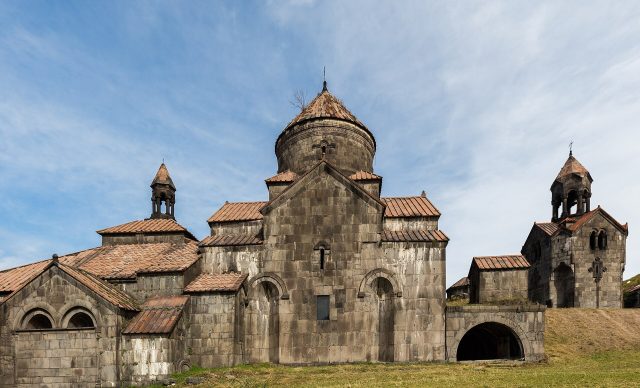
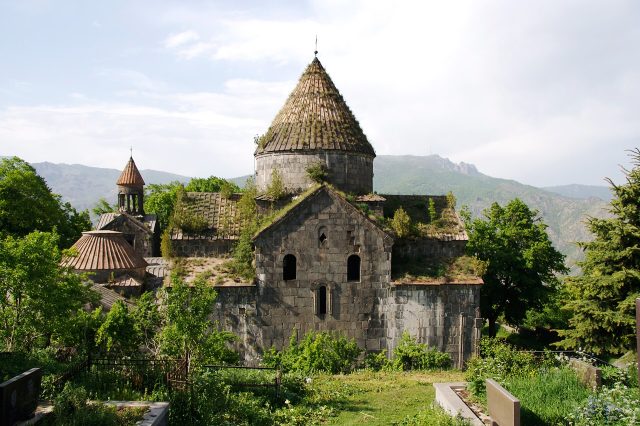
The architecture of the cathedral reflects the hallmarks of medieval Armenian design—simple yet imposing, with a sense of harmony that comes from centuries of refinement. Built from local tuff stone, the structure glows warmly in the sunlight, its golden hues shifting with the time of day. The central dome, supported by four sturdy pillars, seems to float above the ground, while narrow windows filter the light into soft, diffused beams that fill the interior. The exterior is adorned with modest carvings—crosses, geometric patterns, and delicate floral motifs—each element a testament to the craftsmanship of its builders.
Inside, the cathedral’s layout draws the eye toward the altar, the space designed to evoke both reverence and intimacy. The vaulted ceilings, supported by graceful arches, create an atmosphere of openness, while the remaining fragments of frescoes hint at the vibrant artistry that once covered the walls. One of the most striking features is the intricately carved khachkar embedded in the stone—a cross with elaborate patterns unique to Armenian tradition. These stone crosses are more than decoration; they are symbols of faith, each one distinct, like a signature left by the hands that carved it.
The cathedral has not always stood in its current form. Over the centuries, it has endured earthquakes, invasions, and neglect. A particularly devastating tremor in the 17th century left it in ruins, prompting a reconstruction that added the bell tower, which now defines part of its silhouette. During the Soviet era, the building was repurposed for secular use—warehouses, workshops—its spiritual significance ignored. But in the late 20th century, restoration efforts began, and today, the cathedral has been returned to its original purpose, welcoming both worshippers and visitors.
Alaverdi and its cathedral exist in a kind of quiet dialogue with the past. The locals speak of the place with pride, and pilgrims arrive to pay their respects, drawn by the sense of connection to something enduring. On feast days, the cathedral comes alive with the sound of hymns, the scent of incense, and the flicker of candlelight, the rituals unchanged by time. The most significant celebration is the Feast of Saint Gregory the Illuminator, when crowds gather to honor the man who brought Christianity to Armenia, their presence a living thread between history and the present.
The surrounding landscape adds to the cathedral’s allure. Alaverdi is nestled in the Debed River valley, a region of rolling hills and fertile land where orchards and vineyards stretch across the slopes. From the higher ground, the cathedral appears almost organic, rising from the greenery as if it has always been part of the terrain. Nearby, the monasteries of Sanahin and Haghpat—both UNESCO World Heritage sites—stand as further evidence of the region’s rich medieval heritage. Together, these structures form a network of history, each one a chapter in Armenia’s golden age.
Visiting the Cathedral of Saint Gregory the Illuminator is less about ticking off a landmark and more about stepping into a different rhythm. There are no tourist crowds here, no vendors pushing souvenirs, just the quiet hum of the wind and the weight of centuries in the stones beneath your feet. It’s a place where history isn’t confined to books but lingers in the air, in the way the light falls through the windows, in the echoes of footsteps that have crossed the threshold for a thousand years. That, perhaps, is the real gift of such places—they remind you that the past isn’t gone, it’s just waiting to be noticed.