Sanahin Monastery sits on a gentle hill above the Debed River gorge, where the valley once carried trade routes between Armenia, Georgia, and lands farther east. The name itself hints at its age—Sanahin means "this one is older than that one," a quiet claim to its place in history. From here, the view stretches across the landscape, where the past feels closer than the winding road below.
Founded in the 10th century during the Bagratuni dynasty’s golden age, the monastery became a center of learning and faith at a crossroads of cultures. Scribes copied manuscripts by hand, scholars debated philosophy, and students from noble families came to study theology, medicine, and science. The academy’s long arched gallery still holds the stone benches where they sat, the niches where books were kept. Some of those students later shaped Armenian culture and the church itself.
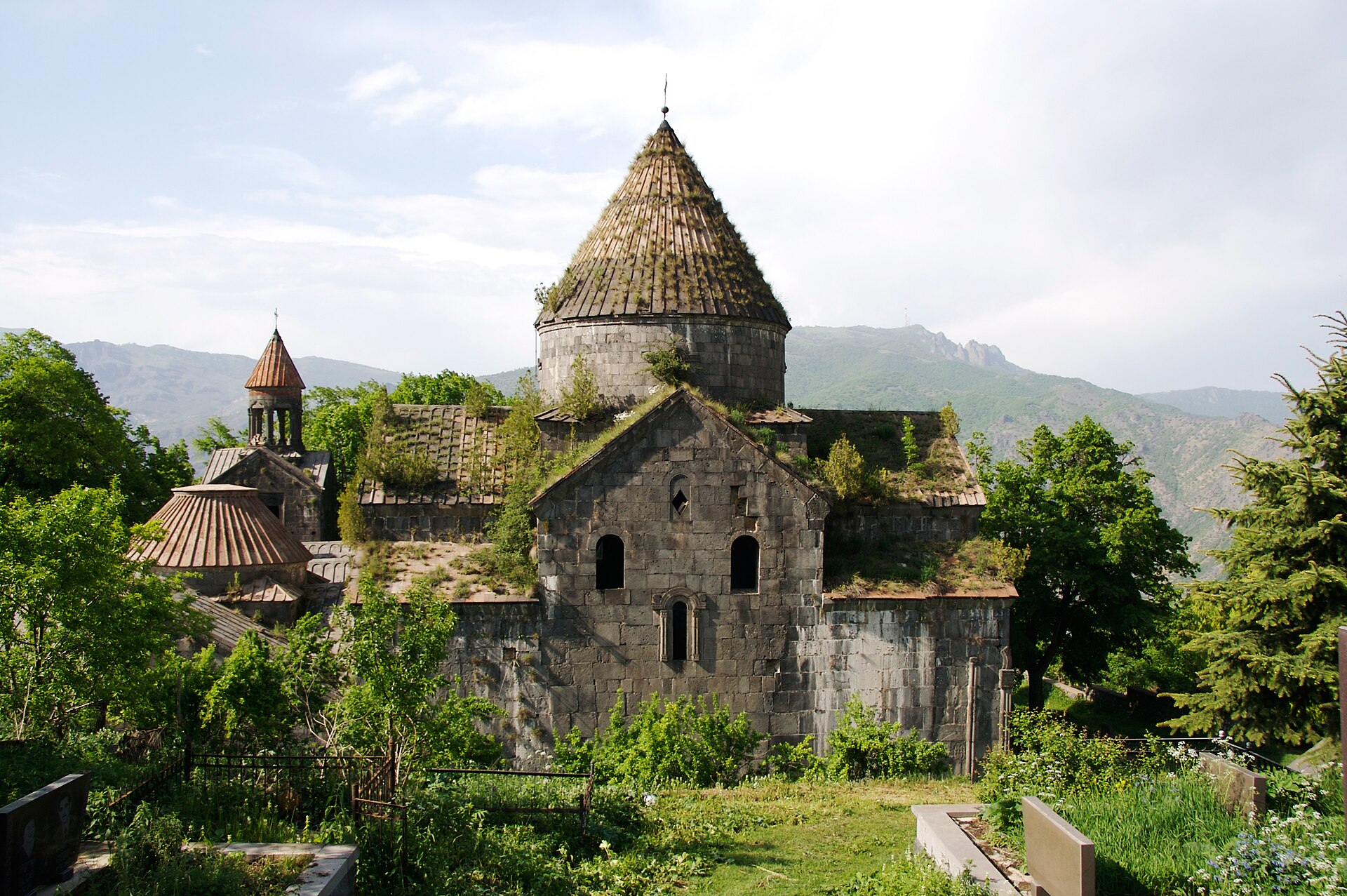
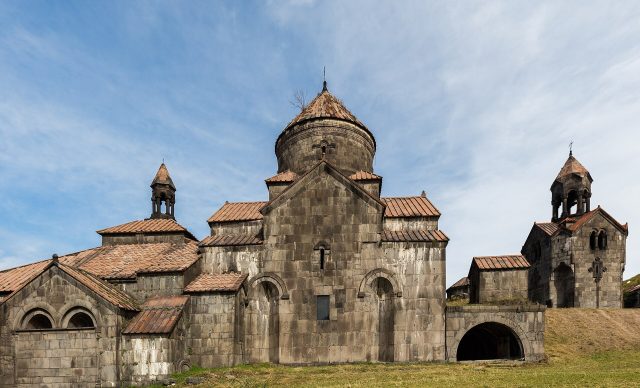
The main church, Surb Astvatsatsin, is a classic example of Armenian religious architecture—a cruciform structure with a high drum and conical dome. Built from pale tuff stone, its walls shift in color with the light, glowing gold in the sun and turning muted gray under clouds. Inside, fragments of frescoes remain, though earthquakes have worn them down over centuries. Nearby stands the smaller Amenaprkich Church, its proportions just as refined, its arches echoing the same quiet elegance.
For a time in the 11th century, Sanahin served as the seat of the Armenian Apostolic Church’s catholicos, a role it inherited when political turmoil forced the spiritual center to move from Ani. The monastery’s walls enclose more than just prayer halls and classrooms; they hold the graves of the Kyurikid princes who ruled the Lori kingdom. Simple stone slabs mark their resting places, carved with crosses and inscriptions in ancient Armenian. These tombs remind visitors that Sanahin was more than a religious site—it was a place where faith and power intersected.
The monastery has endured invasions, earthquakes, and the slow passage of time. Soviet-era restorations stabilized its structures without erasing their history. Today, it doesn’t feel like a museum. Even in peak season, the crowds thin out, leaving space for silence. You can sit on a bench beneath an old tree and listen to the wind rushing through the gorge, the sound carrying the weight of centuries.
Getting here from Alaverdi is a short journey along the Debed River, past crumbling bridges and the skeletal remains of Soviet-era factories. Alaverdi itself is a town of copper mines and concrete apartment blocks, a place shaped by industry. But turn off the main road, climb the hill, and suddenly you’re standing in another era. The monastery rises from the dry grass, its stone walls weathered but unbroken.
The surrounding hills are sparse, dotted with tough shrubs and the occasional tree. Down by the river, old watermills hide among the reeds, their wheels long still. Nearby, the ruins of medieval settlements and fortresses linger, half-forgotten. Locals say the area was once rich in silver and copper, that bandits once lurked in the gorges. Now, the only sounds are the distant whistle of a train and the rustle of wind through the grass.
Sanahin lacks the ornate carvings and vivid frescoes of other Armenian monasteries. Its beauty lies in its restraint—the way the stone bears the marks of time, the way the light falls through empty doorways. There are no grand declarations here, just the quiet persistence of a place that has seen empires rise and fall. To visit is to step into a past that hasn’t quite faded, where the air still hums with the voices of those who once walked these paths.