Savonlinna is a town that feels plucked from an old tale, where granite cliffs meet the still waters of Lake Saimaa and medieval fortresses stand beside quiet wooden houses. In this northern corner of Finland, where summers are brief and winters drape everything in silver frost, there’s a place that holds not just spiritual heritage but echoes of centuries past. The Savonlinna Cathedral rises above the town, a building that is more than just a church—it’s a witness to the days when these lands were caught between Sweden and Russia, when Orthodoxy and Lutheranism vied for the souls of the people who lived here.
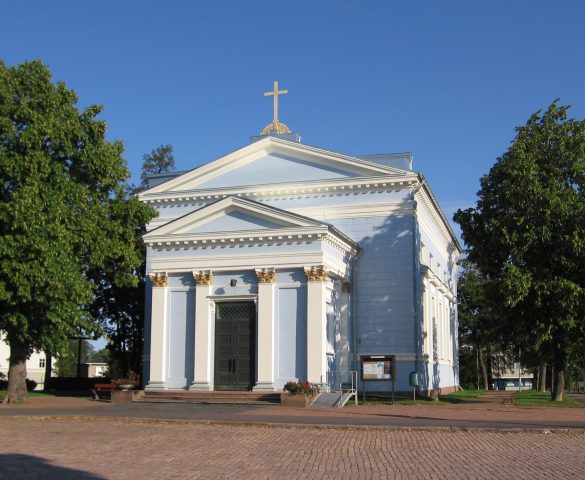
Built in the late 19th century, when Finland was still part of the Russian Empire but already beginning to see itself as a distinct cultural entity, the cathedral reflects the architectural tastes of its time. The architect, Josef Stenbäck, chose a neo-Gothic style, a nod to the European traditions popular across Northern Europe during that era. Tall, pointed windows and delicate tracery give the building a sense of lightness, despite its heavy stone walls. Inside, the space is restrained—light-colored walls, simple wooden pews, and unadorned stained glass create a quiet atmosphere, the kind valued in Lutheran churches for its ability to foster reflection.
What many visitors don’t realize is that the cathedral wasn’t always Lutheran. Before it stood here, the site was home to an Orthodox church, built in the 18th century when Savonlinna was still known as Nyslott and served as a border fortress for the Russian Empire. Orthodoxy arrived with Russian soldiers and merchants, but as Finland shifted under Swedish rule and later became part of the Grand Duchy of Finland, the religious landscape changed. Lutheranism took hold, and the old church was demolished to make way for the new one. Today, the only hint of that earlier history is a small plaque near the entrance, though the layers of the past are still palpable in the building’s very bones.
Compared to the grand cathedrals of Helsinki or Turku, Savonlinna’s is modest in size, and that’s part of its charm. There are no elaborate frescoes or gilded altars here, just a sense of authenticity and a connection to the everyday life of the town. Locals come not only for services but also for organ concerts, which fill the high vaulted ceilings with music. The cathedral’s organ, though not the largest in Finland, is known for its clear, resonant sound, perfectly suited to the space. In summer, when the town hosts its famous opera festival, the cathedral occasionally serves as a venue for chamber performances, its walls vibrating with the works of Mozart or Verdi.
Winter transforms the cathedral into something almost magical. Snow settles on its spires and ledges, while the glow from its windows cuts softly through the frosty air, making the warmth inside feel even more inviting. During Christmas, traditional services draw both parishioners and visitors, all seeking the quiet beauty of a Finnish holiday. The scent of pine and candle wax fills the air, and the choir sings hymns that have echoed here for over a century.
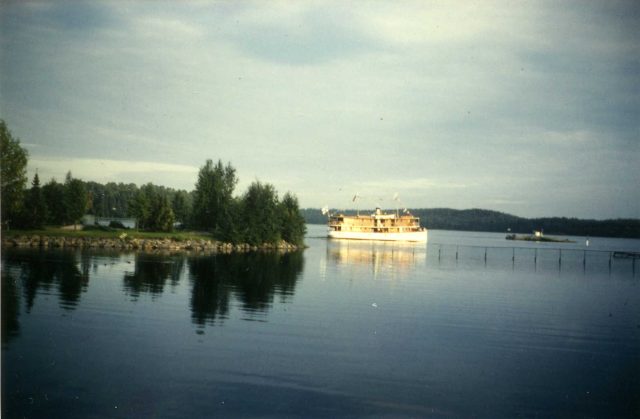
Architecturally, the cathedral marked a turning point for Savonlinna. It was one of the first stone buildings in a town where wood had long been the dominant material, signaling a shift as the settlement grew from a small garrison into a cultural hub for eastern Finland. Today, the cathedral blends seamlessly into the town’s landscape. Its silhouette is visible from Lake Saimaa when approaching by ferry, or from the hills surrounding Savonlinna, a constant presence in the city’s skyline. It has become a symbol of both continuity and change, a building that has watched the town evolve while remaining steadfast itself.
For visitors, the cathedral is more than just a historical site—it’s a natural starting point for exploring Savonlinna. From here, it’s a short walk to Olavinlinna Fortress, the lakeside promenade with its cafés and small shops, or the old wooden neighborhoods where fishermen and craftsmen once lived. The cathedral stands at a crossroads of time, with the medieval fortress on one side and the modern town on the other, where life moves at its own unhurried pace. That’s the quiet magic of Savonlinna—it weaves past and present together so effortlessly that neither overshadows the other.
Around the cathedral, a small garden offers a peaceful retreat. Lime trees and rowan berries grow here, and in summer, roses bloom along the paths. It’s a place to sit on a bench, listen to birdsong, and think about the countless people who have walked these same paths over the last century and a half—the prayers whispered under its vaults, the lives intertwined with its history. Like the cathedral itself, the garden is unassuming, and that’s why it feels so genuine. There’s nothing staged here, just the quiet weight of time in the stones, the trees, and the stillness that lingers in the air.