Gabrovo is known for its humor, but it also has a quieter side—places where the pace slows and the mind can wander. One of those places is the viewpoint on Uzana Mountain, where the town reveals itself from an unexpected angle. It’s not just a spot for photographs; it’s a place where the rhythm of the Balkans feels tangible, unhurried and steady, much like life in these parts.
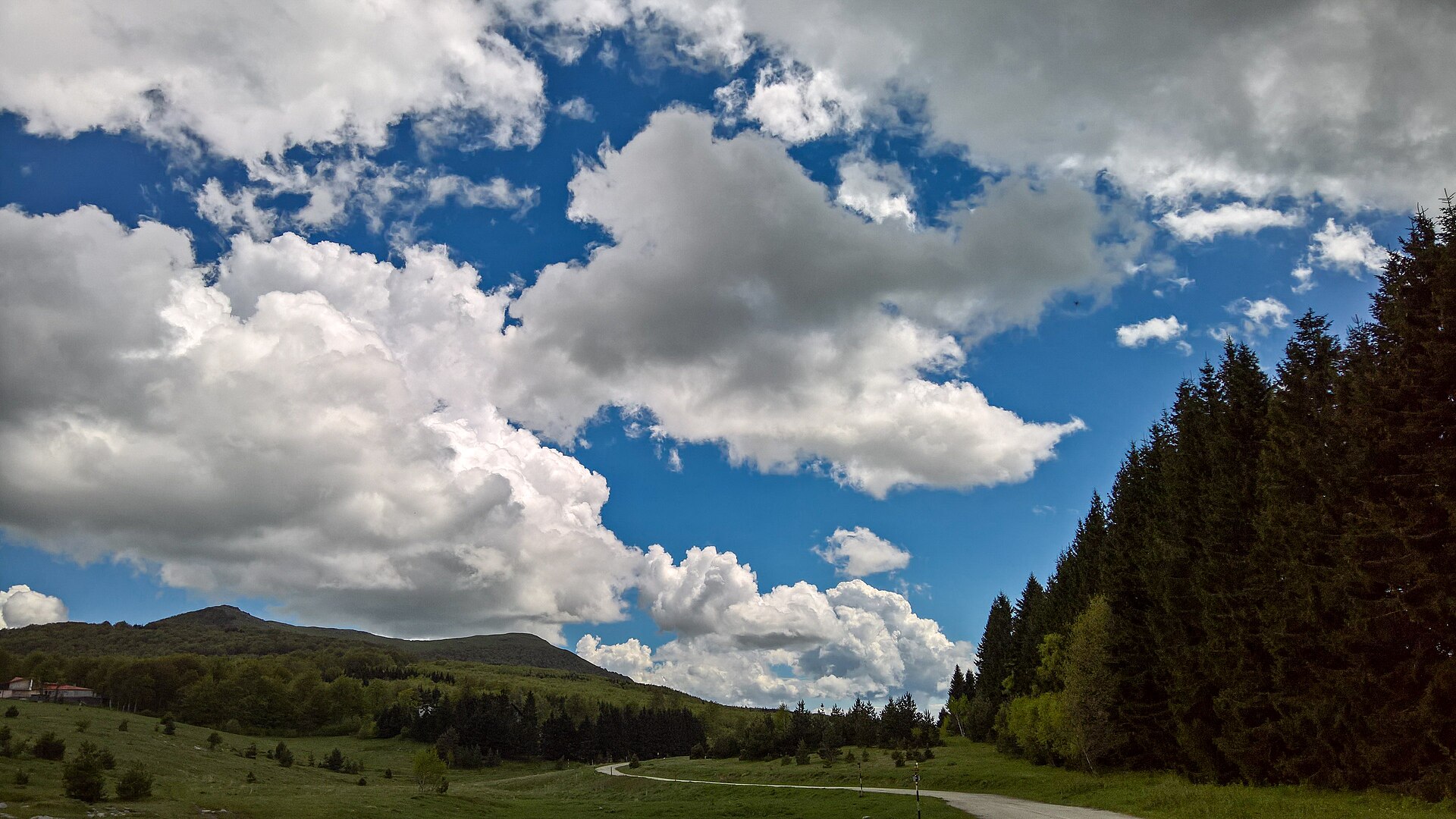
Uzana isn’t a towering peak—just around a thousand meters above sea level—but its slopes hold a special distinction. This is where Bulgaria’s geographical center lies, a meeting point of ridges and watersheds. The views from the platform stretch far, especially on clear days when the horizon blurs into neighboring mountain ranges. Below, Gabrovo sprawls with its red-tiled roofs and winding streets, looking almost like a miniature model. The distance makes everything feel smaller, quieter, as if the world has paused for a moment.
The history of Uzana is woven into Gabrovo’s own past. Long ago, these slopes were part of trade routes connecting northern and southern Bulgaria. Locals used the land for grazing livestock and later built small villages and homesteads. Today, only scattered stone walls and old paths remain, winding through the forest where you can walk for hours without seeing another soul. The viewpoint itself is a recent addition, but it blends seamlessly into the landscape, as if it’s always been there.
There’s little in the way of grand architecture here—just a wooden platform, railings, and a few informational boards with maps and descriptions. The simplicity is deliberate; the focus is on the surroundings. The forest is mostly coniferous, with occasional clearings where wildflowers bloom in summer and fallen needles carpet the ground in autumn. In winter, Uzana becomes a quiet retreat for snowshoeing or cross-country skiing, though it’s far from the bustle of major ski resorts.
For Gabrovo’s residents, this place is more than a scenic overlook. It’s a symbol of their connection to the land, a chance to step away from the noise of daily life. Families come here for picnics, locals bring visitors to share the view, and school groups arrive to learn about the region’s geography. Tourists, too, find something here—a sense of why Bulgaria’s landscapes feel so effortlessly compelling.
The atmosphere shifts with the seasons. In spring, the air is thick with the scent of blooming meadows, and the sky seems impossibly vast. Summer brings cooler temperatures, a welcome escape from the heat below. Autumn turns the forest into a blaze of gold and red, while winter softens the contours with snow, transforming the scene into something almost postcard-perfect. Yet no matter the time of year, the quiet remains, inviting reflection rather than distraction.
Reaching the viewpoint is straightforward. From Gabrovo, it’s about a half-hour drive or bus ride, though those who prefer walking can take the forest trails—though the hike isn’t short and requires some stamina. Near the base of the mountain, a small parking lot marks the start of the ascent. First-time visitors often remark on how quickly the city fades behind them, replaced by the stillness of the woods.
Uzana isn’t a place for crowds or loud gatherings. It’s where people come to think, to breathe, to simply sit and watch the horizon. Maybe that’s why it appeals to those who travel not just for sights, but for moments—places where time moves differently, where the most meaningful experiences aren’t always the most obvious. Here, the view isn’t just of the landscape; it’s a reminder of what happens when you slow down enough to notice it.