Gabrovo has long been known as Bulgaria’s capital of humor, a place where wit and lightheartedness are woven into the fabric of daily life. Yet beyond the jokes and lively streets, there are quieter corners where the city reveals a different side. One of these is Raichinova Gradina, a park that feels like a pause button in the middle of urban bustle. Step through its wrought-iron gates, and the noise of the city fades into the rustling of leaves and the distant murmur of conversation.
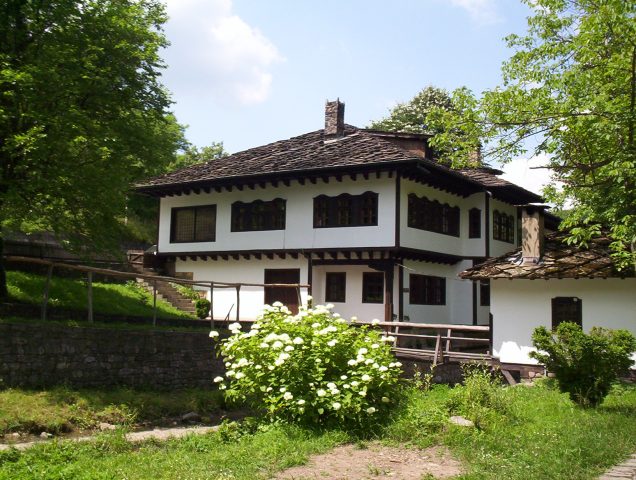
Perched on a hillside, the park offers a sweeping view of old Gabrovo, its red-tiled roofs and narrow streets stretching below. The name itself honors Raicho Karolev, a local businessman and philanthropist who, in the early 20th century, bought this land and turned it into a public space. What began as a simple garden with paths, benches, and a few fountains soon grew into a beloved gathering spot. Over the years, it has changed, but the essence of that era lingers in its unassuming charm.
There’s nothing grand about Raichinova Gradina’s design, and that’s precisely what makes it special. Unlike parks filled with ornate statues or elaborate pavilions, this one is understated—just winding paths, stone steps, and towering trees that have stood here for generations. At its heart is a small fountain, its centerpiece a boy holding a fish, a detail so familiar to locals that it’s become a symbol of the place. Children often gather around it, while adults take a moment to rest on the benches beneath the chestnut trees.
What truly sets the park apart is its atmosphere. While Gabrovo’s main squares buzz with activity, Raichinova Gradina is a place for slow walks and quiet reflection. Here, time seems to move differently. You can spend an hour watching the light shift over the rooftops, listening to the wind in the leaves or the faint chime of a nearby church bell. In summer, the shade keeps the air cool even on the hottest days, and in autumn, the ground is carpeted with golden and crimson leaves.
The park is deeply tied to the city’s cultural life. During the warmer months, it hosts concerts, poetry readings, and open-air theater performances. Locals bring books, guitars, or just good company, turning the space into an extension of their homes. It’s where traditions come to life—festivals, school reunions, even wedding photoshoots. For many in Gabrovo, Raichinova Gradina isn’t just a park; it’s a backdrop for memories.
Despite its modest appearance, the park holds a quiet significance. It’s a living piece of Gabrovo’s past, a reminder of the city’s architectural heritage and its spirit of community. In a world that often feels rushed, places like this offer a chance to slow down, to sit with your thoughts or share a conversation without distraction.
Raichinova Gradina isn’t a tourist hotspot. There are no crowds, no flashy attractions, no pushy vendors. Instead, there’s the quiet hum of life unfolding at its own pace—the dappled sunlight through the trees, the occasional laughter of children, the sense that here, time moves differently. For those who visit Gabrovo not just to see its sights but to feel its rhythm, the park is a small but meaningful discovery. It doesn’t demand attention; it simply waits, ready to offer a moment of peace to anyone who wanders in.