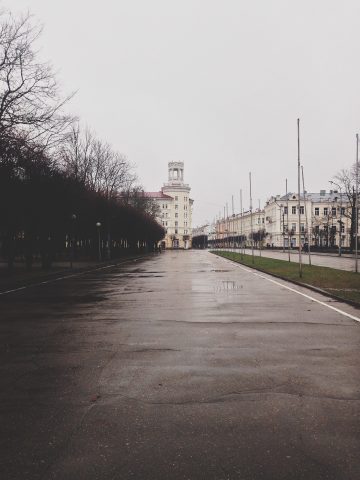
Smolensk State University sits quietly in the heart of the city, its presence unassuming at first glance but growing more meaningful the longer you spend with it. The main building stands on Przhevalsky Street, where the old and the new coexist in the way they often do in provincial Russian cities. The architecture here is a mix of Soviet-era pragmatism and the lingering traces of pre-revolutionary Smolensk, though the university itself is very much a product of the 20th century. It doesn’t dominate the skyline like some of the grander institutions in Moscow or Saint Petersburg, but there’s a certain solidity to it, a sense that this is a place built to last.
The university began in 1918 as a pedagogical institute, a response to the urgent need for teachers in a region that had been ravaged by war. Smolensk had spent years on the front lines of both World War I and the Russian Civil War, and its recovery was slow. The creation of the institute was one of those small but significant steps toward rebuilding—not just physically, but intellectually. Over the decades, it expanded beyond teacher training, adding faculties and research programs, though education remained at its core. Today, it offers degrees in everything from history and biology to economics, reflecting both the needs of the region and the broader evolution of higher education in Russia.
The main building is a classic example of Soviet institutional architecture: functional, unadorned, but not without a certain dignity. Built in the mid-20th century, it follows the template of countless other university buildings across the country—tall windows, a facade with columns that hint at classical influences without fully committing to them, and an interior designed for utility rather than grandeur. The hallways are wide enough to accommodate the daily flow of students, the lecture halls spacious but unpretentious. There’s no marble or gilding here, no grand atriums or sweeping staircases. Instead, there’s a sense of purpose, of a place where work gets done.
For all its modesty, the university plays a significant role in the life of Smolensk. It’s not just a place where students come to study; it’s a hub of activity that extends into the city itself. The university hosts conferences, cultural events, and public lectures, often with the participation of local experts and officials. Students take part in city festivals, volunteer projects, and research initiatives that tie directly into the region’s needs. In a way, the university acts as a bridge between the academic world and the everyday life of Smolensk, grounding its work in the realities of the place.
The university library is one of its quieter but most valuable assets. It may not be vast by the standards of larger institutions, but its collection is carefully curated, with a particular emphasis on materials related to the history and culture of the Smolensk region. There are rare books, local archives, and a growing number of digital resources, all of which make it an important center for research. For students, it’s more than just a place to borrow textbooks—it’s a space for study, discussion, and discovery. The library also serves as a meeting point, where ideas are exchanged over cups of tea in the reading rooms.
Outside, the university courtyard is where much of the informal life of the campus takes place. In the warmer months, it’s a green, shaded space with benches where students gather between classes. In winter, it transforms into an ice rink, a rare bit of seasonal cheer in a city that spends much of the year under gray skies. The courtyard isn’t designed for show; it’s a practical space, meant for relaxation and casual interaction. Small events—concerts, student art exhibitions, impromptu gatherings—happen here, adding to the sense that this is a place where people, not just buildings, matter.
Like many universities in Russia, Smolensk State has its own traditions, some of them dating back decades. There’s the annual initiation for first-year students, a rite of passage that marks their official entry into university life. There are festivals of student creativity, where future teachers and scientists showcase their talents in music, theater, and art. Sports competitions, academic contests, and even the occasional flash mob keep the campus lively. These traditions aren’t just about entertainment; they’re a way of fostering a sense of community, of reminding students that they’re part of something larger than their individual courses of study.
For the people of Smolensk, the university is more than just a building on Przhevalsky Street. It’s a place where many of them—or their parents, or their children—have studied. It’s where the teachers who shaped local schools were trained, where researchers have contributed to the understanding of the region’s history and environment. The university’s graduates are woven into the fabric of the city, working in its institutions, raising families, and passing on what they’ve learned. In that sense, the university isn’t just an educational institution; it’s a part of Smolensk’s identity.
There’s a rhythm to life at Smolensk State that’s different from what you’d find in a larger city. It’s not the frantic pace of Moscow or the cosmopolitan energy of Saint Petersburg. Instead, there’s a steady, unhurried quality to it, a sense that things move at their own pace. The university doesn’t chase prestige or headlines; it focuses on the work at hand, on the students who come through its doors, on the quiet but meaningful contributions it makes to the city and the region. For those who spend time here, it becomes more than just a place to study. It becomes a second home, a place where friendships are formed, where ideas take shape, and where the transition from student to adult happens almost without notice.