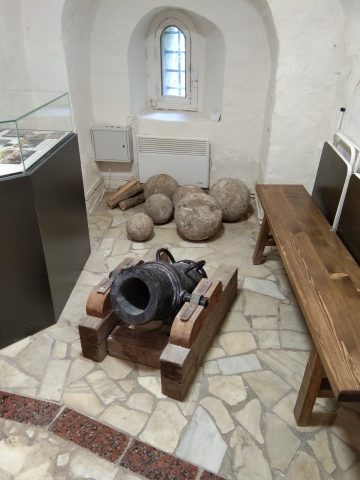
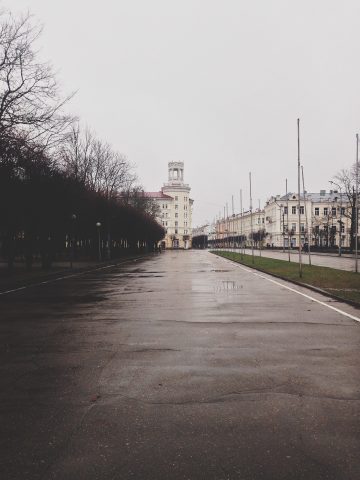
Smolensk is a city where history spills into the streets, lingers in the shadows of ancient walls, and whispers from the banks of the Dnieper. The Smolensk State Museum-Reserve is at its core—a complex that gathers centuries of memory, architecture, and human stories. It doesn’t sit behind museum doors. It spreads across the city, where every corner holds a fragment of time: early Slavic settlements, the devastation of World War II, medieval trade routes, and the rebuilding that followed.
The fortress wall, built in the late 16th century under Boris Godunov’s decree, is Smolensk’s most striking symbol. It stretches nearly six and a half kilometers, once shielding the city from invasions during the Time of Troubles, the Polish-Russian wars, and Napoleon’s 1812 campaign. Today, the wall remains a defining feature, its weathered towers and arched gateways offering a direct link to the past. The Veselukha Tower stands intact, and the Dnieper Gates, once the grand entrance for merchants and envoys, still mark the city’s edge. Walk along the ramparts, and the past feels close.
The historic center lies within the fortress walls. Here, the museum-reserve includes some of Smolensk’s key landmarks. The Uspensky Cathedral sits on Cathedral Hill. Though its current Baroque structure dates to the 18th century, its origins go back to the 12th, when Smolensk was a thriving principality. Inside, the cathedral holds 17th-century frescoes, a carved iconostasis, and the relics of Saint Mercurius, the city’s patron. It has survived fires, wars, and revolutions—its golden domes a constant in the city’s skyline.
The former archbishop’s residence now houses the museum’s main exhibitions. Archaeology dominates here, with artifacts from the Stone Age to the medieval period. Weights, coins, and jewelry from ancient burial mounds show Smolensk’s role in the Varangian-Byzantine trade route. Pottery, metalwork, and weaponry reveal the city’s craftsmanship. Manuscripts and early printed books prove its literate population. The exhibits don’t just display objects—they show the daily lives of merchants, artisans, and clergy who shaped the city.
A short walk from the fortress is the childhood home of Mikhail Glinka, Russia’s first great classical composer. The two-story house, restored to its early 19th-century appearance, holds furniture, family portraits, and original sheet music. Piano recitals sometimes fill the rooms. Glinka’s music, blending Russian folk melodies and European influences, reflects Smolensk’s position as a cultural crossroads. The museum shows how the city’s intellectual circles nurtured creativity, producing figures who left a mark on Russian culture.
World War II left deep scars on Smolensk. The city held out for two years under Nazi occupation before liberation in 1943. The Immortality Mound memorializes those lost—thousands of soldiers and civilians buried here. An eternal flame burns at its summit, surrounded by a solemn park with memorial plaques. The silence is heavy, broken only by the wind. It’s a place that makes you stop and think.
Lopatin Park, laid out in the 19th century on an old cemetery site, is where history meets daily life. Locals retreat here, walking shaded paths around a small pond or resting on benches beneath old trees. In summer, the park hosts concerts and poetry readings; in winter, its snow-covered alleys offer quiet. A statue of Pushkin stands near the entrance, marking his visits to Smolensk. The park isn’t just green space—it’s part of the city’s cultural memory.
The Smolensk Museum-Reserve doesn’t have rigid boundaries. History isn’t something you observe through glass—it’s something you walk through. The cobblestone streets of the old town, the rustling leaves in Lopatin Park, the creak of wooden floors in Glinka’s house—all tell a story. To experience Smolensk, you have to slow down. Climb the fortress walls at dusk, when the Dnieper turns gold. Wander into a quiet courtyard where laundry hangs between buildings. Listen to the church bells of Uspensky Cathedral echo over the rooftops. Then the city reveals itself—not as sights, but as a place where time feels different.